





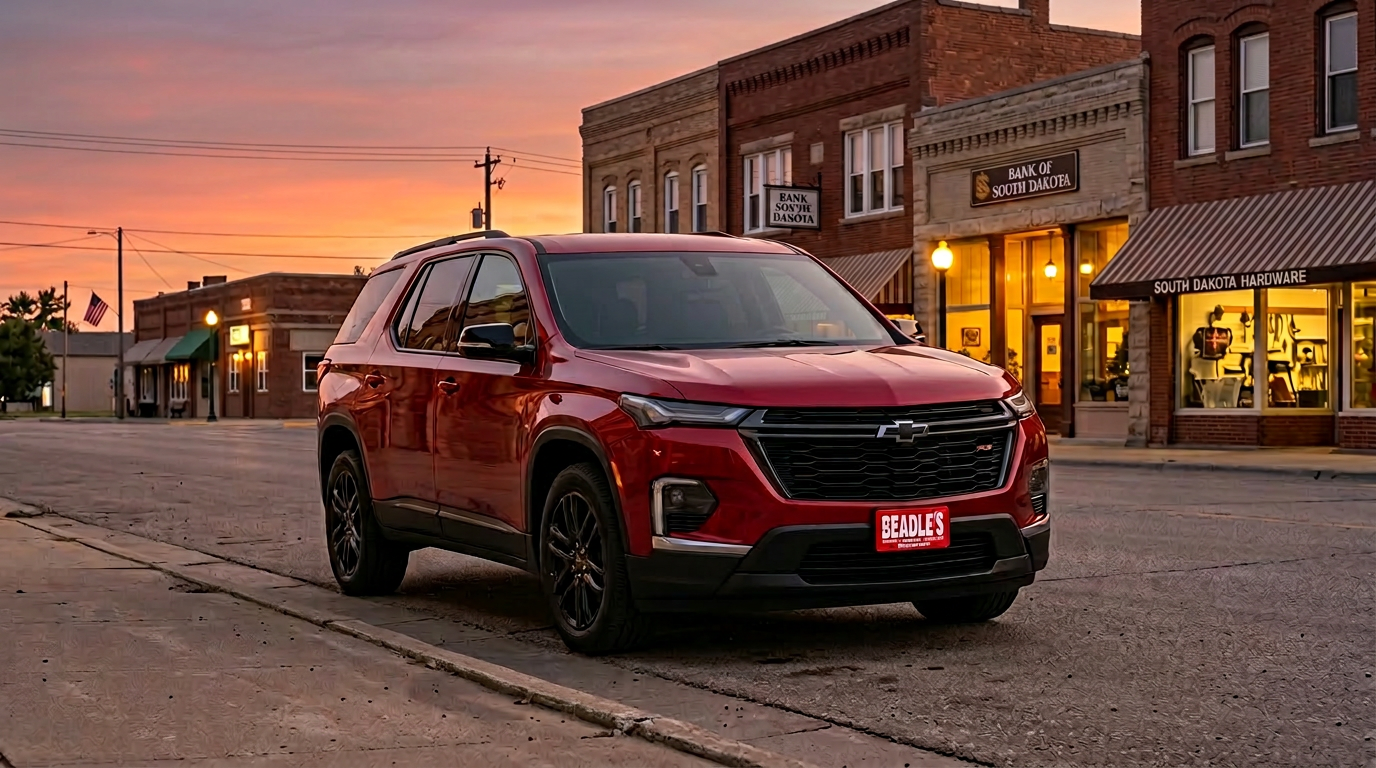
If you’re buying a Traverse in South Dakota, the AWD question deserves a straight answer — not a “it depends” that leaves you guessing. This guide makes the case for when AWD on the 2026 Traverse is a genuine necessity, when it’s a meaningful comfort, and when FWD is the right call. It also covers the difference between the standard AWD available on LT, RS, and High Country versus the Advanced Twin-Clutch AWD exclusive to the Z71.
All drivetrain details and availability are confirmed from the 2026 Chevrolet order guide.
On This Page
- What AWD systems does the 2026 Traverse offer?
- What is the actual difference between AWD and FWD in winter?
- Do South Dakota drivers actually need AWD?
- Is the Z71’s Advanced Twin-Clutch AWD worth it over standard AWD?
- When is FWD the right choice on the Traverse?
- What does AWD cost in real terms — price and fuel economy?
- Key Takeaways
- Frequently Asked Questions
What AWD Systems Does the 2026 Traverse Offer?
The 2026 Traverse offers two distinct all-wheel-drive systems, and they are not the same. Knowing the difference matters when you’re comparing trims.
| AWD System | Available On | How It Works |
|---|---|---|
| Standard AWD | LT (optional), RS (optional), High Country (optional) | Distributes torque front-to-rear based on traction demand. FWD biased under normal conditions, transfers power rearward when front wheels slip. |
| Advanced Twin-Clutch AWD (G99) | Z71 (standard, AWD-only trim) | Adds independent rear torque vectoring between left and right rear wheels. Can send torque to individual rear wheels — more precise traction control on uneven surfaces. |
Standard AWD handles the vast majority of South Dakota winter driving conditions well. Advanced Twin-Clutch AWD adds a level of precision that becomes relevant in off-pavement situations — soft surfaces, significant side-to-side traction differences, or steep loose-gravel scenarios. For most road-only South Dakota driving, standard AWD is sufficient. For gravel roads, soft ramps, and ranch use, the Z71’s system is more capable.
What Is the Actual Difference Between AWD and FWD in Winter?
AWD distributes engine power to all four wheels — so when a front wheel loses traction on ice or snow, torque can shift to the rear wheels to maintain forward movement. FWD sends power only to the front wheels; if a front wheel spins, the system has fewer options to maintain momentum.
The important clarification is what AWD does not do: it does not improve braking. Stopping distance on ice is determined by your tires, not your drivetrain. An AWD vehicle on all-season tires stops no shorter than a FWD vehicle on the same tires. AWD improves going — acceleration, launch traction, and sustained forward movement on slick surfaces. Once you’re moving, tire quality matters more than drivetrain.
AWD vs FWD: What Each Actually Improves
- AWD advantage: Launch traction from a stop on snow or ice
- AWD advantage: Sustained forward momentum on slick grades or loose surfaces
- AWD advantage: Reduced wheelspin when accelerating at highway entry speeds in winter
- Not improved by AWD: Braking distance on ice — tires determine this
- Not improved by AWD: Cornering grip on ice — again, tire dependent
- FWD advantage: Lower vehicle price, slightly better fuel economy, lighter weight
Do South Dakota Drivers Actually Need AWD?
For most drivers in the Mobridge area and the broader northwest South Dakota region: yes, AWD is a genuine benefit — not just a comfort feature. The combination of extended cold winters, significant snowfall, uneven road maintenance on rural routes, and gravel section-line roads creates conditions where AWD provides real-world advantage on a regular basis, not just occasionally.
South Dakota winters routinely bring: blowing snow that drifts across rural roads before they can be cleared, hard-packed ice on gravel roads that can persist for weeks, and unplowed farm and ranch approaches that are part of daily routines. A family driving from Mobridge to Selby or McLaughlin in February on a county road that hasn’t been fully cleared yet will experience conditions that FWD handles less confidently than AWD.
This is meaningfully different from asking the same question in a Sun Belt state, or even in eastern South Dakota where more urban infrastructure means better road clearing. In the Mobridge region specifically, the case for AWD is stronger than the national-average answer to this question would suggest.
AWD Is Not a Substitute for Winter Tires
If your primary winter driving concern is icy stopping distances and cornering, dedicated winter tires will outperform AWD on all-seasons. The best winter setup is AWD or FWD on dedicated winter tires. AWD on all-seasons is the common configuration — it handles most SD winters fine, but drivers should understand that braking improvements come from tires, not drivetrain.
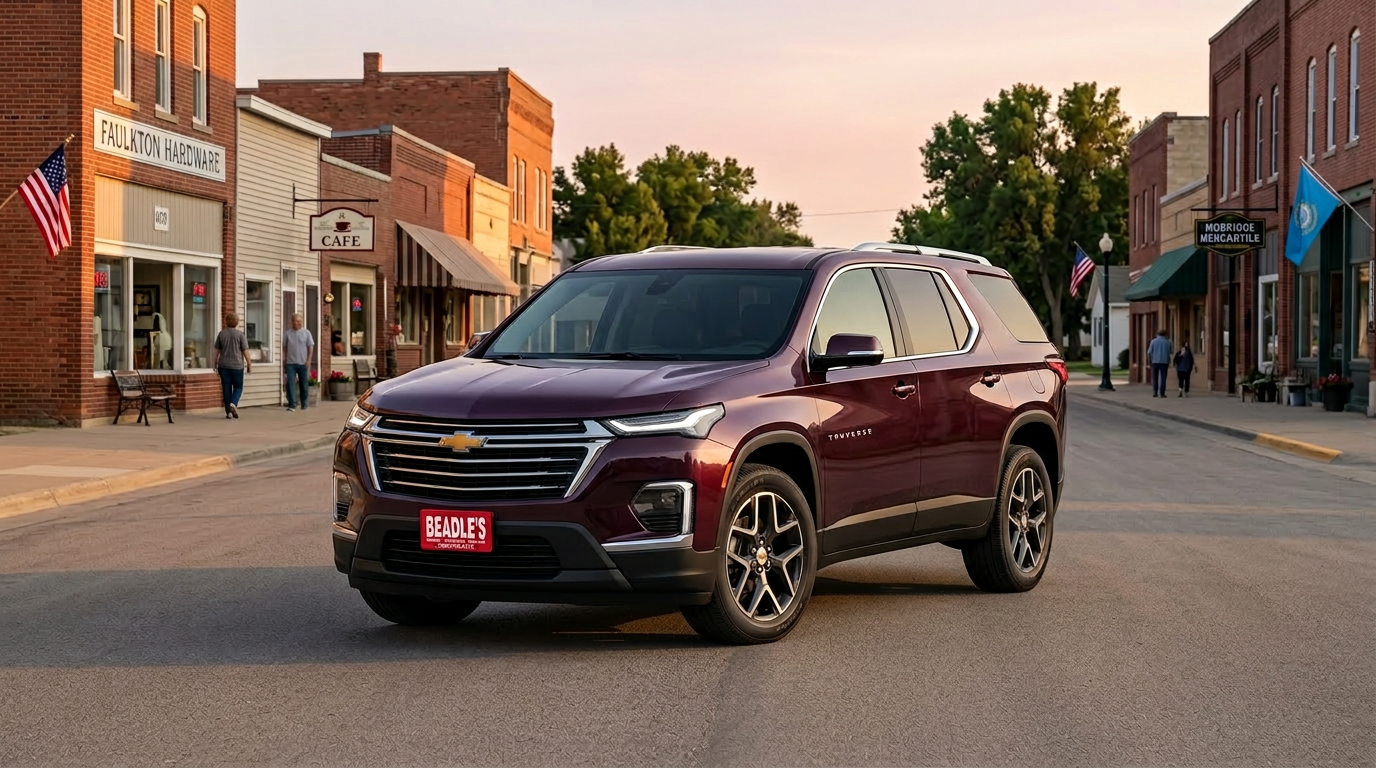
Is the Z71’s Advanced Twin-Clutch AWD Worth It Over Standard AWD?
For most South Dakota road driving — including winter conditions on paved or well-maintained gravel — the standard AWD available on the LT, RS, and High Country handles the job well. The Z71’s Advanced Twin-Clutch AWD provides additional capability that becomes relevant in specific scenarios.
The technical difference: standard AWD transfers torque front-to-rear based on overall axle demand. Advanced Twin-Clutch AWD can independently direct torque to the left or right rear wheel — so if one rear wheel is spinning on ice or mud, the system can send power to the wheel that has grip, rather than waiting for overall axle slip to trigger a response. This is more precise and faster-reacting on uneven surfaces.
| Scenario | Standard AWD | Z71 Twin-Clutch AWD |
|---|---|---|
| Snowy paved roads | Handles well | Handles well |
| Gravel roads — dry | Handles well | Handles well |
| Mixed ice / gravel surface | Adequate | More precise response |
| Soft / muddy terrain | Limited capability | Meaningfully more capable |
| Wet or algae-covered boat ramp | Marginal | Better launch / recovery |
| Steep gravel descent with trailer | No Hill Descent Control | Hill Descent Control standard |
The Z71 also includes Hill Descent Control — unavailable on any other Traverse trim — which is an active assist system for controlled speed on steep descents. On a gravel approach to a pasture or stock pond, or a steep ramp in soft conditions with a boat or livestock trailer, Hill Descent Control provides active braking management that standard AWD cannot replicate.
When Is FWD the Right Choice on the Traverse?
FWD is a legitimate choice for Traverse buyers whose driving profile keeps them on well-maintained roads the majority of the time. Not every South Dakota driver’s situation requires AWD — and FWD saves both upfront cost and ongoing fuel cost.
FWD Is the Right Call When:
- You drive primarily within town — paved, maintained roads with regular snow removal
- Your route is flat — hills and grades significantly increase the benefit of AWD in winter
- You can avoid driving in the worst conditions — flexibility to stay home or wait out the storm
- Fuel economy is a significant priority — AWD carries a fuel economy penalty
- Budget is a constraint and you’re willing to accept the trade-off
A Traverse owner who lives and works in Mobridge proper, drives on plowed city streets and US-12, and rarely travels rural county roads in winter conditions can absolutely run FWD without significant compromise. The same person who runs 25 miles of gravel each day to reach a ranch in January cannot.
What Does AWD Cost in Real Terms — Price and Fuel Economy?
AWD on the 2026 Traverse adds cost at purchase and carries a fuel economy penalty versus the FWD equivalent. The exact price delta depends on trim — AWD is an option on LT, RS, and High Country, and is standard (not optional) on the Z71. Confirm current pricing with Beadle Chevrolet, as MSRP and incentive structures change.
| Drivetrain | City (EPA est.) | Highway (EPA est.) |
|---|---|---|
| FWD | 20 mpg | 27 mpg |
| AWD | 19 mpg | 24 mpg |
EPA estimates. Actual fuel economy varies by driving conditions, load, and driving style. Verify on window sticker.
The highway fuel economy difference — 27 vs 24 mpg — is meaningful on long South Dakota drives. At 15,000 miles per year with 60% highway driving, the AWD configuration will use roughly 75–100 more gallons of fuel annually at current prices. Over five years, that’s a real cost that partially offsets the AWD capability benefit for drivers who don’t frequently encounter the conditions that AWD improves.
Key Takeaways
- The 2026 Traverse offers standard AWD (LT, RS, High Country — optional) and Advanced Twin-Clutch AWD (Z71 — standard only).
- AWD improves launch traction and sustained forward movement on snow and ice — it does not improve braking or cornering grip on ice.
- For most Mobridge-area drivers who travel rural county roads and gravel in winter, AWD is a genuine benefit, not just a comfort feature.
- The Z71’s Advanced Twin-Clutch AWD is more capable than standard AWD on uneven or off-pavement surfaces, and is the only trim with Hill Descent Control.
- FWD is appropriate for drivers who stay on well-maintained paved roads and can avoid worst-condition driving.
- AWD carries a fuel economy penalty: FWD is rated 20/27 city/hwy, AWD is rated 19/24 city/hwy (EPA estimates).
- Tire quality affects winter braking and cornering more than drivetrain selection — AWD on all-seasons is not equivalent to FWD on dedicated winter tires for stopping distance.
Frequently Asked Questions
Can I get the 2026 Traverse in FWD with any trim?
Yes — FWD is the standard drivetrain on LT, RS, and High Country. All three offer AWD as an available option. The Z71 is AWD-only; FWD cannot be ordered on a Z71.
Is AWD worth it on the Traverse in South Dakota?
For most drivers in the Mobridge and northwest South Dakota area: yes. The combination of extended winters, gravel roads, and rural driving makes AWD genuinely useful on a regular basis — not just occasionally. For drivers who stay on plowed paved roads and can avoid the worst conditions, FWD is a workable choice that saves on purchase price and fuel cost.
What is the difference between the Z71 AWD and the AWD on other Traverse trims?
The Z71 uses the Advanced Twin-Clutch AWD system (RPO G99), which can independently direct torque to each rear wheel. Standard AWD on LT, RS, and High Country transfers torque front-to-rear based on overall traction demand but does not vector between individual rear wheels. The Z71 system is more capable on uneven or soft surfaces and is paired exclusively with Hill Descent Control, which is not available on any other Traverse trim.
Does AWD hurt the Traverse’s fuel economy significantly?
There is a measurable difference: FWD is EPA-rated at 20 city / 27 highway, AWD is rated at 19 city / 24 highway. The highway penalty of 3 mpg is the most noticeable for South Dakota drivers who cover longer distances regularly. At 15,000 miles annually, this works out to roughly 75–100 additional gallons of fuel per year depending on your city/highway split.
Will AWD help on a South Dakota gravel road in winter?
Yes, meaningfully. Hard-packed ice and snow on gravel county roads is one of the scenarios where AWD provides the most benefit — it reduces wheelspin during acceleration and helps maintain forward momentum on grades. For drivers who run gravel roads regularly in winter, AWD is one of the more useful hardware investments. The Z71 with Advanced Twin-Clutch AWD adds further capability on the most challenging gravel surfaces.
My Take on AWD for the Mobridge Area
I’ll be straightforward: in this part of South Dakota, I’d lean toward AWD for most buyers. It’s not that FWD can’t get you through a typical winter — it can, especially if you’re on plowed roads and you drive attentively. But the conditions out here aren’t typical. A Tuesday morning in February on a county gravel road after an overnight blizzard is a different proposition than a cleared state highway, and AWD makes that morning easier.
The Z71 specifically makes sense for families who also need AWD and want the capability for ranch roads, boat ramps, or anything that takes them off maintained pavement with any regularity. It’s the only trim where you get AWD standard, Hill Descent Control, and the option to configure 8-passenger seating — which is a combination no other Traverse trim offers.
If you’re still working through the trim decision alongside the AWD question, the 2026 Chevrolet Traverse overview has the full lineup breakdown in one place. Or stop by Beadle Chevrolet in Mobridge — we can pull up what’s in stock and talk through what fits your situation specifically.
About the Author
Lexy Tabbert — Beadle Chevrolet, Mobridge, SD
Lexy Tabbert covers Chevrolet vehicles, trim comparisons, and buyer guidance for Beadle Chevrolet in Mobridge, South Dakota. Her content is grounded in real buyer conversations with families, ranchers, and ag operators across the Mobridge region and western South Dakota. Learn more about Lexy.
Connect with us

