





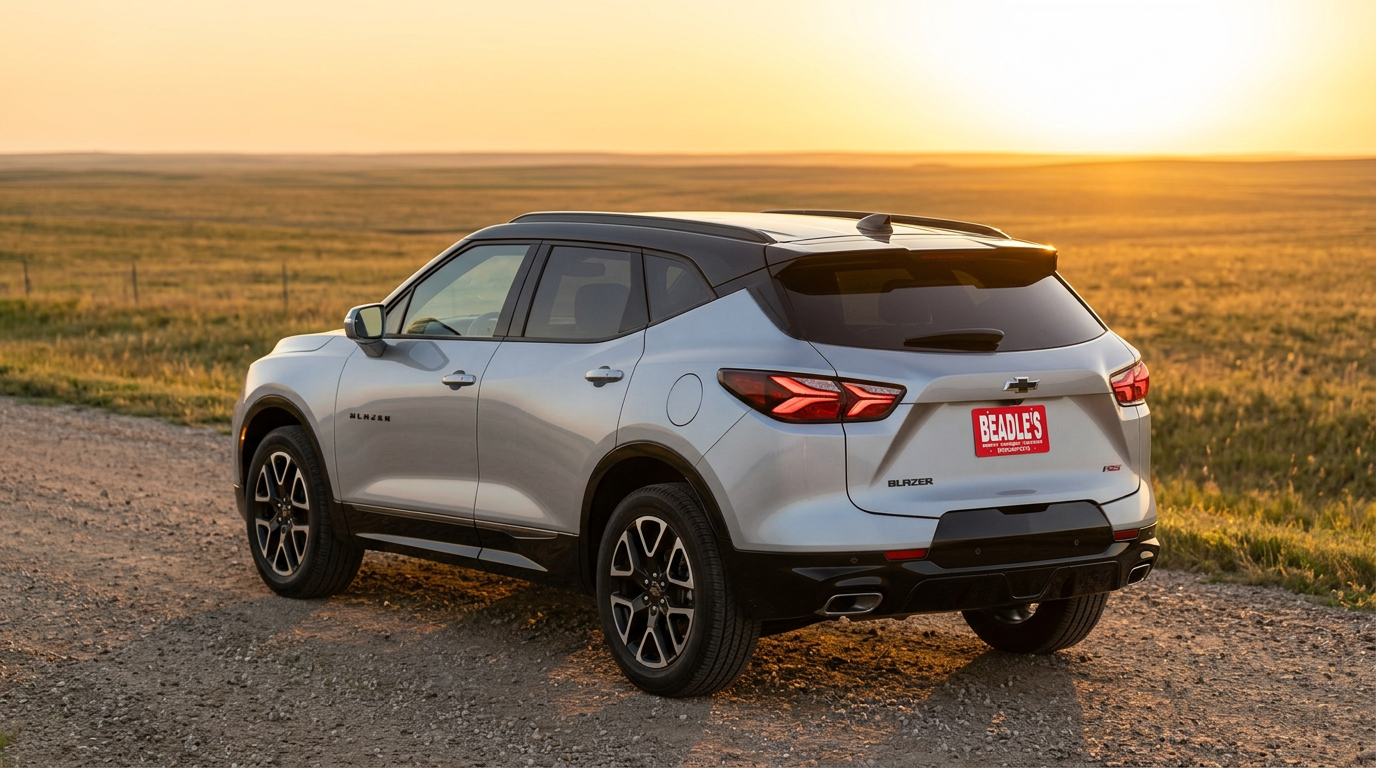
When you’re shopping for a 2026 Chevrolet Blazer, one of the most important decisions isn’t about color or leather seats—it’s what’s under the hood. Chevy gives you two compelling engine choices: a turbocharged 2.0L delivering 228 horsepower, or a naturally aspirated 3.6L V6 with 308 hp. Both pair with a smooth 9-speed automatic transmission, but they offer different experiences depending on your driving style, budget, and what you’ll use your Blazer for around Mobridge and beyond.
This guide breaks down the specs, fuel economy, performance characteristics, and real-world trade-offs so you can confidently pick the engine that fits your life. We’ll help you understand not just the numbers, but how each engine feels on South Dakota’s open highways, passing situations, and trips to the Black Hills.
What Engines Come in the 2026 Chevrolet Blazer?
The 2026 Blazer offers two distinct engine personalities. The first is a turbocharged 2.0-liter four-cylinder that produces 228 horsepower and 258 pound-feet of torque, built for efficiency and responsive performance. The second is a 3.6-liter V6 naturally aspirated engine cranking out 308 horsepower and 270 pound-feet of torque, engineered for maximum power and commanding presence on the road.
Both engines use direct injection, dual overhead cams, variable valve timing, and stop/start technology to balance performance with real-world efficiency. The V6 adds Active Fuel Management, which deactivates cylinders during cruising to save fuel when maximum power isn’t needed. Both pair exclusively with Chevrolet’s smooth 9-speed automatic transmission with Driver Shift Control, so you get the same transmission regardless of engine choice.
Inside the 2.0L Turbo: Specs and Design
The turbocharged 2.0-liter is engineering efficiency meets modern performance. At 228 horsepower and 258 pound-feet of torque—delivered from a low 1,500 rpm across a wide band to 4,000 rpm—this engine is all about responsiveness without excessive fuel consumption. The turbocharger feels quick off the line and creates genuine passing authority on two-lane highways without straining the fuel pump.
What makes the 2.0T appealing is its torque delivery. That 258 lb-ft hits at just 1,500 rpm and stays available through 4,000 rpm, meaning you don’t have to rev the engine hard to feel responsive. Combined with stop/start technology that shuts down the engine during city driving stops, and you get measurable fuel savings without complicated hybrid machinery. The 2.0T uses SIDI (Spark Ignited Direct Injection) and VVT (Variable Valve Timing) to optimize combustion, keeping emissions low and efficiency high.
This engine is available in the base 2LT trim exclusively, and as an option in the mid-level 3LT. It’s the choice for buyers who prioritize efficiency, lower monthly payments, and the confidence of knowing a turbocharged engine can handle passing and moderate towing without strain.
Inside the 3.6L V6: Specs and Capability
The 3.6-liter V6 represents Chevrolet’s answer for buyers who want confident, effortless power. With 308 horsepower peaking at 6,700 rpm and 270 pound-feet of torque available at 5,000 rpm, this engine trades low-end surge for broad power and a commanding presence. There’s no turbo lag, no waiting for boost—just straightforward V6 power that feels substantial from a standstill.
The V6 also incorporates Active Fuel Management (AFM), a system that deactivates alternate cylinders during steady cruising when maximum power isn’t needed. When you stomp the throttle, all six cylinders wake up instantly. AFM works so seamlessly you don’t feel it—it just improves fuel economy on the highway without any sacrifice to feel or response. Like the 2.0T, the V6 uses direct injection and VVT to optimize burning fuel and minimize emissions, plus stop/start technology for city driving efficiency.
The V6 is available as the standard engine in the RS trim, and as an upgrade option in the 3LT. If you tow trailers, haul heavy loads, or frequently drive mountain roads, the V6 delivers the extra torque and horsepower to make those tasks feel less demanding. It’s also the engine for buyers who simply prefer the character and responsiveness of a naturally aspirated six-cylinder.
Which Engine Comes in Which Trim?
Engine availability varies by trim level, so here’s the breakdown:
2LT (Base): 2.0L Turbo only. The V6 is not available at this trim level, keeping the entry price accessible while offering solid performance and good fuel economy.
3LT (Mid-Level): 2.0L Turbo standard, 3.6L V6 available. This gives you choice—stick with the turbo’s efficiency or upgrade to the V6 for more power and presence.
RS (Premium): 3.6L V6 only. At this trim, Chevrolet pairs premium features with the more powerful engine, positioning the RS as the ultimate Blazer experience.
This structure means your trim choice influences your engine option. If you’re committed to the V6, you’ll step up to either the 3LT with the V6 upgrade or the RS. If you want maximum efficiency and lower monthly payments, the 2LT with the 2.0T turbo is your lane.
Fuel Economy: Real MPG Expectations
Fuel economy is where the engineering differences between the two engines become tangible in your budget. Here are the EPA-estimated figures across configurations:
| Engine & Drivetrain | City | Highway | Combined |
|---|---|---|---|
| 2.0T Front-Wheel Drive | 22 mpg | 29 mpg | 25 mpg |
| 2.0T All-Wheel Drive | 22 mpg | 27 mpg | 24 mpg |
| V6 Front-Wheel Drive | 19 mpg | 26 mpg | 22 mpg |
| V6 All-Wheel Drive | 18 mpg | 26 mpg | 21 mpg |
The difference is striking on the highway. The 2.0T FWD achieves 29 mpg highway, while the V6 FWD hits 26 mpg—a 3 mpg advantage for the turbo on Interstate runs. In combined driving, the 2.0T averages 24-25 mpg while the V6 lands at 21-22 mpg. Over a year of driving Highway 12 to Pierre or I-90 to the Black Hills, those highway miles accumulate quickly, and the fuel savings with the 2.0T become meaningful.
All-wheel drive models (whether 2.0T or V6) see modest fuel economy reductions due to the additional weight and drivetrain friction. If fuel economy is your priority and you live in an area where winter demands AWD, the 2.0T AWD at 24 mpg combined is still competitive. If you choose the V6 for its power, accept that you’re trading 3-4 mpg for 80 additional horsepower and extra passing authority.
How Does Each Engine Feel on the Highway?
Real-world highway experience is where two-lane South Dakota roads teach you about engine character. Both engines are competent, but they deliver confidence in different ways.
The 2.0T Turbo on the Highway: The turbocharged four-cylinder excels at mid-range passing. Because that 258 lb-ft of torque sits between 1,500 and 4,000 rpm, you don’t need to downshift and rev the engine hard to pass a slow farm truck on Highway 12. Squeeze the throttle, and the turbo boost delivers immediate response. You’ll downshift the 9-speed automatic once, feel the surge, and complete the pass smoothly. The 2.0T makes you feel like you’re working with the engine, not against it. It’s brisk and satisfying without excess drama. On elevation changes heading toward the Hills, the turbo provides consistent power—you won’t feel that the engine is laboring.
The V6 on the Highway: The naturally aspirated V6 is pure effortless authority. You don’t think about passing; you just do it. That 308 horsepower and 270 lb-ft of torque means the engine always has power in reserve. Passing another vehicle feels almost lazy—there’s so much excess capacity that you’re rarely pushing hard. On elevation changes, the V6 maintains composure without requiring gear-hunting from the transmission. If you frequently drive with trailers, four people, and gear, or regularly navigate hilly terrain, this is the engine that makes everything feel lighter and easier. The character is more relaxed, less urgent.
Neither engine will fail you on South Dakota highways. The choice is between engaging responsiveness (turbo) and relaxed capability (V6).
Which Engine Should You Choose?
Both engines are proven, reliable, and capable. Your choice depends on priorities:
Choose the 2.0L Turbo if: You prioritize fuel economy and lower monthly payments. You drive mostly on highways and want responsive, turbocharged performance. You don’t regularly tow heavy trailers or haul maximum loads. You’re comfortable with a four-cylinder engine. You want the security of Chevrolet’s proven turbo technology. You’re shopping the 2LT and want excellent value.
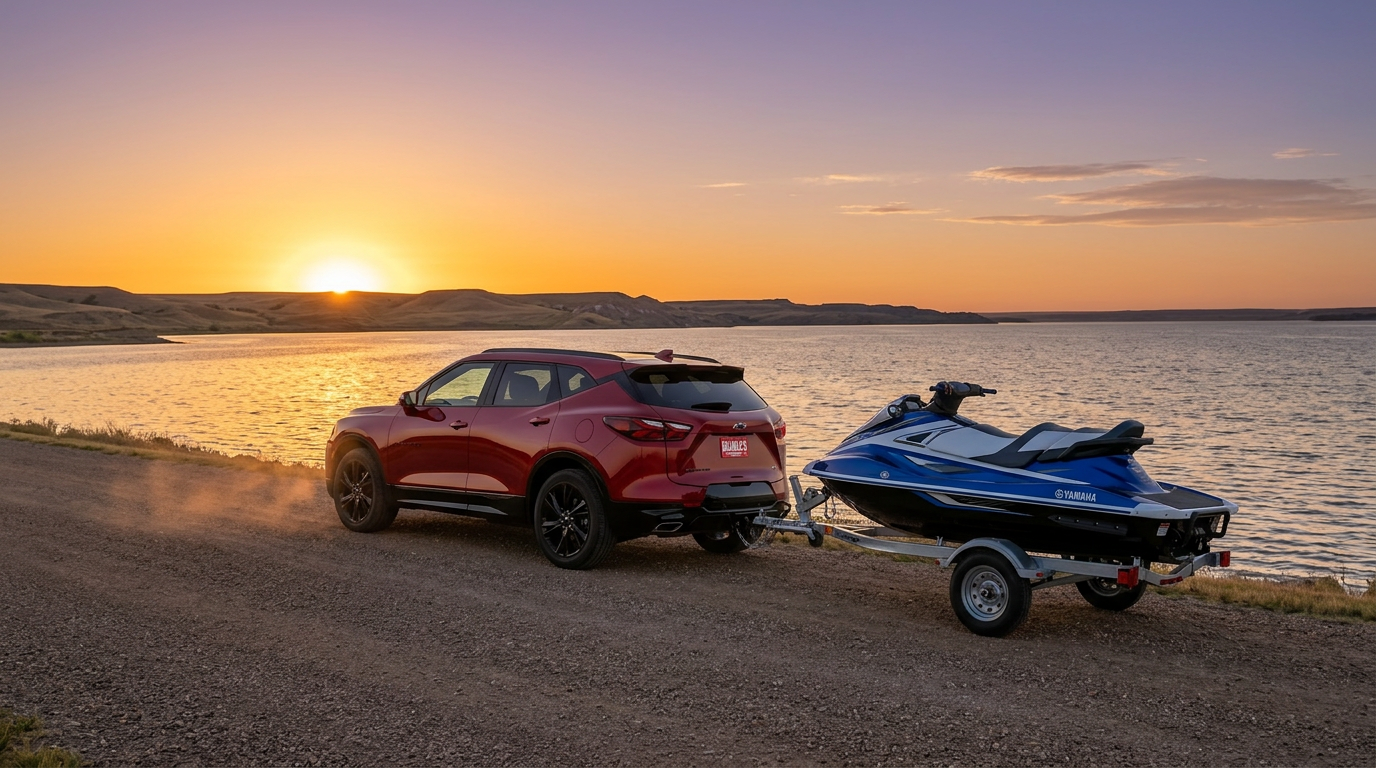
Choose the 3.6L V6 if: You prioritize power, presence, and effortless performance. You frequently tow trailers or haul heavy loads (the V6 AWD achieves 4,500 lb towing capacity). You want the character and smoothness of a naturally aspirated six-cylinder. You’re willing to accept 3-4 mpg lower fuel economy for 80 more horsepower. You’re stepping up to a 3LT or the premium RS trim. You drive varied terrain and want the engine to feel like it’s barely working.
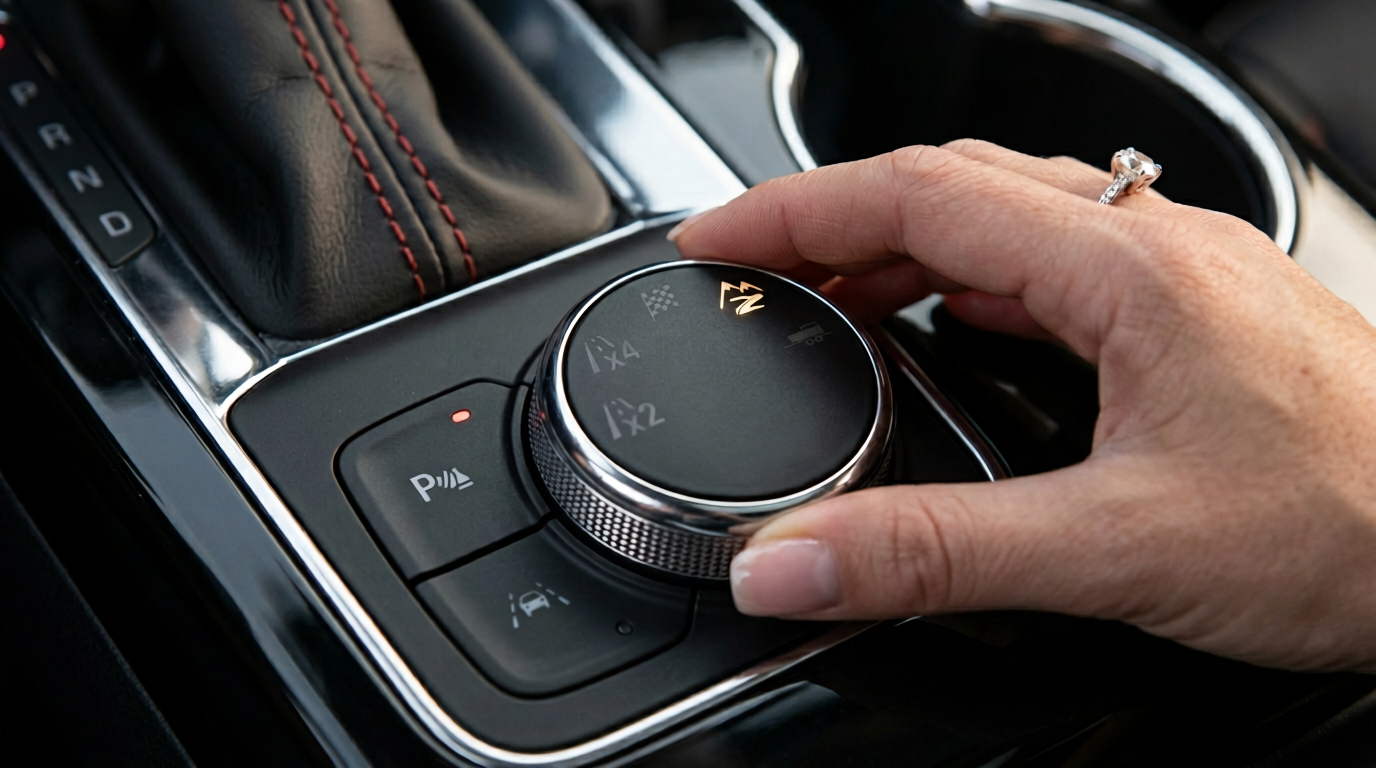
A practical rule: if you tow or haul regularly, the V6 makes sense. If you commute and take occasional weekend trips, the 2.0T is smart money. Both engines include six drive modes (Tour, Sport, AWD, Snow/Ice, Tow/Haul, Off-Road) to adapt to South Dakota conditions.
For detailed information on how each engine handles towing, check out our 2026 Chevrolet Blazer Towing Guide, which compares towing capacities and performance. And if you’re deciding between all-wheel drive and front-wheel drive engines, our AWD and Winter Driving Guide digs into how drivetrain choice affects engine performance on icy and snowy roads.
Key Takeaways
- The 2.0L Turbo delivers 228 hp, 258 lb-ft torque, and achieves up to 29 mpg highway. It’s standard in 2LT and available in 3LT.
- The 3.6L V6 produces 308 hp, 270 lb-ft torque, and is available in 3LT or standard in RS. Towing capacity reaches 4,500 lb with V6 AWD.
- Fuel economy favors the turbo by 3-4 mpg combined. Highway passing is responsive (turbo) vs. effortless (V6).
- Both engines use 9-speed automatic transmission, direct injection, variable valve timing, and stop/start technology.
- Choose 2.0T for efficiency and value; choose V6 for power, towing, and relaxed authority on all roads.
Frequently Asked Questions
I’ve spent enough time behind the wheel of both engines to know this: there’s no wrong choice, only the choice that’s right for you. Our customers who commute I-90 toward Sioux Falls or drive Highway 12 regularly and value stopping at the pump less often gravitate toward the 2.0T—and they’re delighted with the responsiveness and fuel savings. Customers with boats, trailers, or families who love weekend trips into the Black Hills with a full vehicle choose the V6, and they never regret the extra power and presence.
Here’s my practical advice: test drive both. Spend 20 minutes with a 2.0T on Highway 12, then 20 minutes with a V6. Feel how each engine responds when you pass a slow vehicle. Feel how it handles the slight elevation grade north of town. Then ask yourself: “Which one made me smile?” That feeling matters more than a spec sheet.
For a full look at the 2026 lineup — trims, pricing, and features beyond the engine bay — explore the complete 2026 Chevrolet Blazer overview. When you’re ready to test drive, we’ll have both engines on the lot — or if we don’t, we’ll locate one in our inventory system. My job is making sure you drive away in the exact Blazer and engine that fits your life.
— Lexy Tabbert
Director of Sales & Marketing, Beadle Chevrolet
About the Author
Lexy Tabbert — Beadle Chevrolet, Mobridge, SD
Lexy Tabbert is the Director of Sales and Marketing at Beadle Chevrolet in Mobridge, South Dakota. She covers Chevrolet vehicles, trim comparisons, and buyer guidance — helping families, ranchers, and ag operators across the region find the right truck and configuration for their needs. Learn more about Lexy.

