





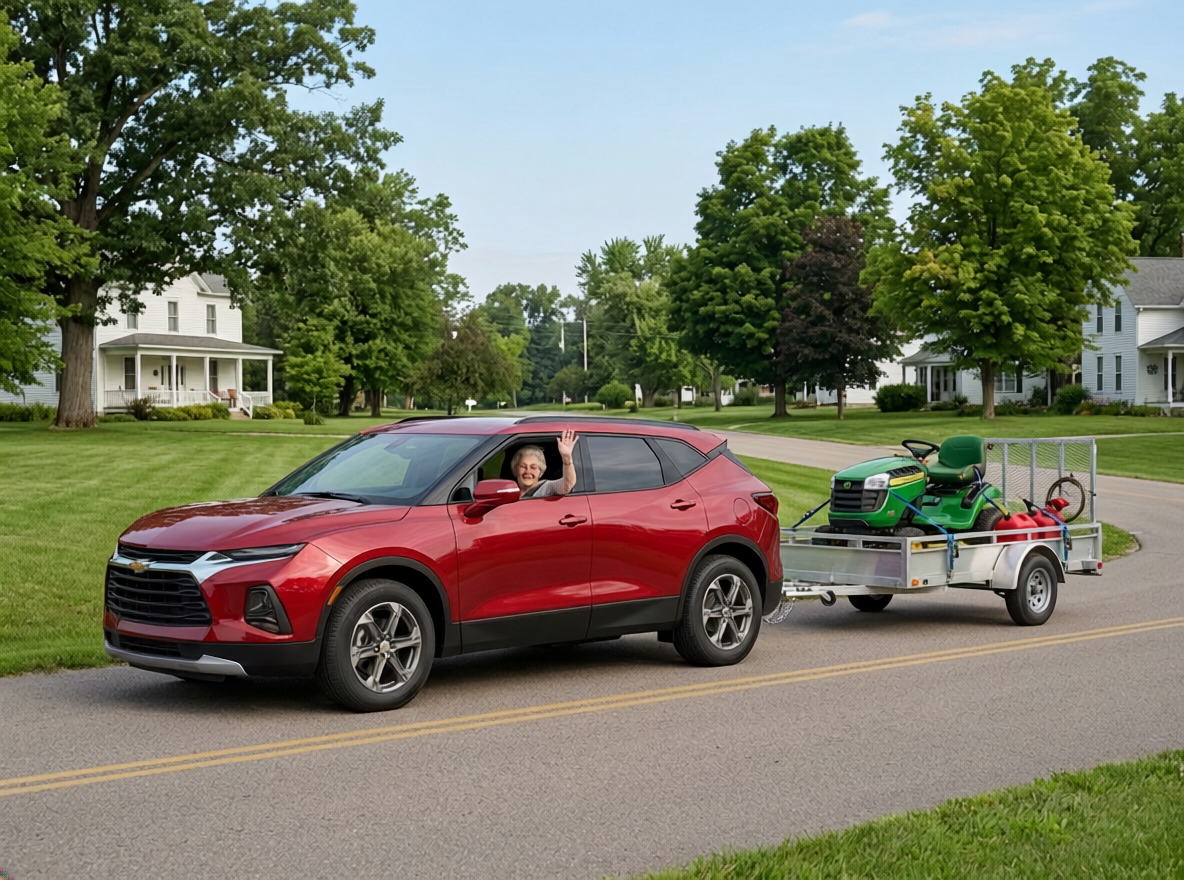
The 2026 Chevrolet Blazer is built for more than just daily commutes — it’s engineered for families and rural operators who need real hauling capability. Whether you’re planning a weekend fishing trip to Lake Oahe, loading a side-by-side UTV for ranch work, or towing a utility trailer across South Dakota’s gravel roads, understanding your Blazer’s towing capacity is essential. Towing capacity varies significantly based on engine choice, drivetrain, and whether you’ve equipped the vehicle with Chevrolet’s trailering package. This guide breaks down the numbers and shows you exactly what your Blazer can handle.
If you’re exploring the Blazer and want to dive deeper into engine performance and power delivery, check out our complete engine guide. For the full lineup breakdown, see the complete 2026 Chevrolet Blazer overview.
What’s the Blazer’s Maximum Towing Capacity?
The 2026 Chevrolet Blazer can tow between 1,500 pounds and 4,500 pounds, depending on your configuration. The base 2.0-liter turbocharged engine paired with front-wheel drive (without the trailering package) maxes out at 1,500 pounds—suitable for small utility trailers or lawn equipment. Step up to the 2.0T with the factory trailering package, or choose all-wheel drive, and you unlock 3,250 pounds of capacity. For maximum towing power, the 3.6-liter V6 engine delivers an impressive 4,500-pound rating when paired with the trailering package on FWD models, or standard on all AWD V6 configurations.
This progression means you have genuine flexibility: whether you’re a light-duty tower or someone who regularly hauls across Missouri River crossings and ranch country, there’s a Blazer configuration built for your needs. The key is understanding which engine and package combination aligns with your towing goals.
How Towing Varies by Engine and Drivetrain
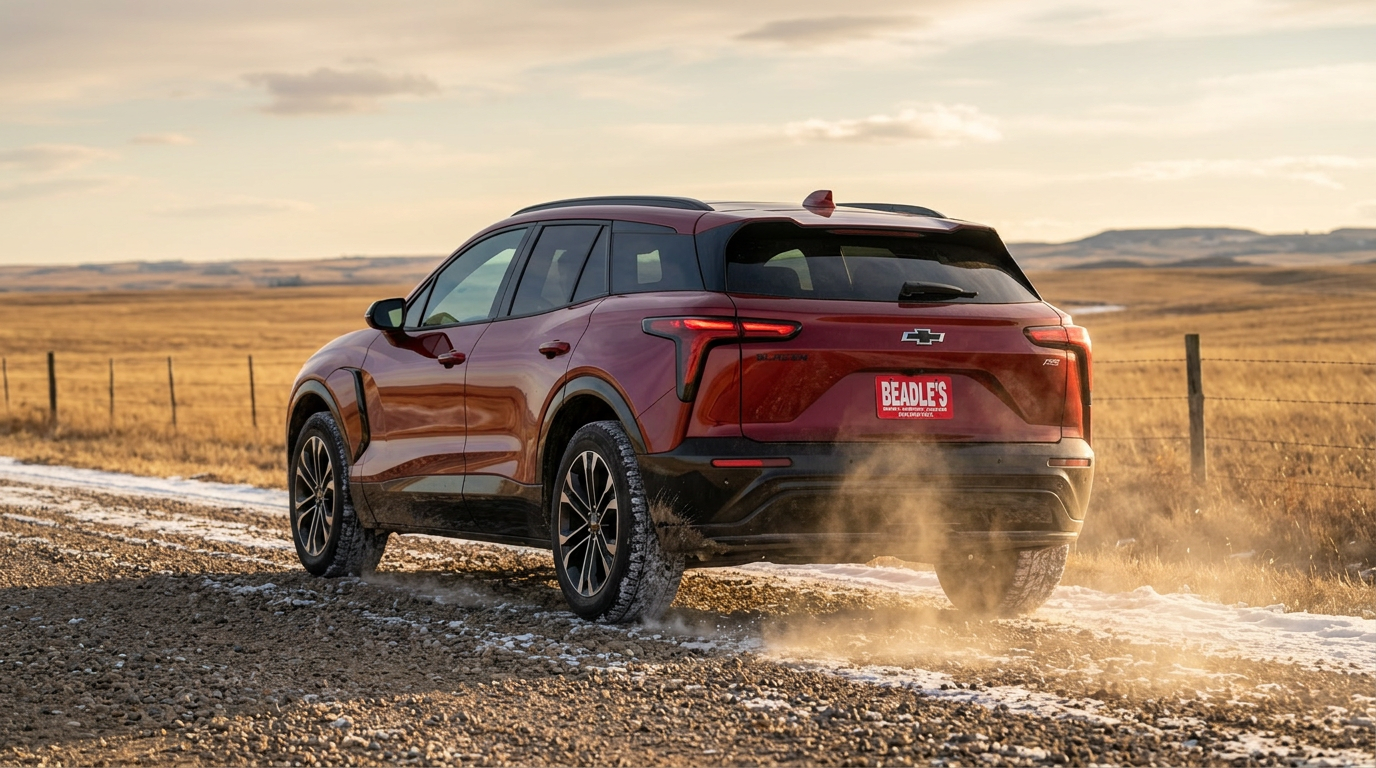
Towing capacity is a direct result of powertrain engineering. The 2026 Blazer’s 2.0-liter turbocharged engine produces strong mid-range torque, while the 3.6-liter V6 delivers more raw power and is the towing champion of the lineup. However, the drivetrain you choose—front-wheel or all-wheel drive—also plays a critical role in how much weight your Blazer can safely manage.
2.0T Turbo Engine Ratings
- 2.0T FWD without trailering package: 1,500 lbs
- 2.0T FWD with trailering package: 3,250 lbs
- 2.0T AWD: 3,250 lbs (trailering equipment standard)
3.6L V6 Engine Ratings
- V6 FWD without trailering package: 1,500 lbs
- V6 FWD with trailering package: 4,500 lbs (trailering equipment required)
- V6 AWD: 4,500 lbs (trailering equipment standard)
Notice that without the trailering package, both engines are limited to 1,500 pounds. This is an important distinction for budget-conscious buyers: if you think you’ll tow regularly, investing in the trailering package (especially on FWD models) unlocks significantly more capacity. The V6 really shines for heavier loads—ranchers and ag operators hauling equipment across South Dakota often gravitate toward V6 configurations for that 4,500-pound potential.
What Does the Trailering Package Include?
Chevrolet’s trailering package isn’t just about rating increases—it’s a thoughtfully engineered suite of equipment designed to make towing safer, easier, and more confident. When you add this package to your Blazer, here’s what you’re getting:
Key Package Components
- Hitch Guidance with Hitch View Camera: A rear-view camera that activates during reverse, showing you exactly where your hitch is positioned relative to the trailer coupler. This feature alone prevents countless backing mishaps on gravel lot roads.
- Heavy-Duty Transmission Cooling: Upgraded cooling systems that keep transmission fluid temperature under control during sustained towing, extending component lifespan and maintaining performance on hot summer days.
- Integrated Hitch Receiver: A factory-installed hitch receiver designed to your Blazer’s specifications—no aftermarket retrofitting needed.
For FWD models especially, this package is essentially mandatory if you plan any serious towing. On AWD models, some features (like the standard equipment) are built in. The hitch camera is worth its weight in gold if you’re backing up to boat launches or farm gates—a feature that makes towing practical for anyone without professional hitching experience.
What Can You Realistically Tow?
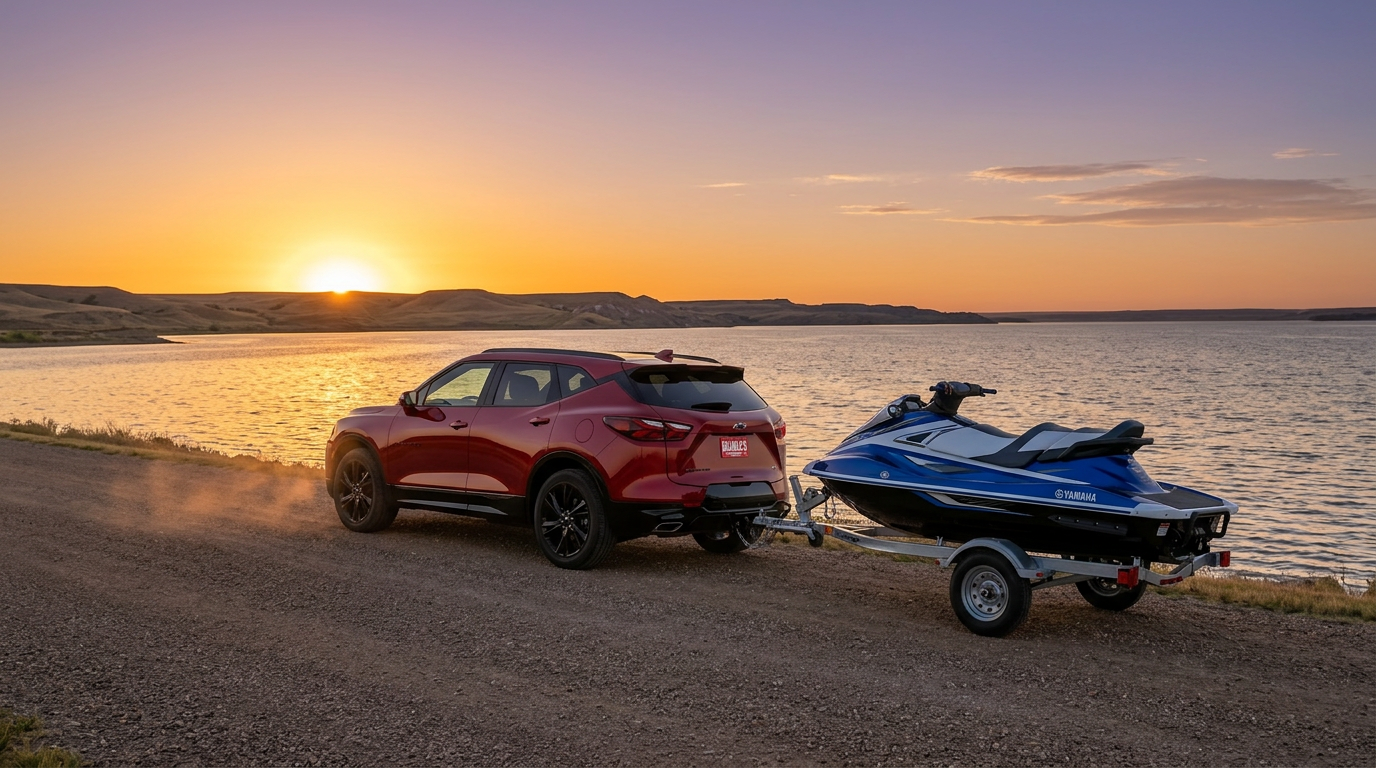
Maximum capacity numbers are important, but real-world towing scenarios tell the practical story. Here are common loads you’ll encounter across South Dakota and how different Blazer configurations handle them:
Small Fishing Boat (1,200–1,800 lbs)
If you’re a regular at Lake Oahe or Missouri River boat ramps, you’ll appreciate how the Blazer handles modest fishing boats. Even the base 2.0T FWD without the trailering package can manage this load safely. A typical 18-foot fishing boat with trailer weighs around 1,500 pounds—right at the base capacity limit. Upgrading to the 2.0T with trailering package or stepping to AWD gives you comfortable headroom and the confidence to explore different boat configurations.
Utility Trailer Loaded (2,000–3,000 lbs)
Ranch and farm operators frequently trailer equipment, hay, livestock panels, and gravel across county roads. A loaded utility trailer—perhaps carrying a small implement, portable corral panels, or seasonal gear—typically weighs 2,000 to 3,000 pounds. Here, the 2.0T with trailering package or the V6 configurations shine. You’re well within safe limits with comfort and stability.
Side-by-Side UTV on Flatbed (2,500–3,500 lbs)
Many ranchers haul UTVs to remote grazing areas or work sites. A loaded side-by-side on a flatbed trailer can easily weigh 2,500 to 3,500 pounds with fuel and supplies. The 2.0T with trailering package handles the lower end; the V6 AWD configuration comfortably manages the full range. The added weight distribution of the hitch camera becomes invaluable when backing onto uneven ground.
Small Pop-Up or Hard-Sided Camper (2,500–4,000 lbs)
If you’re exploring campgrounds across South Dakota or heading to a hunting lodge, a compact camper opens up weekend adventures. Dry weights typically range from 2,500 to 4,000 pounds. The 2.0T with trailering package covers lower-weight units; the V6 safely handles the full spectrum. Remember that wet weight (water, propane, gear) adds 10–15%, so check your owner’s manual and trailer specs carefully.
How Does Tow/Haul Mode Work?
The 2026 Chevrolet Blazer features six drive modes—one of which is Tow/Haul. When you engage this mode (usually via a dash button or steering wheel control), the vehicle optimizes performance for towing-specific demands. Here’s what happens under the hood:
Transmission Shift Strategy
Tow/Haul mode adjusts your Blazer’s transmission to hold gears longer, reducing unnecessary upshifts that can cause trailer sway or loss of control. The transmission stays in a lower gear for hill descents, providing engine braking that reduces strain on your service brakes and improves stability when navigating hilly terrain or gravel roads.
Engine and Cooling Optimization
The system increases cooling system engagement, helping keep your engine and transmission temperature optimal even on hot summer days. This is especially valuable when climbing steep grades while hauling weight—cooling systems work overtime, and Tow/Haul mode ensures they have priority.
When to Use It
Activate Tow/Haul whenever you’re pulling a trailer, especially on long highway stretches or hilly terrain. For a quick run to the boat ramp with a light trailer, you may not notice dramatic differences. But on a full-day excursion hauling a loaded utility trailer across the Missouri River bottoms or up elevation changes, the difference is noticeable—cooler transmission temps, better handling, reduced brake fade. It’s a simple button press that makes towing safer and more enjoyable.
Understanding Tongue Weight and Hitch Setup
Towing capacity is only half the story. Tongue weight—the actual load pressing down on your hitch receiver—is the other critical factor. Understanding this relationship prevents unsafe trailer configurations and ensures your Blazer’s suspension handles the load properly.
The 10–15% Rule
Industry best practice dictates that tongue weight should equal 10 to 15 percent of your total trailer weight. For example, if you’re towing a 3,000-pound trailer, your tongue weight should be between 300 and 450 pounds. This balanced weight distribution ensures:
- Stable tracking and reduced sway
- Proper braking response
- Minimal impact on your vehicle’s handling and suspension wear
Hitch Receiver and Balls
The factory-installed hitch receiver on trailering-equipped Blazers is rated for specific ball sizes and tongue weights. Most common configurations use a 2-inch or 2 5/16-inch ball. Match your ball to your trailer coupler size—mismatches create unsafe connections and can cause trailer detachment. The receiver itself has a weight limit stamped on its tongue-weight plate; never exceed this rating.
Real-World Setup Tips
When loading a utility trailer or boat, distribute weight toward the front (tongue) to stay within the 10–15% sweet spot. A trailer that’s too light at the tongue will fish-tail and wander; one that’s too heavy will overload your hitch and crush the rear suspension. Use a truck scale or bathroom scale under the tongue to verify before heading down a county road. And always use safety chains—they’re not optional equipment, even with modern couplers.
Key Takeaways
- The 2026 Blazer tows between 1,500 and 4,500 pounds depending on engine, drivetrain, and trailering package.
- Base ratings (no trailering package): both engines max at 1,500 lbs.
- 2.0T with package or AWD: 3,250 lbs. V6 with package: 4,500 lbs.
- The factory trailering package adds hitch guidance camera, heavy-duty cooling, and unlocks higher capacity ratings.
- Tongue weight should be 10–15% of total trailer weight for safe, stable towing.
- Tow/Haul mode optimizes transmission shifts and cooling for better handling under load.
- Real-world loads across South Dakota (fishing boats, utility trailers, UTVs, campers) all fit within Blazer’s capabilities when configured properly.
Frequently Asked Questions
Can I tow 4,500 pounds with the 2.0T engine?
No. The 2.0T engine’s maximum is 3,250 pounds when paired with the trailering package or AWD. Only the 3.6L V6 reaches 4,500 pounds. The turbocharged engine is excellent for moderate towing needs, but for heavier loads, the V6 is the right choice.
Do I need the trailering package if I only tow occasionally?
If you plan to tow more than a few times per year, the package is well worth the investment—especially on FWD models. It unlocks significant capacity (1,500 to 3,250 lbs on the 2.0T), adds the invaluable hitch camera, and ensures heavy-duty cooling for transmission longevity. For truly light-duty use only, you might skip it, but most regular towers will benefit.
What’s the difference between tongue weight and towing capacity?
Towing capacity is the total weight your Blazer can safely pull. Tongue weight is the downward force the trailer’s hitch point exerts on your vehicle’s hitch receiver—typically 10–15% of the trailer’s total weight. Both matter: you could theoretically tow within capacity but have unsafe tongue weight distribution if your trailer is improperly loaded.
Is the hitch camera worth the cost of the trailering package?
Yes. Anyone who’s backed a trailer to a boat ramp or farm gate knows how difficult it can be. The hitch view camera eliminates guesswork, showing you exactly where the hitch sits relative to the coupler. It prevents mishaps, saves time, and gives peace of mind—especially valuable if you’re not a frequent tower or backing into tight spaces on uneven ground.
Can I tow on gravel roads with the Blazer?
Absolutely. The Blazer is built for rural South Dakota life. Gravel roads are common across ranch country and Lake Oahe access roads. With proper tongue weight distribution, engaged Tow/Haul mode on longer hauls, and regular vehicle maintenance, your Blazer handles rural towing safely. Just reduce speed on rough or muddy gravel to maintain traction and stability.
Lexy’s Take: The 2026 Chevrolet Blazer is a genuinely capable towing vehicle, and I’m impressed by how much flexibility Chevrolet built into the lineup. Whether you’re a weekend angler heading to Lake Oahe, a rancher hauling equipment across Missouri River bottoms, or a family planning a camping adventure, there’s a Blazer configuration that fits your needs. The real key is matching the right engine and drivetrain to your typical load. Don’t skip the trailering package if you tow regularly—the hitch camera alone will save you frustration on South Dakota’s back roads, and the capacity increase is substantial. Stop by Beadle Chevrolet, and we’ll help you spec out exactly the right Blazer for your lifestyle.
— Lexy Tabbert, Director of Sales & Marketing, Beadle Chevrolet
About the Author
Lexy Tabbert — Beadle Chevrolet, Mobridge, SD
Lexy Tabbert is the Director of Sales and Marketing at Beadle Chevrolet in Mobridge, South Dakota. She covers Chevrolet vehicles, trim comparisons, and buyer guidance — helping families, ranchers, and ag operators across the region find the right truck and configuration for their needs. Learn more about Lexy.
Connect with us

