





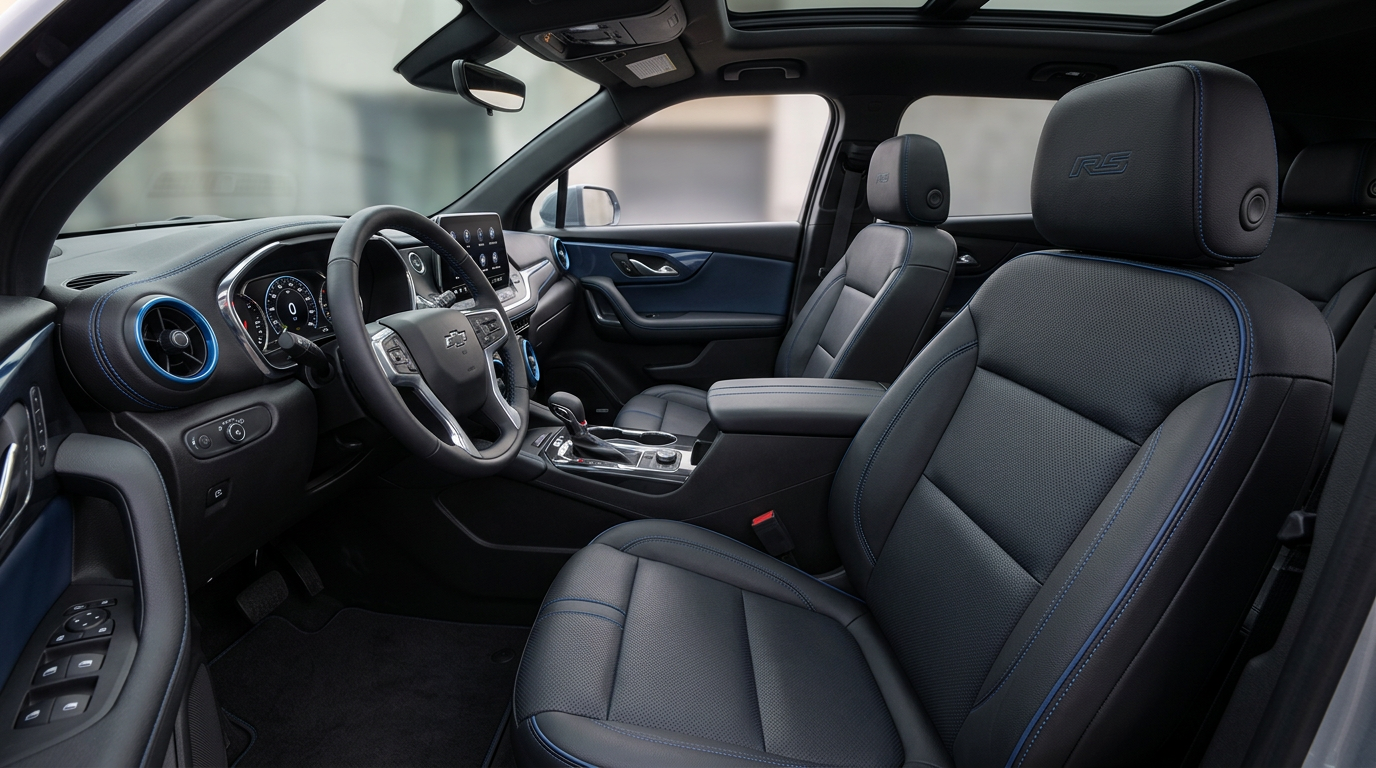
South Dakota winters demand a vehicle that can handle everything from -20°F Mobridge nights to muddy spring thaw conditions. The 2026 Chevrolet Blazer arrives with available AWD, six intelligently mapped drive modes, and winter-specific features that make it a credible contender for harsh Midwest climates. But is AWD really necessary for South Dakota? How does the twin-clutch system perform on gravel county roads and packed snow? Let’s explore what owners across the region need to know.
Whether you’re commuting Highway 12 in winter weather, accessing ranch roads, or pulling a boat trailer to Lake Oahe, the Blazer’s drivetrain options and available winter tech are designed for real regional challenges. This guide breaks down AWD capability, drive mode strategy, and cold-weather performance—so you can decide if the 2026 Blazer fits your South Dakota driving reality.
Quick Navigation
Is the 2026 Chevrolet Blazer Good in Snow?
The 2026 Blazer is engineered to handle winter precipitation and cold-weather driving, though real-world performance depends on your drivetrain choice and how you configure winter features. With available AWD, dedicated Snow/Ice drive mode, and standard heated seats, the Blazer addresses most winter commuting scenarios across South Dakota.
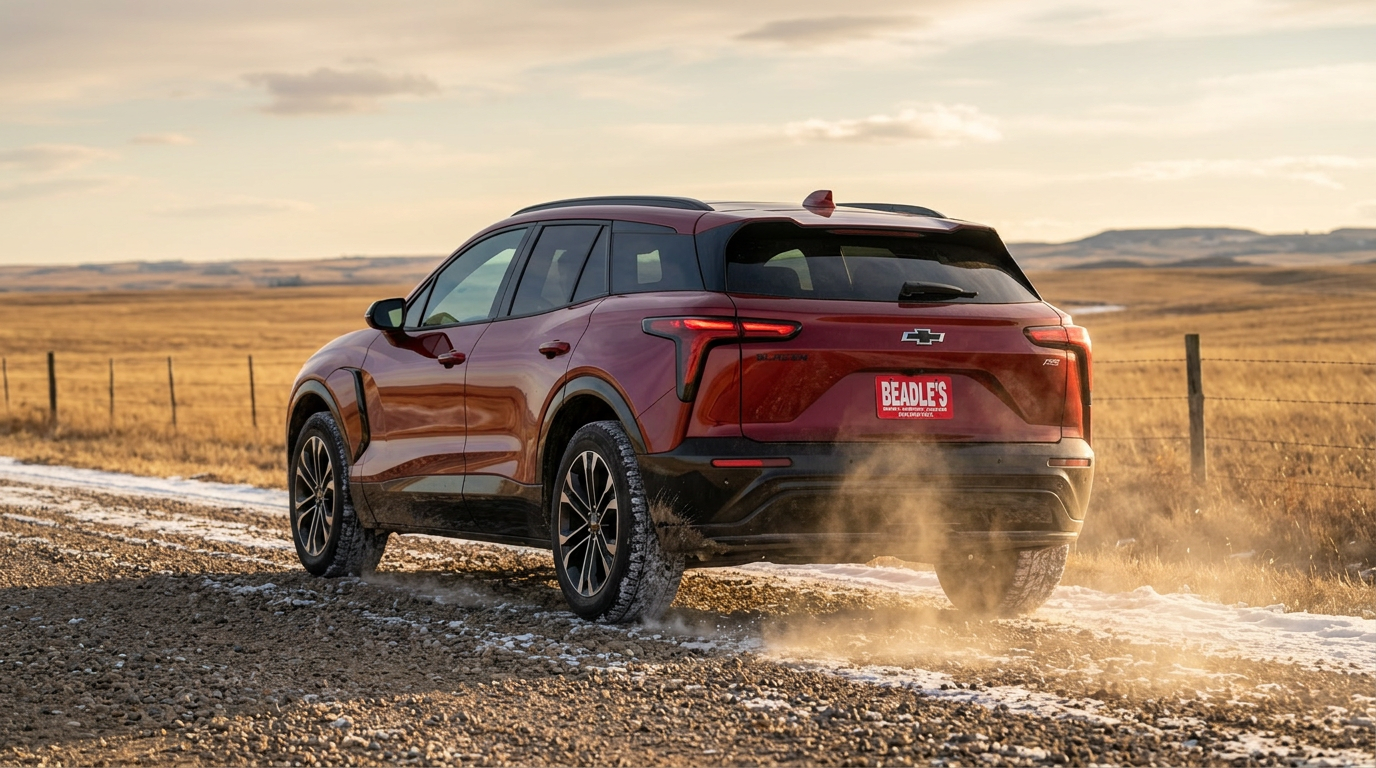
In Mobridge winters—where temperatures regularly drop to -20°F and Highway 12 sees packed snow and black ice—the Blazer’s winter capability shines with intelligent torque distribution and traction management. The standard front-wheel-drive model provides adequate snow traction with proper winter tires, while the optional AWD system adds a layer of security on icy surfaces and soft snow.
The real differentiator is the Snow/Ice drive mode, which adjusts throttle response, transmission shift logic, and traction control to minimize wheel slip on slippery surfaces. Combined with 7.5″ ground clearance (2LT) and the Blazer’s low center of gravity, the midsize crossover is more stable than many truck-based alternatives when navigating winter roads.
How the Twin-Clutch AWD System Works
The Blazer’s available AWD system uses a twin-clutch rear differential to distribute engine torque dynamically between the front and rear axles. This architecture allows the vehicle to send power to individual rear wheels—a technique called torque vectoring—that improves cornering stability and traction in slippery conditions.
In practical terms, when you’re navigating a muddy ranch access road or a gravel county road during spring thaw, the twin-clutch system continuously monitors wheel slip and road surface conditions. If the front wheels lose grip, the system automatically sends more power to the rear, and vice versa. On black ice or packed snow, this real-time adjustment happens in milliseconds—faster than any driver input.
The AWD system adds $2,700–$2,900 to your Blazer’s MSRP and is available on all trim levels (2LT, RS, and RS Max). Power is standard delivered to the front wheels, with rear engagement happening automatically based on driving conditions and the selected drive mode. This means you get the fuel efficiency of front-wheel drive during normal commuting, with instant AWD engagement when needed.
For Mobridge winter driving, the twin-clutch system’s responsiveness is a genuine safety asset on slick Highway 12 sections or unpaved access roads where traction is uncertain.
FWD vs. AWD: Is AWD Worth It in South Dakota?
This is the question that separates practical choices from unnecessary upgrades. For South Dakota winters, the answer depends on your specific driving patterns and risk tolerance.
FWD makes sense if: You commute primarily on cleared highways (Highway 12 usually gets treated and maintained). You live in Mobridge proper and avoid back roads in winter. You’re comfortable with winter tires and understand FWD traction limits. You want maximum fuel economy. The standard FWD Blazer is genuinely capable on winter roads—many owners across the Dakotas drive FWD crossovers year-round without incident.
AWD makes sense if: You regularly access unpaved ranch roads, logging roads, or gravel county roads in winter or during spring thaw. You pull a boat trailer to Lake Oahe and need confidence on slippery boat ramp approaches. You live in remote areas where road treatment is inconsistent. You want maximum traction confidence on black ice or packed snow. You’re willing to invest $2,700–$2,900 for that peace of mind. You value the torque-vectoring advantage in emergency maneuvers.
The honest assessment: Both drivetrains are winter-capable with proper tires and driver skill. AWD tilts the odds in your favor on unpaved surfaces and in extreme conditions. For rural South Dakota living, many owners find the extra investment justified. For urban/suburban Mobridge commuting alone, FWD is sufficient.
Drive Modes for South Dakota Conditions
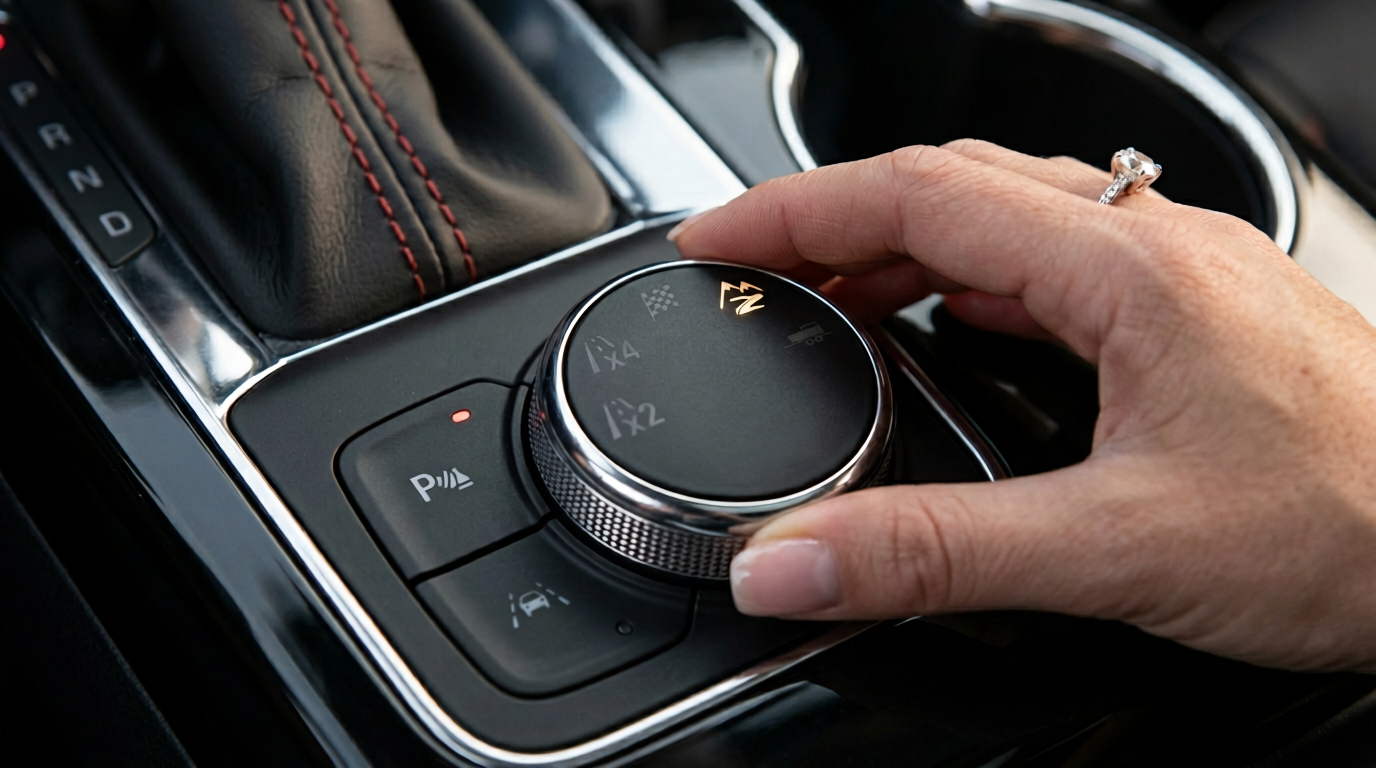
The 2026 Blazer includes six standard drive modes, all engineered with regional driving in mind. These modes adjust throttle responsiveness, transmission shift timing, traction control sensitivity, and AWD engagement—letting the vehicle adapt to whatever South Dakota throws at you.
Tour Mode
Your daily driver setting. Optimized for Highway 12 commutes on dry, treated pavement. Smooth throttle response, efficient shifting, and relaxed traction control. Use this for most of your Mobridge winter driving when roads are maintained.
Sport Mode
For responsive passing maneuvers on two-lane roads. Tighter throttle mapping and held gears longer through turns. Useful when you need confidence to pass another vehicle safely on winter roads, though this isn’t a winter mode per se.
AWD Mode
Optimizes torque split for wet or mixed surface conditions. Default for unpredictable weather—partially snow, partially bare pavement. The system biases power delivery toward rear wheels without fully engaging Snow mode’s traction management. Good for early spring when some roads are clearing.
Snow/Ice Mode
Your primary winter weapon. Reduces wheelspin by smoothing throttle input and adjusting traction control for packed snow, black ice, and slippery surfaces. This mode is essential for Highway 12 during storms or when ice conditions are present. The system prioritizes stability over acceleration.
Tow/Haul Mode
For pulling a boat trailer to Lake Oahe or hauling ranch equipment. Adjusts transmission logic for loaded towing, optimizes braking control, and manages engine braking on downhills. Winter applicability: when towing on icy boat ramp approaches, this mode keeps the vehicle stable under trailer load.
Off-Road Mode
Engineered for gravel county roads, muddy ranch access roads, and spring thaw conditions. Maximizes AWD engagement, adjusts traction control for low-grip surfaces, and optimizes wheel slip tolerance. This is where the Blazer’s capability shines on unimproved roads during or after winter precipitation.
For most Mobridge winters, you’ll toggle between Tour (main roads), Snow/Ice (when precipitation falls), and Off-Road (gravel/unpaved access). The system responds instantly to your selection, giving you confidence that the vehicle’s settings match road conditions.
Gravel Roads and Ground Clearance
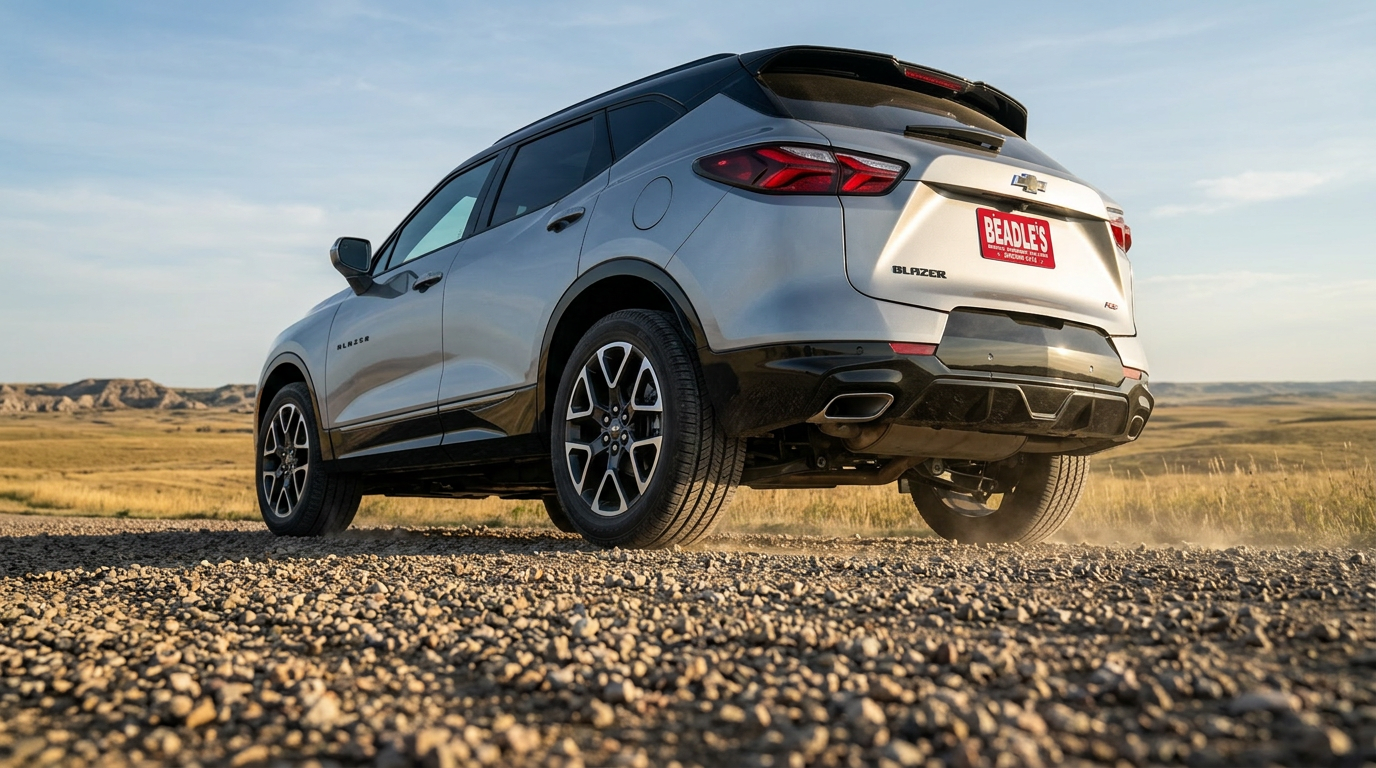
If you access your property or hunting cabin via unpaved county roads, the Blazer’s clearance and Off-Road mode capability matter. With 7.5″ ground clearance (2LT trim) or 7.6″ (RS trim), the Blazer sits lower than typical body-on-frame SUVs but higher than most car-based crossovers. This means you can handle moderate ruts and washboard surfaces without bottoming out—provided you’re not pushing through deep mud holes.
The real advantage is Off-Road mode combined with optional AWD. When you’re crossing a muddy spring thaw road or navigating a washboard gravel surface, the system distributes torque to maximize traction on each wheel. The Blazer won’t climb rocks like a truck, but for typical South Dakota ranch access roads—even in challenging conditions—it’s remarkably capable.
Consider the Blazer’s 191.88″ length and 113″ wheelbase when evaluating ground clearance. A longer wheelbase can struggle on extremely broken terrain or steep grades (since the chassis is more likely to hang on obstacles). However, this same wheelbase provides stability on rolling prairie roads at highway speeds, a genuine advantage when you’re crossing ranch property on gravel at 45+ mph.
Bottom line: The Blazer is gravel-road capable, especially with AWD and Off-Road mode engaged. It’s not a truck, and extreme obstacles are off-limits. But for realistic county road and ranch access driving in South Dakota, it delivers confidence.
Cold-Weather Features and Winter Equipment
Mobridge winters demand more than just grip—they demand comfort and reliability. The Blazer packs several standard and available winter features that make harsh South Dakota cold more manageable.
Standard Winter Features
- Heated Front Seats: Standard on all trims (2LT, RS, RS Max). Essential for -20°F Mobridge mornings. Reach maximum heat in seconds and adjust to your comfort level. Dramatically reduces the time you spend shivering on your commute.
- Remote Vehicle Start: Standard on all trims. Pre-warm the Blazer from your home or office before you step outside. Defrosts windshield, warms cabin, and thaws frozen door locks—a genuine quality-of-life upgrade in Dakota winters.
RS-Trim Advantages
- Heated Steering Wheel: Standard on RS trims. Gloved hands won’t slip, and you stay comfortable on long winter drives. Small feature, major comfort impact at -10°F.
- Heated Rear Seats: Available with Enhanced Convenience Package (RS trim). If passengers regularly join winter drives, rear heating keeps everyone warm.
The Blazer’s sealed cabin and modern HVAC system also contribute to winter comfort. Defrosting is fast and thorough—important when you’re dealing with ice buildup on South Dakota mornings. The climate control integrates with remote start, meaning your cabin is already warm when you get in.
For winter tire storage and recommedations: Equip your Blazer with genuine winter tires (not all-seasons) for the best traction in packed snow and on black ice. Winter tires have softer rubber compounds and specialized tread patterns that maintain grip at sub-freezing temperatures. The difference between quality winter tires and standard all-seasons is night and day in Mobridge winters.
For more details on engine performance and how the Blazer’s powertrain handles cold starts in sub-zero temperatures, see our complete guide to 2026 Blazer engine performance.
Key Takeaways
- Snow-Capable Standard: The FWD Blazer handles Mobridge winters well with winter tires. AWD ($2,700–$2,900) adds confidence on unpaved surfaces and extreme conditions.
- Twin-Clutch AWD Advantage: Real-time torque vectoring to individual rear wheels provides instant traction adjustment on slippery surfaces—faster and more responsive than older AWD systems.
- Six Drive Modes: Tour (daily highways), Sport (passing), AWD (mixed), Snow/Ice (black ice and storms), Tow/Haul (boat ramps and trailers), Off-Road (gravel and muddy ranch roads).
- Gravel-Road Ready: With 7.5–7.6″ clearance and Off-Road mode, the Blazer confidently handles South Dakota county roads and ranch access during winter and spring thaw.
- Standard Cold-Weather Comfort: Heated front seats and remote start on all trims. RS adds heated steering wheel and optional heated rear seats.
- Real-World Recommendation: For Mobridge highway commuting alone, FWD is sufficient. For ranch living or frequent unpaved road access, AWD is the practical choice.
Frequently Asked Questions
Does the 2026 Chevrolet Blazer have all-wheel drive?
Yes. AWD is available on all trims (2LT, RS, RS Max) as an optional upgrade. It uses a twin-clutch rear differential that distributes torque dynamically to maximize traction. Standard drivetrain is front-wheel drive, which is winter-capable with proper tires.
What is Snow/Ice mode and when should I use it?
Snow/Ice mode adjusts throttle smoothness, transmission shift logic, and traction control to prevent wheel slip on packed snow, black ice, and slippery surfaces. Activate it whenever precipitation has fallen on highways or roads, or when you suspect ice. It’s essential for Mobridge winters on Highway 12.
Is the Blazer good on gravel roads?
Yes, with AWD and Off-Road mode activated. Ground clearance of 7.5–7.6 inches is adequate for county roads and ranch access. The Blazer isn’t a truck and won’t handle extreme obstacles, but it confidently navigates typical South Dakota gravel and muddy roads, especially in Off-Road mode.
Do I need AWD for Mobridge winters?
Not for highway commuting alone. The standard FWD Blazer with winter tires is adequate for Highway 12 during most winter conditions. AWD becomes practical if you access unpaved ranch roads, gravel county roads, or navigate uncertain surface conditions. For rural South Dakota living, AWD adds confidence and is worthwhile.
What cold-weather features come standard on the Blazer?
Heated front seats and remote vehicle start are standard on all trims. The RS trim adds a heated steering wheel standard, and heated rear seats are available on RS with the Enhanced Convenience Package. These features make -20°F Mobridge mornings far more manageable.
How much does AWD cost?
The AWD option adds $2,700–$2,900 to your Blazer’s MSRP, depending on trim and configuration. This includes the twin-clutch rear differential system and integration with all six drive modes.
My Final Word on the Blazer and South Dakota Winter Driving
—Lexy Tabbert, Director of Sales & Marketing, Beadle Chevrolet
I’ve spent every winter of my professional life helping South Dakota families and ranchers choose the right vehicle for harsh conditions. The 2026 Blazer impressed me because it doesn’t pretend to be something it’s not—it’s a refined, capable midsize crossover engineered with real winter scenarios in mind.
Mobridge winters are unforgiving. We get -20°F nights. Highway 12 turns into an ice rink without notice. Spring thaw creates muddy ranch roads that’ll trap cars with all-season tires. In that reality, the Blazer’s standard winter features (heated seats, remote start) and six-mode drivetrain strategy give owners genuine options. No vehicle eliminates winter risk, but the Blazer tilts the odds in your favor.
Should you spend $2,700 on AWD? If you’re commuting Highway 12 in Mobridge proper, the FWD model is honest-to-goodness sufficient with proper winter tires. If you access unpaved roads, own property outside town, or pull a boat to Lake Oahe, the twin-clutch AWD system’s real-time torque vectoring is worth every dollar. It’s not luxury; it’s practicality.
The thing that sells me on the Blazer for our region is the drive mode flexibility. One button switches from Tour to Snow/Ice to Off-Road—acknowledging that South Dakota drivers face genuinely different conditions on the same day. That intelligence, paired with available AWD and standard cold-weather equipment, makes the 2026 Blazer a credible choice for anyone serious about winter-capable transportation in South Dakota.
For a complete look at everything the 2026 Blazer brings to the table — trims, pricing, towing, and more — see the full 2026 Chevrolet Blazer overview. And if you’re looking for a capable, refined crossover that doesn’t flinch at Mobridge winters, the Blazer deserves a test drive — preferably in winter conditions so you can feel the drive modes and AWD system respond to what South Dakota throws at it.
About the Author
Lexy Tabbert — Beadle Chevrolet, Mobridge, SD
Lexy Tabbert is the Director of Sales and Marketing at Beadle Chevrolet in Mobridge, South Dakota. She covers Chevrolet vehicles, trim comparisons, and buyer guidance — helping families, ranchers, and ag operators across the region find the right truck and configuration for their needs. Learn more about Lexy.

