



Quick Answer
The 2026 Chevrolet Silverado 2500 HD standard bed is 82.25 inches at the floor and holds 69.5 cubic feet. The long bed is 98.27 inches and 83.5 cubic feet. The long bed adds 158 lb of payload on a 4WD Crew Cab but costs you 13 inches of wheelbase and 4.3 feet of turning circle.
Sixteen inches. That is the entire difference between a standard bed and a long bed on a Silverado 2500 HD, and it is the decision people spend the longest agonizing over and the least time measuring. The towing column barely moves. The payload column moves a little. What really changes is whether the truck fits where you need it to fit, and whether an eight-foot panel lies flat with the tailgate up. Here is the whole trade, with a tape measure instead of an opinion.
By Lexy Tabbert, Director of Sales and Marketing, Beadle Chevrolet GMC
Jump to Section
What actually fits in each one
What it does to payload and towing
The configurations with no choice
What Do Two Extra Feet of Bed Buy You?
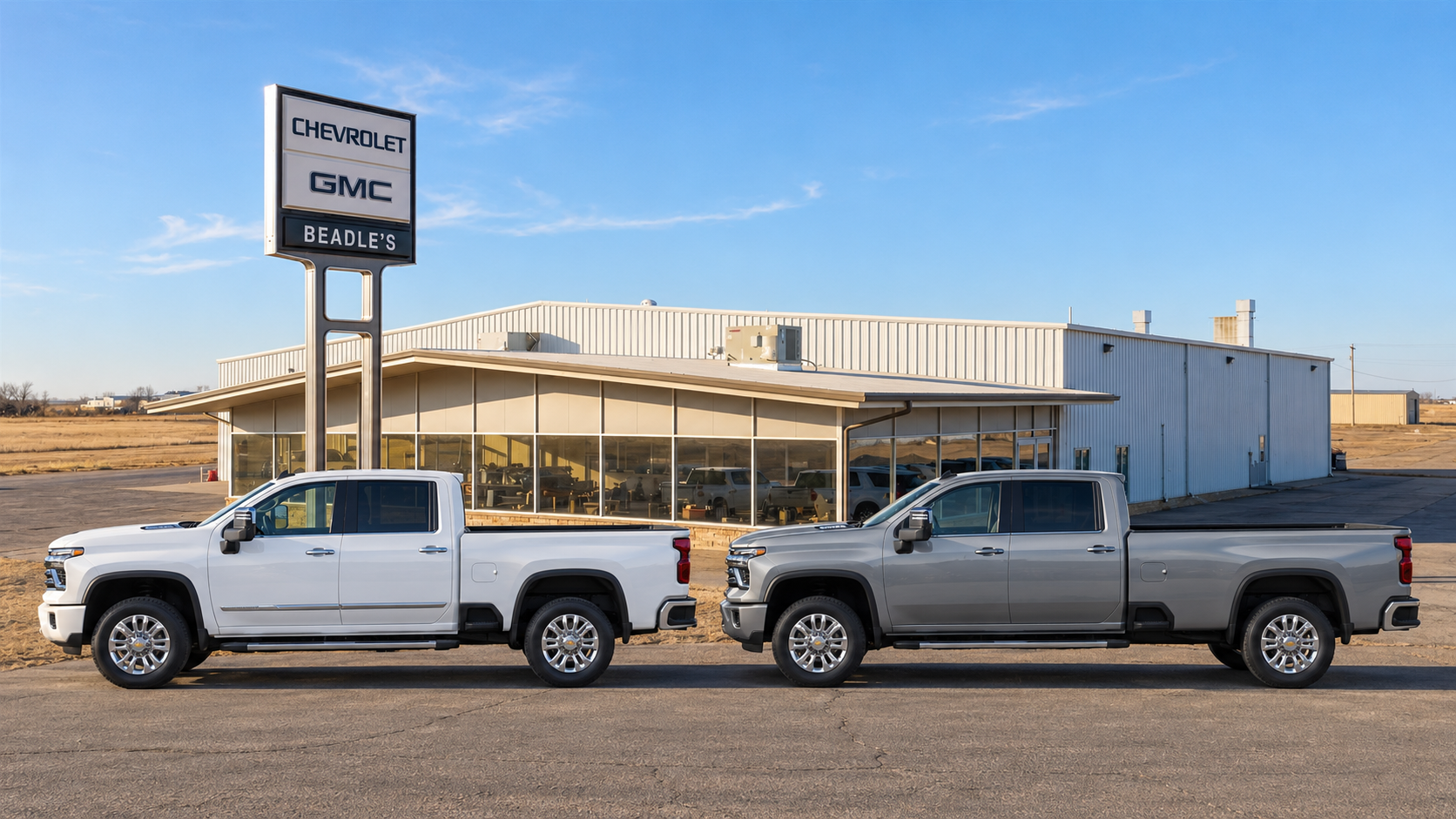
The standard bed measures 82.25 inches at the floor and holds 69.5 cubic feet. The long bed measures 98.27 inches and holds 83.5 cubic feet. That is sixteen inches of floor and fourteen cubic feet of volume.
The number that matters most is 98.27, because it clears eight feet. A sheet of plywood, a stack of eight-foot siding, a run of fence panels or a post driver lies flat on a long bed floor with the tailgate closed. On a standard bed, 82.25 inches is a little under seven feet, so an eight-foot anything rides with the tailgate down and a flag on the end.
If that describes your week more than twice a year, the decision is already made and the rest of this post is confirmation. If it describes your year more than your week, keep reading, because the costs are real.
What Actually Fits in Each One?
Cubic feet is an abstraction. What people actually want to know is whether a specific thing goes in with the gate shut, so here is the practical version.
Both beds take a standard pallet lengthwise with room to spare, and both will carry a round bale on the floor. Both handle the everyday load that makes up most of a truck's life: feed, mineral tubs, tools, a generator, fence supplies, a side-by-side ramped in at an angle. For that category the two beds are interchangeable and the extra sixteen inches is dead weight in your turning circle.
The long bed separates itself the moment something is eight feet long and rigid. Plywood and OSB. Eight-foot steel posts and corral panels. Dimensional lumber in full lengths. A post driver. Lengths of pipe or well casing. On a long bed those lie flat on the floor, the tailgate closes, nothing is cantilevered past the bumper and nothing needs strapping to stop it sliding out.
On a standard bed the same load rides with the tailgate down and roughly sixteen inches hanging out the back. That is legal with a flag, and people do it every day, but it changes how you load, how you strap, how you back up and what you can leave in the truck unattended overnight.
There is a third category worth naming: anything that bolts to the frame rather than sitting in the bed. Flatbeds, service bodies, hoists and dump inserts are generally built around the longer frame, so if a body is in the truck's future the bed-length question is really a frame-length question and the answer is usually the long one.
What Does It Cost You?
Length, and the handling that comes with it. On a Crew Cab, the comparison looks like this.
| Measurement | Standard bed | Long bed | Difference |
|---|---|---|---|
| Bed floor length | 82.25 in | 98.27 in | +16.0 in |
| Cargo box volume | 69.5 cu ft | 83.5 cu ft | +14.0 cu ft |
| Wheelbase | 159 in | 172 in | +13 in |
| Overall length | 250.04 in | 266.06 in | +16.0 in |
| Turning circle, curb to curb | 52.7 ft | 57 ft | +4.3 ft |
The turning circle is the one that bites daily. Four and a third extra feet is the difference between making a yard gate in one pull and making it in three. It is the difference between parking at the grocery store in Mobridge and parking behind it. Nobody notices sixteen inches of bed when they are driving; everybody notices 57 feet of turning circle in a calving shed alley.
Overall length matters too, and 266 inches is 22 feet of truck before you hook anything to it. Measure your shop, your gate and wherever the truck sleeps at night before you commit.
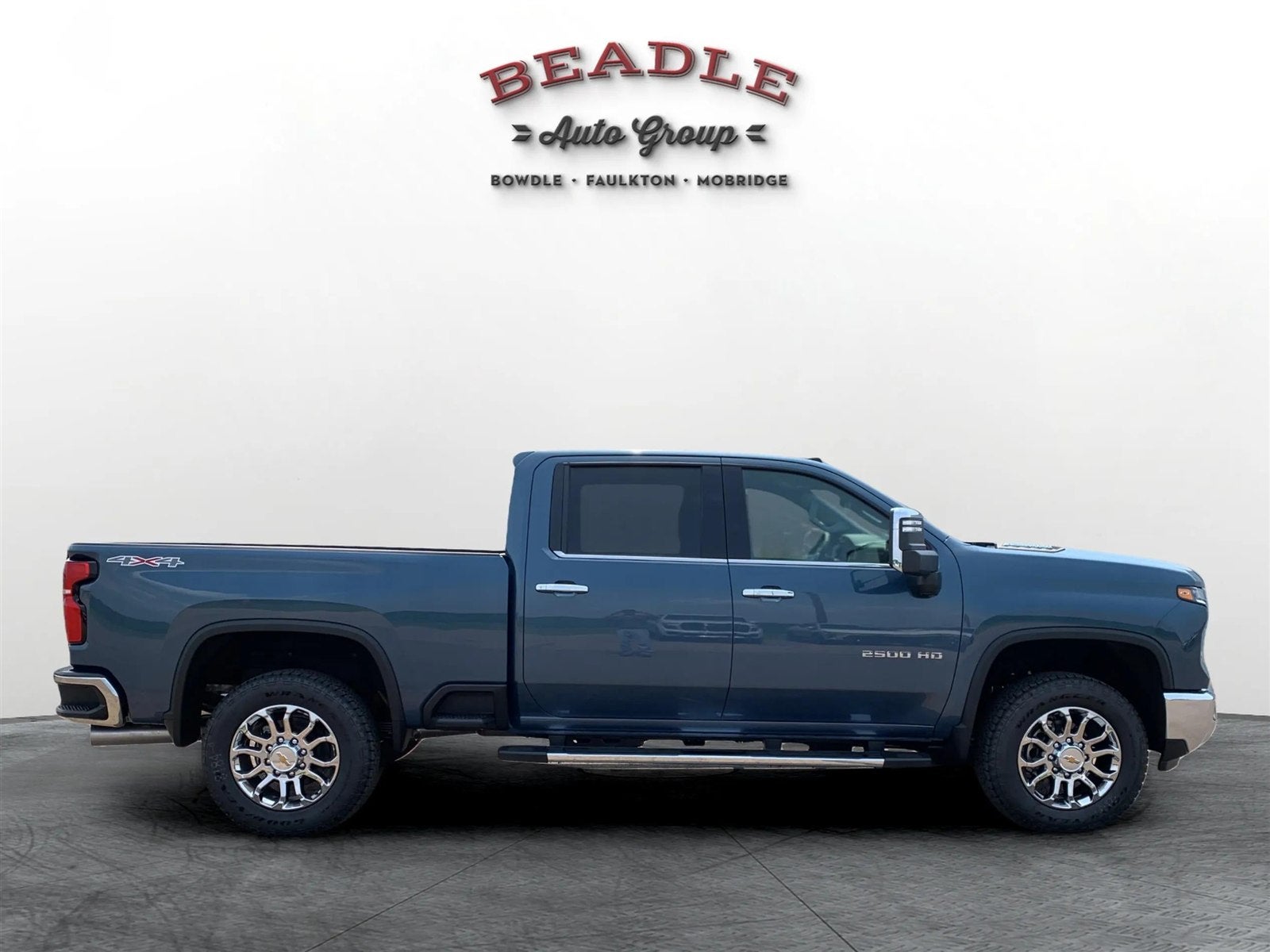
What Does It Do to Payload and Towing?
Less than people assume, and in opposite directions. These are Crew Cab 4WD figures on 18-inch or 20-inch wheels, properly equipped.
| Rating | Standard bed | Long bed |
|---|---|---|
| Payload, gas V8 | 3,779 lb | 3,937 lb |
| Payload, Duramax | 3,583 lb | 3,748 lb |
| Gooseneck, Duramax | 19,100 lb | 19,000 lb |
| Gooseneck, Duramax with Max Trailering | 21,600 lb | 21,490 lb |
The long bed carries more and tows slightly less. It adds roughly 158 lb of payload on gas and 165 lb on the diesel, because the longer frame and axle placement rate higher. It gives back about 100 lb of gooseneck rating, which is noise.
A hundred pounds out of nineteen thousand is well under one percent. Nobody should choose a bed length on the towing column. If a hundred pounds of gooseneck rating is the deciding factor in your build, the real problem is that you are too close to the ceiling and the gooseneck math needs another look regardless of bed.
There is one genuinely important exception. The highest gooseneck figure in the whole 2026 lineup, 22,070 lb, belongs to a Crew Cab long bed 2WD Work Truck or Custom with the Max Trailering Package. If you are chasing the absolute ceiling, that one specific truck is a long bed. The full picture is in the bed section of the buyers guide.
The Configurations Where You Do Not Get a Choice
Before you weigh anything, check whether the truck you want even offers both.
- The Regular Cab is long bed only. There is no short-bed Regular Cab 2500 HD.
- The ZR2 is standard bed only. Crew Cab, standard bed, four-wheel drive, and nothing else.
- The Custom has no Regular Cab and no long-bed Double Cab. It builds on the Crew Cab standard bed and the Double Cab standard bed.
- The Crew Cab offers both on Work Truck, LT, LTZ and High Country, and the Double Cab offers both on Work Truck and LT.
That last point cuts both ways. If you want a long bed and a Custom, those two are incompatible and the answer is a Work Truck with the convenience group, which is often the better truck anyway.
Why We Mostly Stock the Standard Bed
That is not an accident and it is not a shortage. The Crew Cab standard bed is what sells around here, because it is the truck that does the most jobs adequately: it seats a family, it fits through a gate, it parks in town, and it pulls everything most operations hook to it.
It also means that if you want a long bed, you are almost certainly ordering it rather than driving one home this week. That is worth knowing early, because an order is a lead time and a lead time is a planning decision. It is not a reason to settle for the wrong bed.
When is the standard bed genuinely the wrong answer? When eight-foot material is routine, when you are running a flatbed or a service body that needs the longer frame, when you want the 22,070 lb gooseneck ceiling, or when the truck is primarily a hauler and only occasionally a family vehicle.
From the Beadle Chevrolet GMC Lot
The most common conversation we have about bed length is with somebody who wants the long bed for one specific job they do a few times a year, and who has never measured their own gate. We walk out with a tape measure more often than you would think. About half the time the long bed is clearly right. The other half, somebody realises the trailer they are really worried about has a gooseneck on it, and a gooseneck does not care about bed length.
Standard Bed or Long Bed: Which Is Right for You?
| Standard bed is worth it if | Go long bed if |
|---|---|
| The truck has to fit a yard gate or a shop door It doubles as the family vehicle and parks in town Your trailers are goosenecks, which do not care You want it this week rather than ordered You want a ZR2 or a Custom |
Eight-foot material is routine, not occasional You want the 22,070 lb gooseneck ceiling A flatbed or service body is going on it You want the extra 158 lb of payload The truck is a hauler first and a car second |
How to Decide in One Afternoon With a Tape Measure
This takes about an hour and settles it permanently.
- Measure your narrowest regular turn. The yard gate, the alley, the shop door. A long-bed Crew Cab needs 57 feet curb to curb against 52.7 for the standard bed.
- Mark out 266 inches where the truck parks. That is 22 feet 2 inches. If it does not fit comfortably, you have your answer.
- Count the eight-foot loads you hauled last year. Actually count them. Under about six and the standard bed plus a tailgate flag is cheaper than four feet of turning circle every day.
- Check whether your trim offers both. ZR2 is standard bed only; Regular Cab is long bed only; Custom has no long-bed Double Cab.
- Only then look at the ratings. The long bed adds about 158 lb of payload and gives back about 100 lb of gooseneck. Neither should decide it.
Whichever you choose, the trailering label in the driver door jamb is the final word on that individual truck.
Our Recommendation
For most Mobridge-area buyers we recommend the Crew Cab standard bed. The 52.7-foot turning circle is worth more on an ordinary Tuesday than fourteen cubic feet is on the handful of days you haul eight-foot material, and if your trailers are goosenecks the bed length costs you about 100 lb of rating, which is nothing. Order the long bed when eight-foot loads are routine or a body is going on the frame.
Key Takeaways
Standard bed is 82.25 inches and 69.5 cubic feet; long bed is 98.27 inches and 83.5 cubic feet.
The long bed costs 13 inches of wheelbase, 16 inches of overall length and 4.3 feet of turning circle.
The long bed carries about 158 lb more payload on gas and gives back about 100 lb of gooseneck rating, properly equipped.
Regular Cab is long bed only, ZR2 is standard bed only, and the Custom has no long-bed Double Cab.
We rarely stock a long bed, so plan on it being an order rather than a drive-away.
Frequently Asked Questions
How long is the bed on a 2026 Silverado 2500 HD?
The standard bed is 82.25 inches at the floor with 69.5 cubic feet of cargo volume. The long bed is 98.27 inches with 83.5 cubic feet. The long bed clears eight feet, so eight-foot material lies flat with the tailgate closed.
Does a long bed tow more than a standard bed?
Slightly less, on a four-wheel-drive Crew Cab. The standard bed is rated 19,100 lb on a gooseneck with the Duramax against 19,000 lb for the long bed, properly equipped. That difference is under one percent and should not decide a bed length. The one exception is the 22,070 lb lineup ceiling, which belongs to a Crew Cab long bed 2WD with the Max Trailering Package.
How much bigger is the turning circle on a long bed?
A Crew Cab long bed turns in 57 feet curb to curb against 52.7 feet for the standard bed, a difference of 4.3 feet. Overall length goes from 250.04 inches to 266.06 inches and wheelbase from 159 to 172 inches. This is the trade most owners actually notice day to day.
Can I get a long bed on any Silverado 2500 HD trim?
No. The ZR2 is standard bed only. The Regular Cab is long bed only. The Custom has no Regular Cab and no long-bed Double Cab. Work Truck, LT, LTZ and High Country Crew Cabs offer both, and Work Truck and LT Double Cabs offer both.
Quick Answers
Will a sheet of plywood lie flat in a standard bed?
No. At 82.25 inches it is a little under seven feet, so an eight-foot sheet rides with the tailgate down.
How much more payload does the long bed carry?
About 158 lb on gas and 165 lb on the diesel, on a 4WD Crew Cab.
How long is a long-bed Crew Cab overall?
266.06 inches, which is 22 feet 2 inches.
Does bed length change the gooseneck prep package?
No. The prep package is available on both and on all six trims.
Which bed holds the lineup's highest gooseneck rating?
The long bed, on a Crew Cab 2WD Work Truck or Custom with Max Trailering, at 22,070 lb.
Is a long-bed Double Cab available?
Yes on Work Truck and LT, but not on the Custom.
Do you stock long beds?
Not usually, so plan on ordering.
Does the long bed ride differently?
The longer wheelbase generally rides steadier, which is part of why the ratings are higher.
Where is the final answer for my truck?
The trailering label in the driver door jamb, specific to that VIN.
Keep Researching
For the full picture on trims, packages, payload and every towing table in one place, read the 2026 Chevrolet Silverado 2500 HD buyers guide, or jump to its payload section.
How much a 2026 Silverado 2500 HD tows with a gooseneck
My Take
This is the decision I see people get wrong most often, in both directions. Some buy a long bed for a job they do twice a year and then spend five years backing up in their own yard. Others buy a standard bed, discover their fencing contractor habit is a weekly thing, and live with the tailgate down and a red flag for the life of the truck.
The cure is boring and it works: go count last year's eight-foot loads and go measure your gate. An hour of that beats a year of second-guessing, and it almost always produces an obvious answer. What should not drive it is the towing column, because a hundred pounds out of nineteen thousand is not a reason to do anything.
If you want a second opinion, bring the measurements in and we will walk the lot with them. Call or text us at 605-845-7277, or stop by 2200 US Hwy 12 in Mobridge.
Lexy Tabbert, Director of Sales and Marketing
Beadle Chevrolet GMC, Mobridge, SD
About the Author
Lexy Tabbert — Beadle Chevrolet GMC, Mobridge, SD
Lexy Tabbert is the Director of Sales and Marketing at Beadle Chevrolet GMC in Mobridge, South Dakota. She covers Chevrolet and GMC vehicles, trim comparisons, and buyer guidance — helping families, ranchers, and ag operators across the region find the right truck and configuration for their needs. Learn more about Lexy.