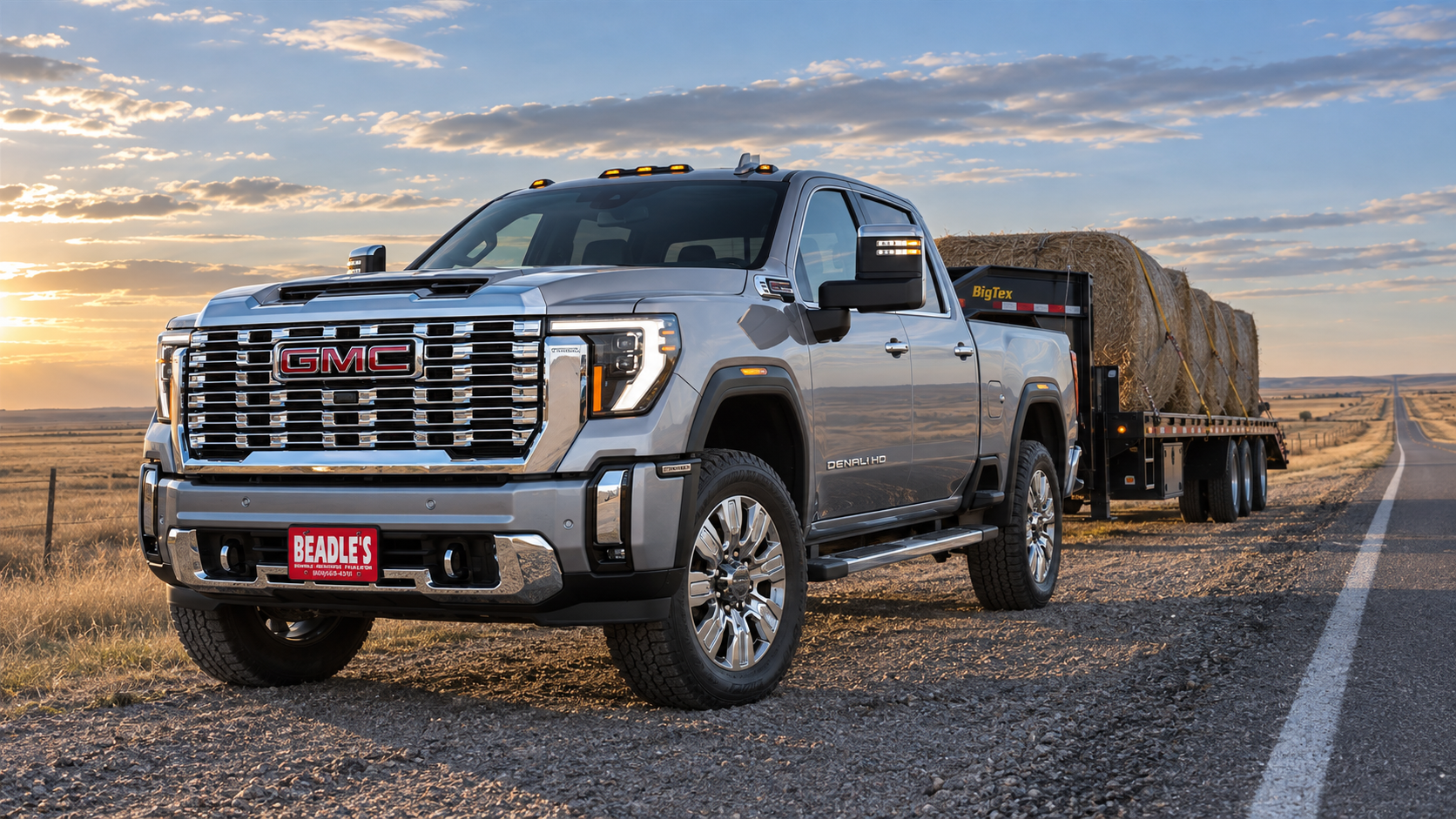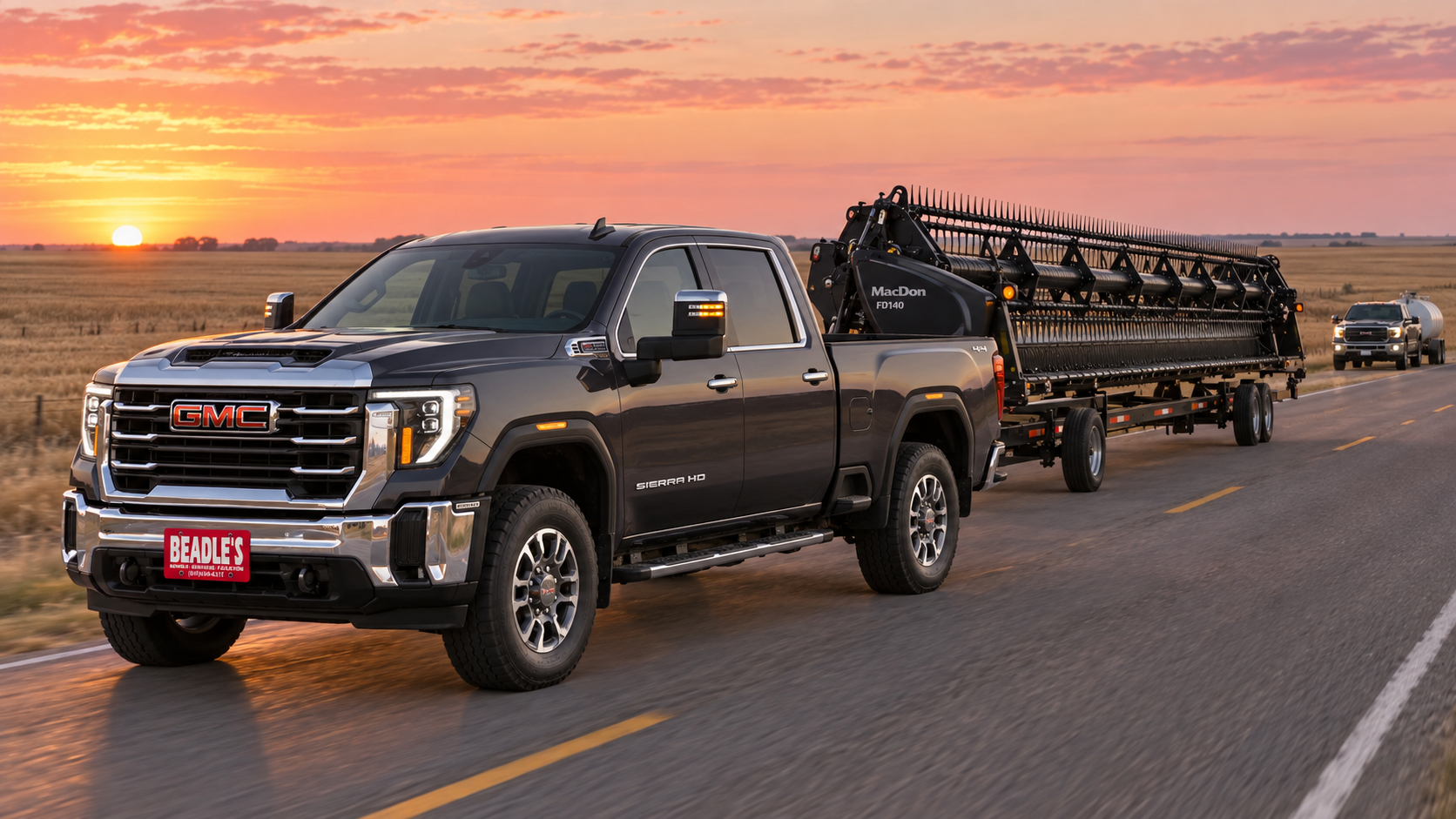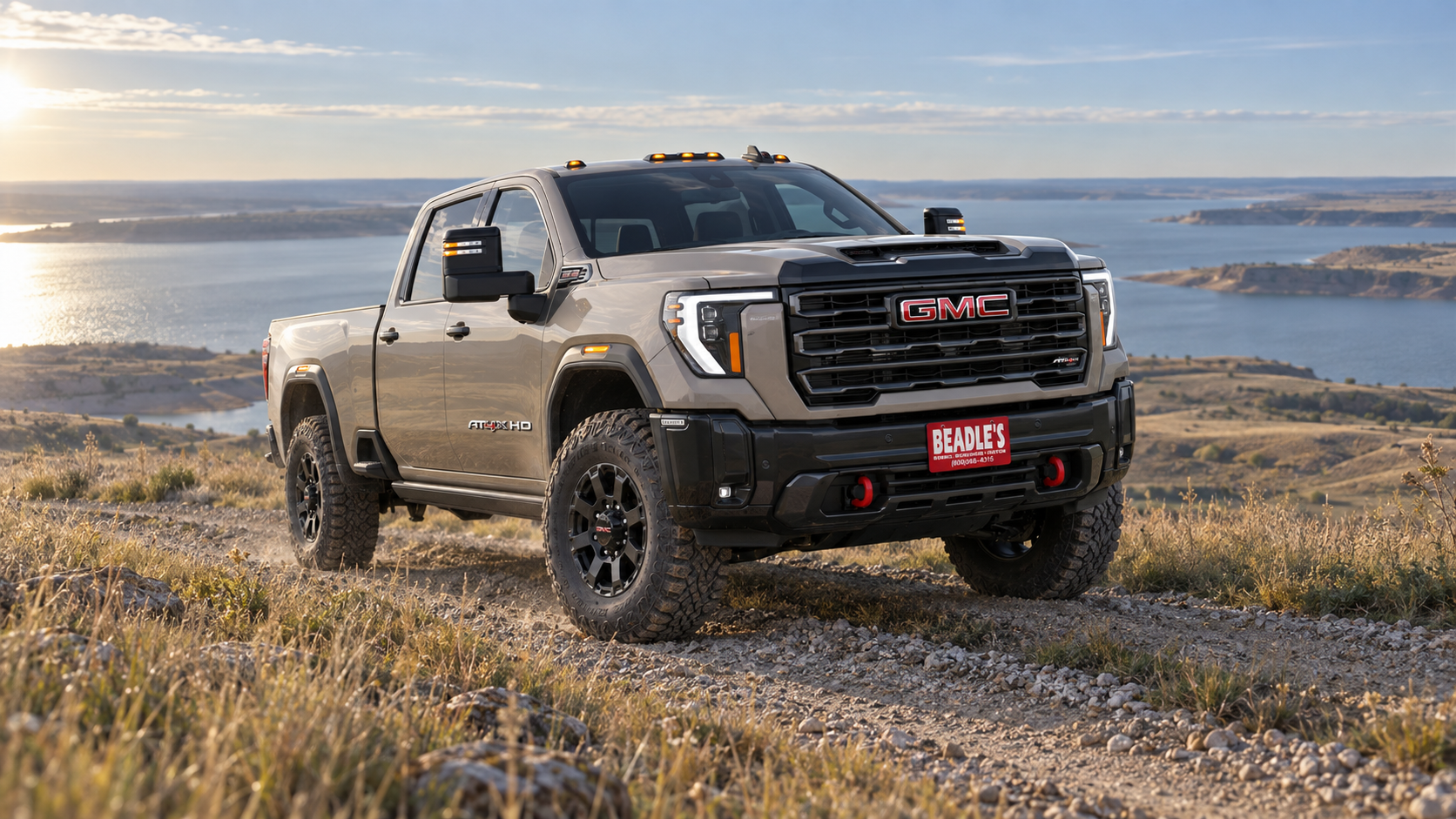





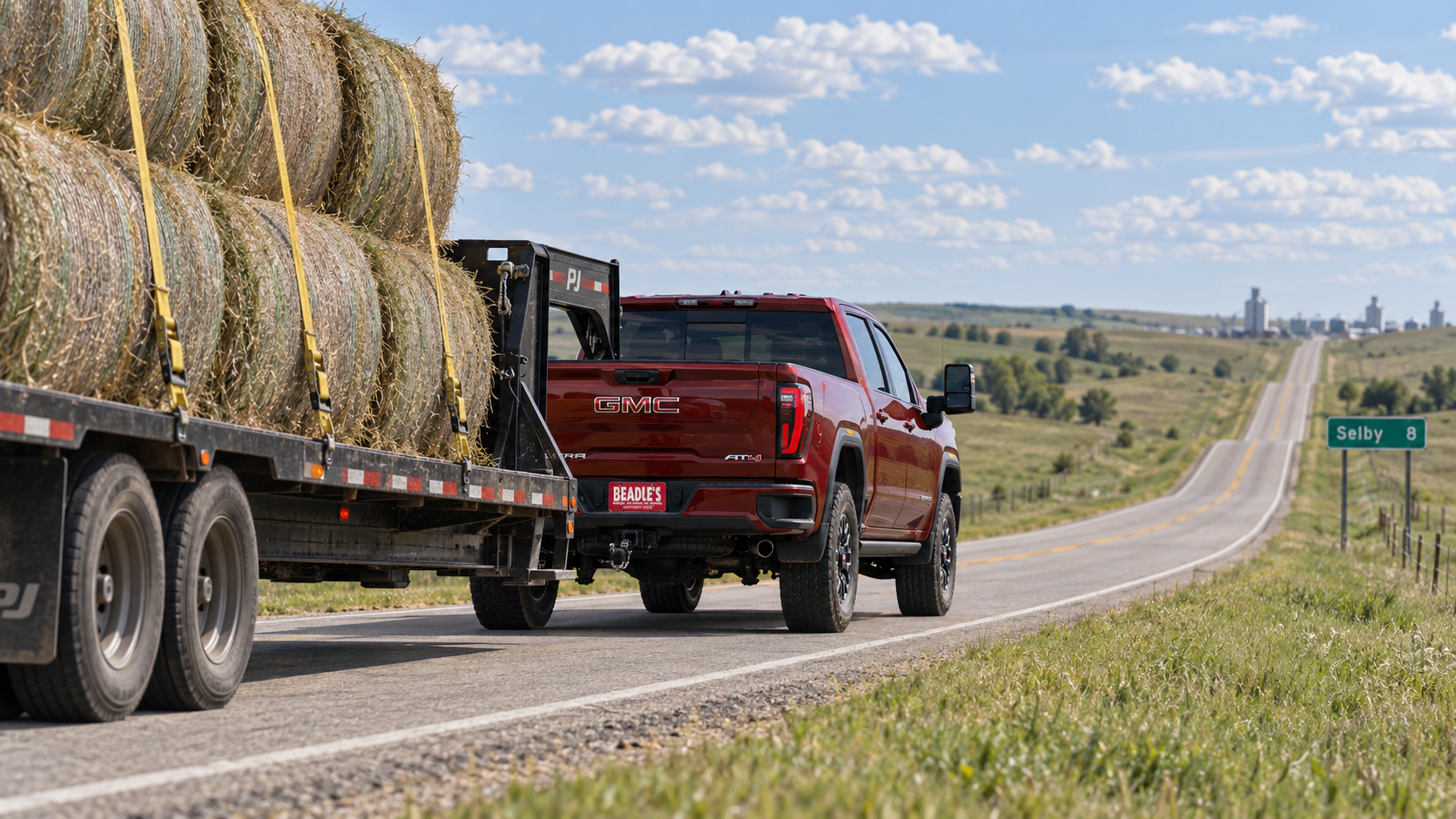
The engine question comes up on every Sierra 2500 HD we sell, usually the same way: somebody has driven a Duramax at a neighbor's place, liked it, and wants to know if it is worth it for an outfit that pulls a stock trailer a few times a month and runs the rest of the miles empty on gravel. The 2026 GMC Sierra 2500 HD gives you two 6.6L V8s, and neither one is the wrong answer. They are the right answer for different weeks.
Short answer: if the truck tows heavy on the highway most weeks, runs long routes, or you want the Max Trailering Package, order the Duramax. If the truck lives within 40 miles of the yard, tows a lighter trailer now and then, and carries more than it pulls, the 6.6L gas V8 is a better truck for the money and it carries more payload. The rest of this post lays out the numbers behind that and a short checklist for deciding with your own miles.
On This Page
What Are the Two 6.6L V8s, by the Numbers?
The standard engine on every trim from Pro through Denali is the 6.6L gas V8, rated 401 horsepower at 5,200 rpm and 464 lb-ft of torque at 4,000 rpm. The optional engine on those same trims, and the only engine on the Denali Ultimate, is the 6.6L Duramax turbo-diesel V8, rated 470 horsepower at 2,800 rpm and 975 lb-ft of torque at 1,600 rpm. Both run through a 10-speed automatic. The horsepower gap is modest. The torque gap is not.
| 2026 Sierra 2500 HD | 6.6L gas V8 | 6.6L Duramax turbo-diesel V8 |
|---|---|---|
| Horsepower | 401 hp at 5,200 rpm | 470 hp at 2,800 rpm |
| Torque | 464 lb-ft at 4,000 rpm | 975 lb-ft at 1,600 rpm |
| Transmission | 10-speed automatic | 10-speed automatic (PTO version on Pro and SLE 4WD) |
| Rear axle ratio | 3.73 | 3.42 |
| Alternator | 170-amp | 220-amp, dual batteries |
| Availability | Standard, Pro through Denali | Available Pro through Denali; standard on Denali Ultimate |
Read the rpm column, not just the totals. The gas engine makes its best torque at 4,000 rpm, so the transmission has to drop two or three gears to get a loaded trailer moving up a hill. The Duramax makes 975 lb-ft at 1,600 rpm, barely above idle, and pulls the same hill in a taller gear at a lower engine speed. That difference is what you feel in the seat.
Neither engine has a published fuel economy rating; trucks in this weight class are not tested for one, so any number you see online is a guess. What we hear from customers is that heavy highway towing favors the diesel on a tank, and empty local miles do not show much difference. The engine section of our 2026 Sierra 2500 HD buyers guide has the full detail on both.
What Does the 3.73 vs 3.42 Axle Ratio Mean on the Highway 12 Grades?
The axle ratio is fixed to the engine on this truck: the gas V8 comes with a 3.73 rear axle and the Duramax comes with a 3.42. You do not pick it, and you do not need to. Each ratio is matched to where its engine makes torque, which is why the gas truck gets the numerically higher, shorter gear and the diesel gets the taller one.
A 3.73 turns the driveshaft more times for every turn of the wheels. It gives the gas engine more leverage off the line and keeps it up in the rpm range where its torque lives, which is what a 464 lb-ft engine needs pulling a loaded trailer out of the sale barn lot. The trade is a faster-spinning engine at highway speed. A 3.42 does the opposite: fewer engine revolutions per mile, which suits a diesel that has made all of its torque by 1,600 rpm.
On the ground: coming up out of the river bottom on Highway 12 east of the bridge, or on the long pulls along 1806 toward the North Dakota line, a loaded gas truck will downshift and hold a higher rpm than the diesel on the same grade. It gets there fine; it just works harder and louder. Empty on a gravel section line at 45 mph, you will not notice the axle ratio at all.
How Much More Does the Duramax Tow, and Why Does Only It Get Max Trailering?
On a Crew Cab, any bed, the conventional tow rating is 16,000 pounds with the gas V8 and 18,500 pounds with the Duramax, properly equipped. Add the Max Trailering Package and the Duramax is rated 20,000 pounds. The gas truck cannot take that package, so 16,000 pounds is its ceiling on a bumper pull. Gooseneck, the gap is narrower without the package: a Crew Cab long bed 4WD is rated 18,280 pounds gas and 19,000 pounds Duramax, then 21,500 pounds with the Duramax and Max Trailering.
| Crew Cab long bed 4WD, properly equipped | 6.6L gas | Duramax | Duramax + Max Trailering |
|---|---|---|---|
| Conventional towing | 16,000 lb | 18,500 lb | 20,000 lb |
| Gooseneck / fifth-wheel | 18,280 lb | 19,000 lb | 21,500 lb |
| Max payload | 3,812 lb | 3,566 lb | see the door label |
| GCWR | 24,500 or 26,000 lb (wheel-dependent) | 27,500 lb (18-inch or larger wheels) | 30,000 lb |
The payload row is the one gas buyers should circle. The gas V8 is the lighter engine, so the same Crew Cab long bed 4WD carries 3,812 pounds with gas against 3,566 with the Duramax. That 246 pounds is a passenger or a mineral tub and a toolbox, and it matters most on a gooseneck, where the pin weight comes out of the same number. The gooseneck towing post works that math for a loaded stock trailer.
Max Trailering requires the Duramax because the package is built around the 30,000-pound GCWR, and only the diesel driveline is rated to move that much combined weight. It also needs 18-inch or larger wheels and is not offered on the AT4X or a Double Cab. If your plans include that package, the engine decision is already made. Whatever the brochure says, the rating that counts is on the trailering information label in the driver door jamb of the truck you take home.
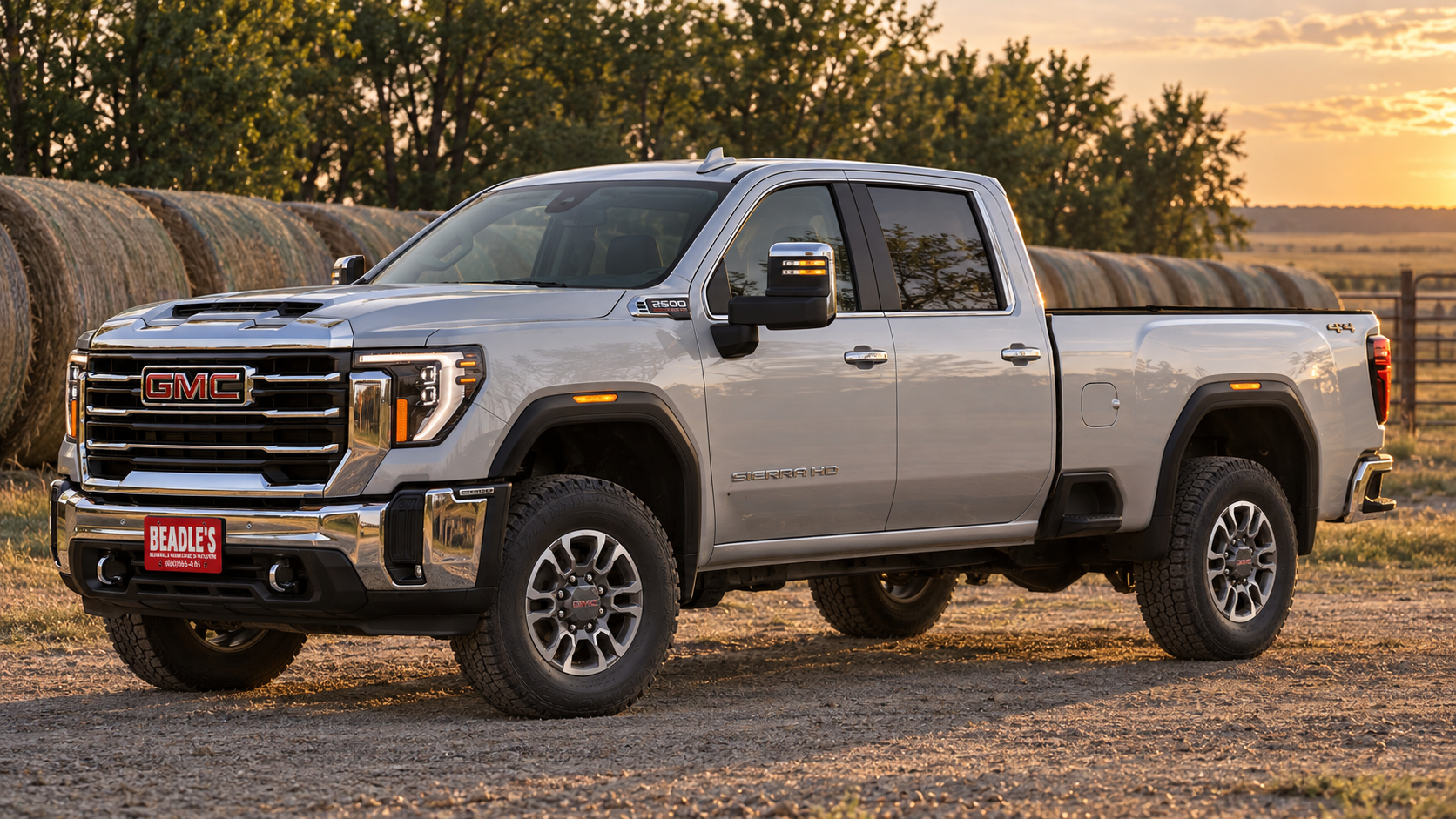
A Crew Cab long bed SLT, the configuration most ranch buyers around Mobridge order with either engine. The badge on the fender is the only outside clue to which one is under the hood.
What Comes With the Duramax, and How Do DEF and Regen Behave in a South Dakota Winter?
Ordering the Duramax brings more than the engine. Every 2026 Sierra 2500 HD diesel includes an engine block heater, an exhaust brake, a 220-amp alternator, and dual batteries, and it is B20 biodiesel capable. That hardware is why the diesel is the default for ranchers who calve in February: the block heater gets it started at 20 below, the alternator and second battery keep up with a radio and a DEF heater, and the exhaust brake saves the service brakes on every long downgrade with a trailer behind.
The exhaust brake deserves a longer look than it usually gets. Coming down the hill into Mobridge from the east with 18,000 pounds of cattle pushing, a gas truck relies on the transmission's grade braking and your right foot. The Duramax adds engine braking through the exhaust, which holds the rig at speed without heating the brakes. Anyone who has smelled hot pads at the bottom of a river grade knows what that is worth.
Now the part nobody likes to talk about. Yes, the Duramax uses diesel exhaust fluid, and yes, its particulate filter cleans itself with a regeneration cycle. Neither is a problem if the truck gets the miles it was built for. DEF freezes when it gets cold enough, and the truck is built to thaw it as it warms up, so a plugged-in truck that runs its normal route is fine. Regen needs a hot exhaust, which means sustained driving; a diesel that only idles at the calving barn and runs a mile to the mailbox will start asking for a highway trip. That is the honest reason we steer some low-mile buyers to the gas engine, and it has nothing to do with reliability. The winter post goes deeper on cold starts and the snow plow prep package.
What we will not print
You will not find a DEF tank size, a fuel economy number, or a cold-start procedure in this post, because none of those are in the factory specifications we work from. The block heater and exhaust brake are confirmed on every 2026 Duramax. For the cold-start steps and DEF details on your truck, the owner's manual is the source, and we will walk through it with you at delivery.
Is the Duramax Worth It If You Only Tow a Few Times a Month?
Often, no. The Duramax costs more up front, and a truck that tows a 12,000-pound stock trailer to the sale barn twice a month and runs the rest of its miles empty does not get enough out of the diesel to earn that back. The 6.6L gas V8 tows that trailer within its rating, carries more payload, and has no DEF and no regen to think about. It is the engine we recommend for most Pro and SLE work trucks and for a lot of ranch trucks that stay close to home.
The gas engine is also the better fit for a truck that spends its life loaded rather than towing. A welder, a fuel transfer tank, or a bale bed eats payload, and the gas truck starts with more of it. The Pro vs SLE work truck post is built around that buyer. The one exception is a truck that needs the PTO transmission for a hydraulic body; that is a Duramax-only option on Pro and SLE 4WD trucks.
Where the gas engine falls short is sustained heavy towing. Sixteen thousand pounds conventional is a real limit, and a loaded 28-foot gooseneck stock trailer sits closer to it than most people think. If you pull that trailer to Aberdeen or Pierre every week, or run hay 90 miles in July, the gas engine will do it, but it will spend the trip in the lower gears and you will feel it at the pump and in your patience. That is the truck that pays for the Duramax.
Two more things push the decision. Resale on a Duramax around here is strong, because the next buyer usually tows more than you did, and that offsets part of the upfront difference at trade time. And if the operation might grow into a bigger trailer while you own this truck, the Duramax is the engine that grows with it, since it is the only one that can take Max Trailering. We do not print prices in these posts; ask us for current pricing on both engines in the trim you want and we will show you the window sticker for each.
How to Decide Between the Duramax and the Gas V8 With Your Own Miles
Five steps, most of them done at the kitchen table before you ever come to the lot.
- Count the towing weeks: tally how many weeks last year the truck pulled more than about 12,000 pounds. Fewer than one a month points to gas; most weeks points to the Duramax.
- Weigh the heaviest trailer: run the loaded stock trailer or hay flatbed across the elevator scale. Over 16,000 pounds on a bumper pull, or a gooseneck that needs Max Trailering, means the Duramax is the only engine rated for it.
- Add up what rides in the bed: a permanent load like a fuel tank, a bale bed, or a welder favors the gas engine's extra payload unless the towing says otherwise.
- Map the route: long highway pulls, river grades, and 300-plus miles a week reward the diesel's torque and exhaust brake. Short gravel loops and idle time at the calving barn reward gas.
- Read both labels: when you narrow it to two trucks on the lot, open the driver door on each and compare the trailering information label and the payload figure before you decide.
Which Engine Belongs in Your Sierra 2500 HD?
| The Duramax is worth it if | Skip it (order the gas V8) if |
|---|---|
| You tow heavy most weeks, or your loaded trailer is over 16,000 pounds You want the Max Trailering Package or a 30,000-pound GCWR You run long highway routes with grades and want the exhaust brake You calve in February and want the block heater and dual batteries You need the PTO transmission on a Pro or SLE |
You tow a few times a month and the trailer is inside 16,000 pounds The truck carries a permanent load and payload matters more than towing Most miles are short gravel loops and idle time, where regen becomes a chore You want the lower purchase price and simpler upkeep You are buying a Pro or SLE as a local work truck |
Key Takeaways
- The 6.6L gas V8 makes 401 hp and 464 lb-ft at 4,000 rpm; the Duramax makes 470 hp and 975 lb-ft at 1,600 rpm. The torque and where it arrives is the whole difference.
- A Crew Cab tows 16,000 pounds conventional with gas, 18,500 with the Duramax, and 20,000 with the Duramax and Max Trailering, properly equipped. Only the Duramax can take the package.
- The gas truck carries more payload: 3,812 pounds against 3,566 on a Crew Cab long bed 4WD.
- Axle ratios are fixed to the engine, 3.73 gas and 3.42 Duramax, and each is matched to where its engine makes torque.
- Every Duramax includes a block heater, exhaust brake, 220-amp alternator, and dual batteries; DEF and regen are fine on a truck that gets highway miles.
Frequently Asked Questions
Does the 2026 Duramax use DEF, and does it handle a South Dakota winter?
Yes, it uses diesel exhaust fluid like every current emissions diesel. Every 2026 Duramax includes an engine block heater, a 220-amp alternator, and dual batteries, the cold-weather hardware that matters. Plug in below zero, run winter-blend fuel, and give the truck regular highway miles so the exhaust system can complete its cleaning cycles. The owner's manual has the cold-start steps and DEF specifics for your truck.
What is the difference between the 3.42 and 3.73 rear axle on the Sierra 2500 HD?
The 3.73 comes with the gas V8 and the 3.42 comes with the Duramax; they are fixed to the engine and not a separate option. The shorter 3.73 gives the gas engine more leverage and keeps it up in the rpm range where its torque lives. The taller 3.42 lets the diesel, which makes its torque at 1,600 rpm, turn fewer revolutions per mile on the highway. Each is the right gear for its engine.
Can I get the Max Trailering Package with the gas engine?
No. The Max Trailering Package requires the Duramax, 18-inch or larger wheels, and no bed delete, and it is not offered on the AT4X or any Double Cab. With the gas V8, a Crew Cab tops out at 16,000 pounds conventional and 18,280 pounds gooseneck on a long bed 4WD, properly equipped. With the Duramax and the package, the same truck is rated 20,000 pounds conventional and 21,500 pounds gooseneck.
Which engine carries more payload in the Sierra 2500 HD?
The gas V8, on every configuration, because it is the lighter engine. A Crew Cab long bed 4WD carries 3,812 pounds with gas and 3,566 pounds with the Duramax; a Regular Cab long bed is 4,049 pounds gas and 3,811 pounds Duramax. For a truck that carries a permanent load and tows only occasionally, that is a real advantage.
My Take on Duramax vs Gas in the Sierra 2500 HD
I sell more Duramax trucks than gas ones, and I think most of those buyers are right. A ranch that hauls to the sale barn, moves hay in the spring, and calves in the cold is the operation this diesel was built for, and the block heater, exhaust brake, and second battery come in the box. If there is a gooseneck in your future that needs the Max Trailering Package, there is no decision to make.
But I have also talked people out of the diesel, and I would do it again. A truck that runs short loops, idles at the barn, and tows a light trailer a few times a month is happier with the gas V8, and so is the checkbook. Count your towing weeks honestly, weigh your heaviest trailer, and the engine picks itself.
Both engines, every trim, and the full towing and payload tables are in the 2026 GMC Sierra 2500 HD buyers guide. Or bring your mileage and your trailer weights to Beadle Chevrolet GMC at 2200 US Hwy 12 in Mobridge, or call or text 605-845-7277, and we will put you in both trucks on the same afternoon.
About the Author
Lexy Tabbert — Beadle Chevrolet, Mobridge, SD
Lexy Tabbert is the Director of Sales and Marketing at Beadle Chevrolet in Mobridge, South Dakota. She covers Chevrolet and GMC vehicles, trim comparisons, and buyer guidance — helping families, ranchers, and ag operators across the region find the right truck and configuration for their needs. Learn more about Lexy.