




Every fall somebody stands in our showroom with a sale-barn ticket in one hand and asks the same question: will a three-quarter-ton pull my stock trailer loaded, or do I need to step up to a one-ton? The brochure answer for the 2026 GMC Sierra 2500 HD is 22,390 pounds, and it is a true number. It is also not the number for the truck you are going to buy, and if you plan a trailer around it you will find out the hard way at the scale.
Short answer: a Crew Cab long bed 4WD Sierra 2500 HD with the Duramax, the truck most ranchers around Mobridge actually order, is rated to tow 19,000 pounds on a gooseneck, and 21,500 pounds with the Max Trailering Package, properly equipped. That handles a 28-foot aluminum stock trailer with a normal load of pairs, and a spring hay flatbed, with one catch that this post spends most of its time on: the pin weight eats your payload long before the trailer reaches the tow rating.
On This Page
Conventional, Gooseneck, Fifth-Wheel: Why Are There Three Different Numbers?
A Sierra 2500 HD carries two tow ratings on its trailering label, not one. The conventional rating is for a bumper-pull trailer hooked to the receiver hitch and tops out at 20,000 pounds with the Duramax and the Max Trailering Package. The gooseneck and fifth-wheel rating is for a trailer that couples in the bed, over the rear axle, and it runs higher because the truck carries the hitch weight where it was built to carry it.
Gooseneck and fifth-wheel share the same rating on this truck. The difference is the hitch: a gooseneck uses a ball in the bed floor, which is what every stock trailer and hay flatbed in Walworth County rides on, and a fifth-wheel uses a kingpin and plate, which is what the camper at Indian Creek rides on. The truck does not care which one you bolt in; it cares about the weight and where it sits.
Both ratings change with cab, bed, drive, engine, and whether the Max Trailering Package is on the truck. That is why the honest way to shop is by configuration, not by the biggest number on the website. Our 2026 Sierra 2500 HD buyers guide lays out both full tables; the rest of this post works through the ones that matter to a cow-calf outfit.
What Is the Rancher Configuration Actually Rated For?
The truck most of our ranch buyers order is a Crew Cab long bed 4WD with the Duramax, usually an SLE or SLT. With the standard gooseneck prep it is rated for 19,000 pounds gooseneck; add the Max Trailering Package and it is rated for 21,500 pounds. Conventional, the same truck is rated 18,500 pounds, or 20,000 pounds with the package. Properly equipped, in every case.
| 2026 Sierra 2500 HD configuration | Gooseneck, Duramax | Gooseneck, Duramax + Max Trailering | Max payload, Duramax |
|---|---|---|---|
| Crew Cab long bed 4WD | 19,000 lb | 21,500 lb | 3,566 lb |
| Crew Cab standard bed 4WD | 19,100 lb | 21,600 lb | 3,463 lb |
| AT4 Crew Cab long bed | 18,000 lb | 21,190 lb | ask us for the label |
| Denali Crew Cab long bed | 18,400 lb | 19,820 lb | ask us for the label |
| Crew Cab long bed 4WD, 6.6L gas | 18,280 lb | not available | 3,812 lb |
Two things jump out of that table. First, the gas V8 is not far behind on the gooseneck rating without the package, and it carries more payload because the engine is lighter. Second, the Max Trailering Package is only offered with the Duramax, so if you want the 21,500-pound number the engine decision is made for you. The Duramax-versus-gas post goes through the rest of that trade.
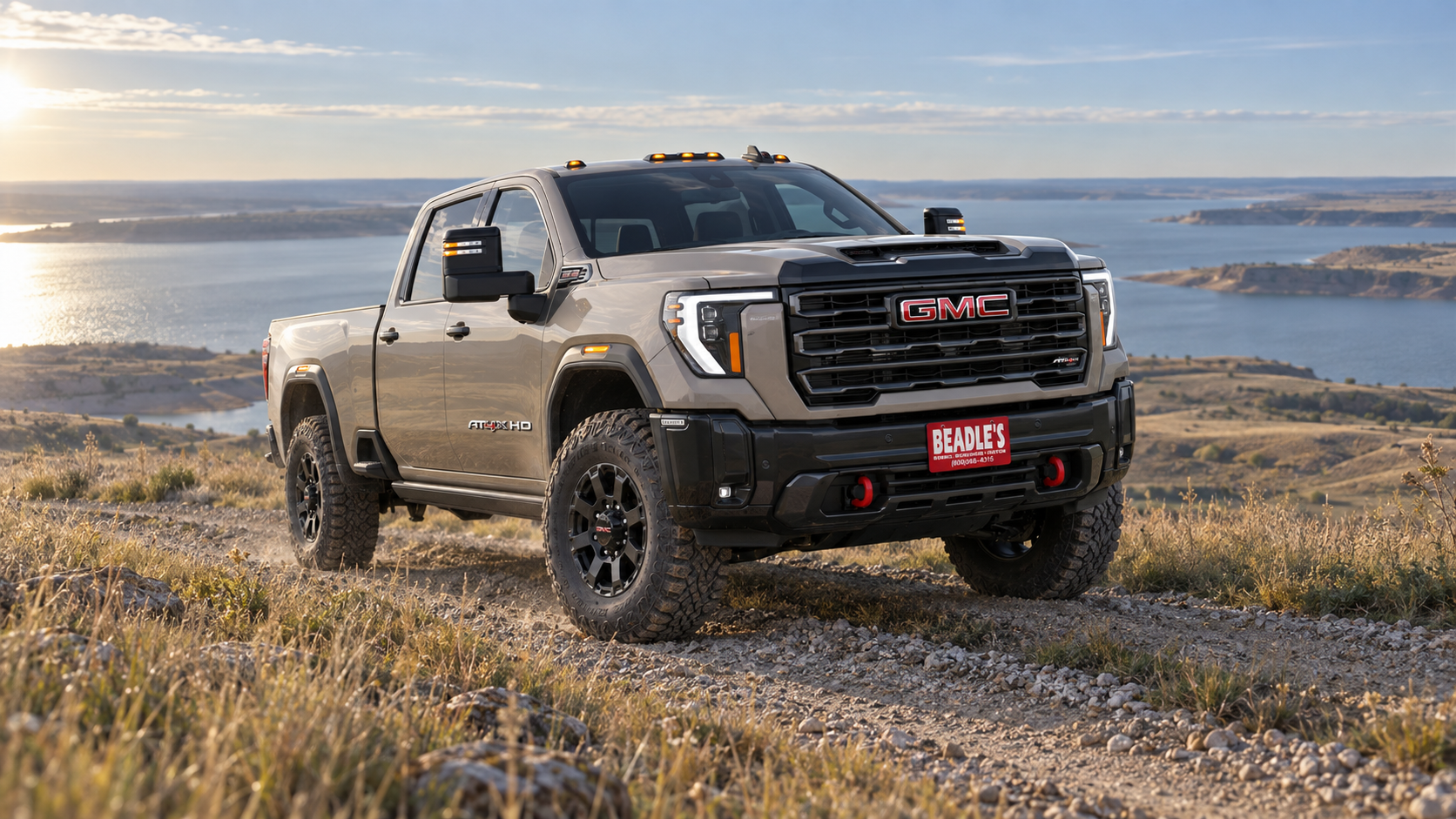
The AT4 and the Denali give up a little because of their wheels and equipment. The AT4X cannot be ordered with the Max Trailering Package at all, which makes it the wrong Sierra for a gooseneck outfit, however good it is on a pasture two-track.
Where Does the 22,390-Pound Number Come From?
The 22,390-pound maximum belongs to one configuration: a Regular Cab 2WD long bed with the Duramax and the Max Trailering Package. It is the lightest truck in the lineup with the strongest driveline, so it has the most left over for the trailer. The 4WD version of the same truck is rated 22,000 pounds.
Almost nobody in north-central South Dakota orders that truck. A Regular Cab has one row of seats, a 2WD truck is a hard sell in a county with gravel section lines and a January, and the extra 890 pounds of rating over the Crew Cab long bed 4WD does not buy you a bigger trailer once payload enters the picture. It is a real rating and we will order one for a farm that wants it, but it is a spec-sheet champion, not the truck in your yard.
Numbers to ignore
Third-party listing sites regularly print a higher gooseneck figure for the 2500 HD. Those are either rounding errors or Sierra 3500 HD dually numbers pasted into the wrong table. Our figures are GM's ratings for the 2026 truck, and the trailering information label in the driver door jamb of the specific truck is the final word on every one of them.
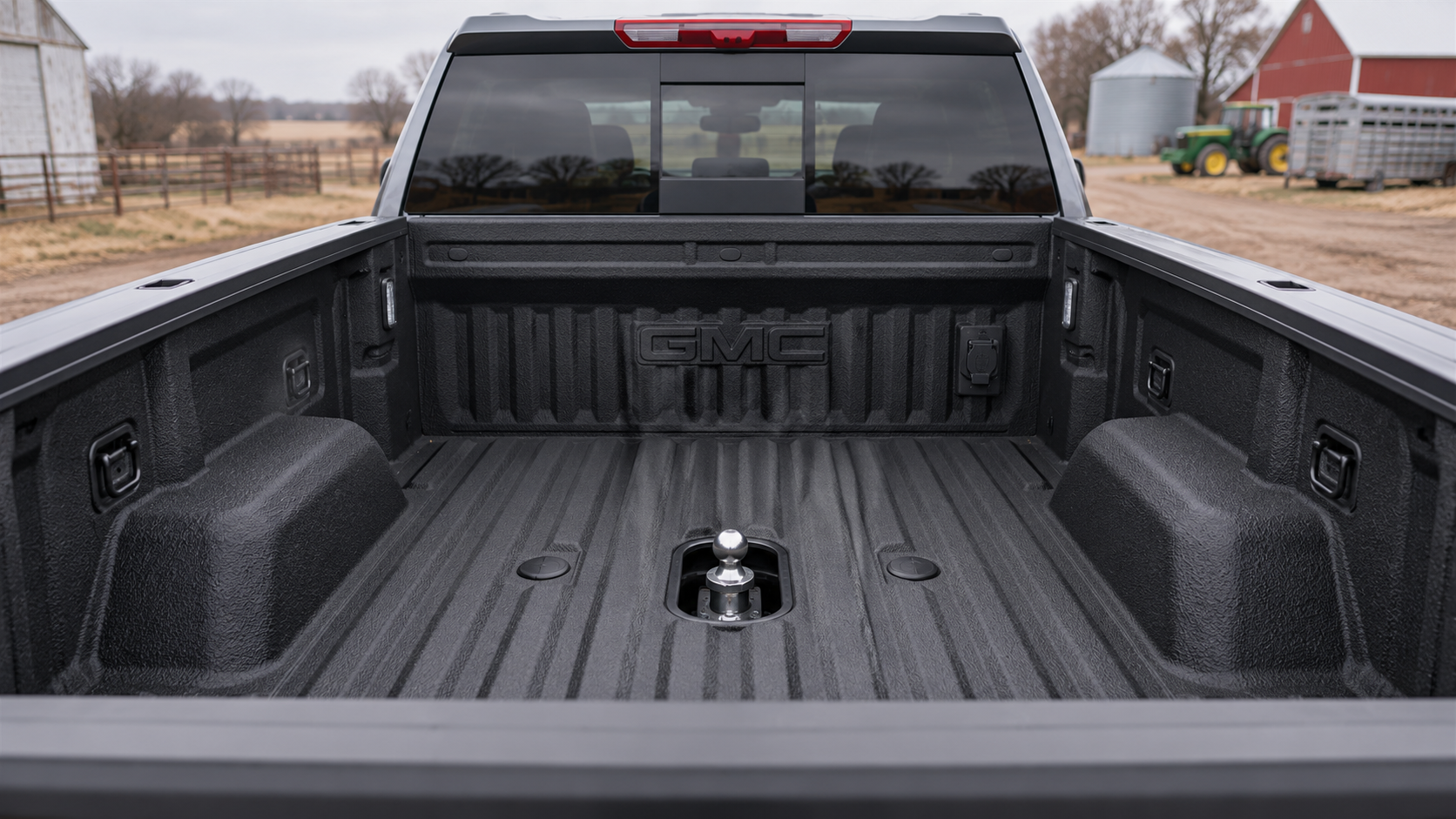
The gooseneck prep that comes with the Max Trailering Package: hitch tray, stamped and capped bed holes, and the 7-pin connector in the bed wall.
Will It Pull a 28-Foot Stock Trailer or a Spring Hay Flatbed?
Yes to both, within the rating, on a Crew Cab long bed 4WD Duramax. The tow rating is rarely the problem. The problem is that a loaded stock trailer puts a quarter of its weight on the truck through the gooseneck ball, and that weight comes out of payload. Here are two examples worked the way we work them at the desk. The trailer and animal weights are illustrations; yours will differ, and a scale ticket beats every estimate.
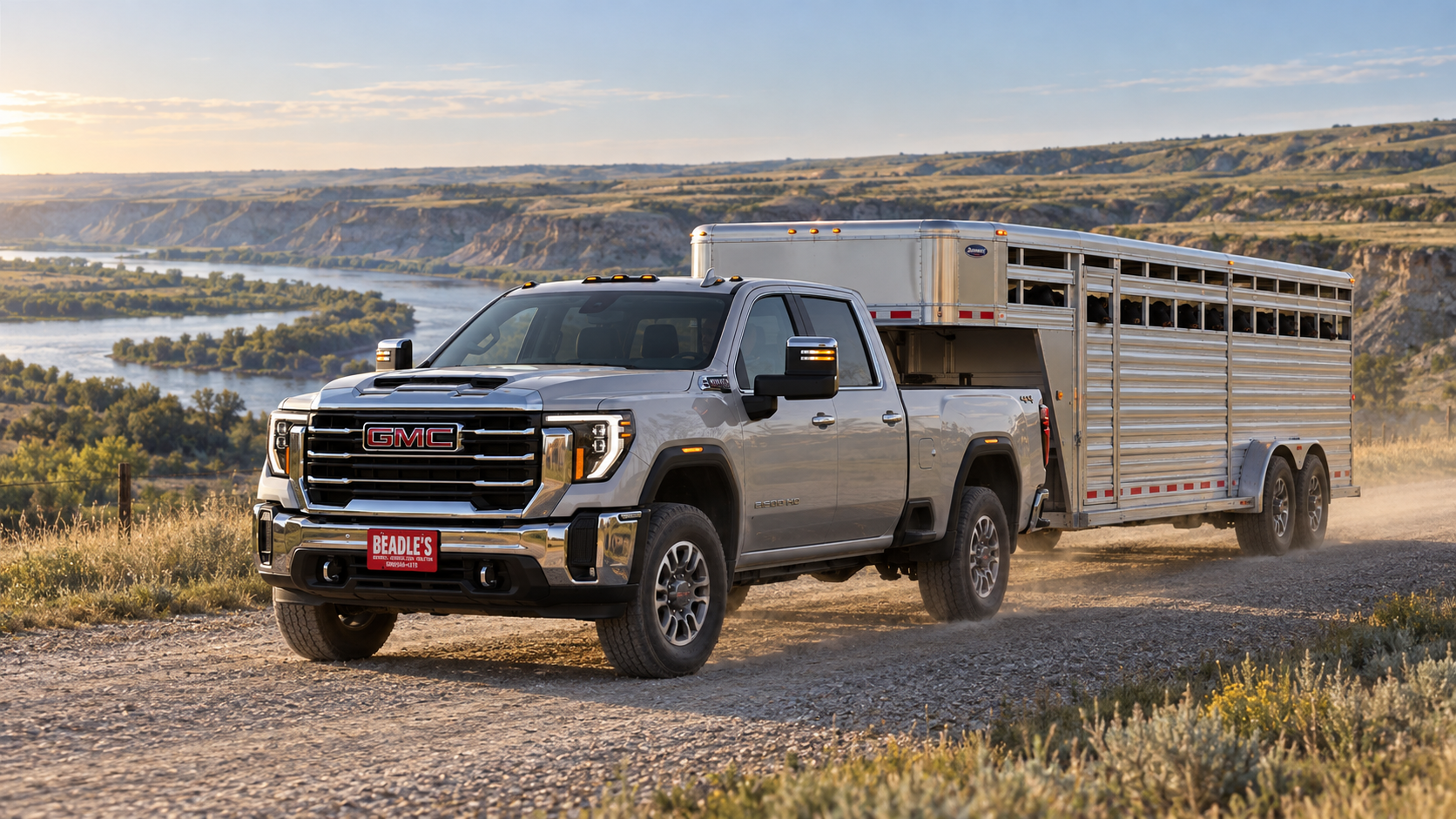
Example one, for illustration: a 28-foot aluminum gooseneck stock trailer. Say the trailer weighs 7,000 pounds empty and you load 10 cows at 1,300 pounds. That is 20,000 pounds behind the truck. Without the Max Trailering Package the 19,000-pound rating is already exceeded; with the package, 21,500 pounds covers it. Now the pin: at 20 percent that load puts 4,000 pounds on the truck, and the Crew Cab long bed 4WD Duramax has 3,566 pounds of payload before you climb in. The truck is over on payload while it is under on towing. Drop to eight cows and the trailer is 17,400 pounds with a 3,480-pound pin, and now the driver alone is enough to push it to the line.
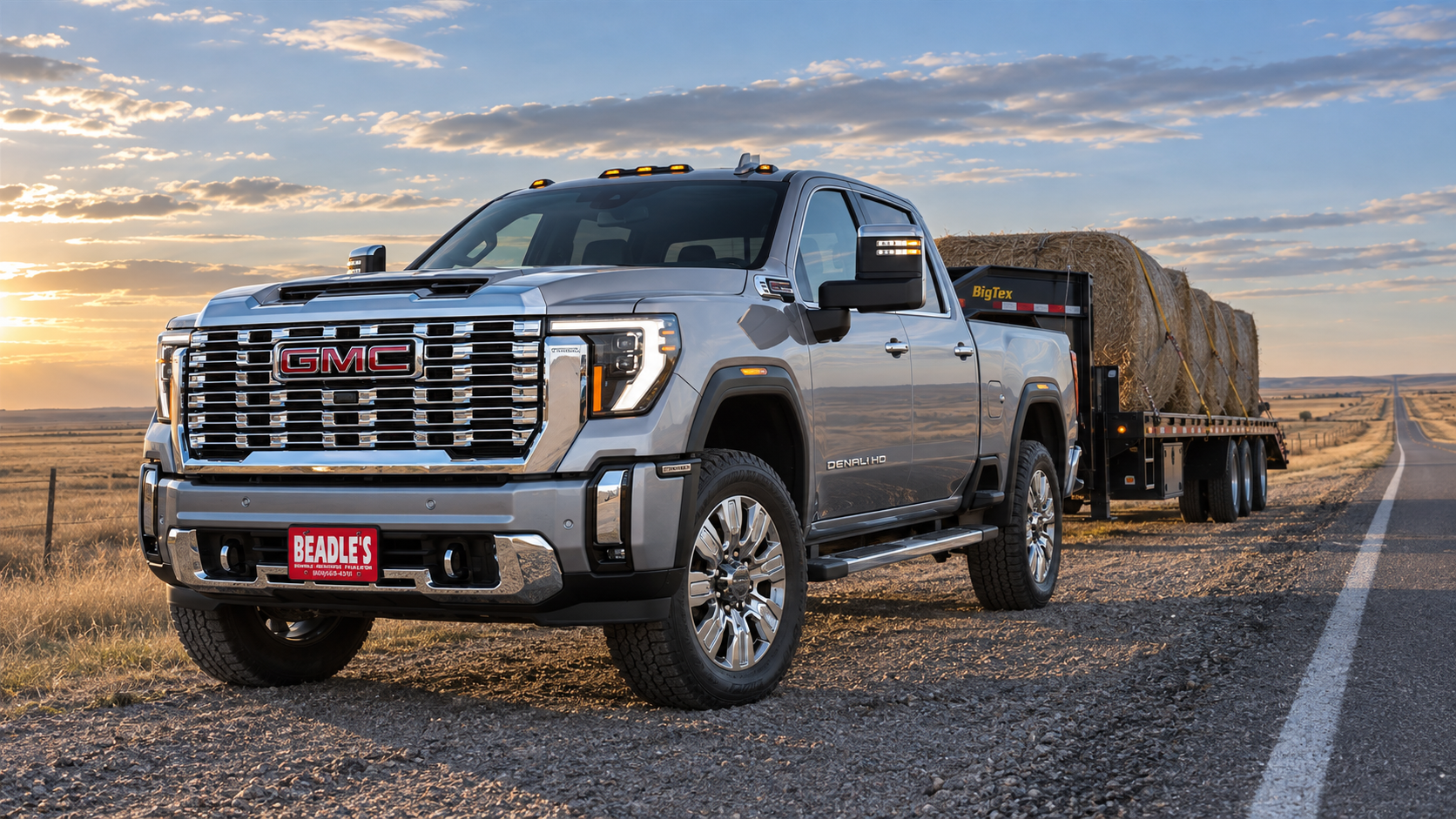
Example two, for illustration: a 32-foot gooseneck hay flatbed. Say the flatbed weighs 6,500 pounds and you stack 10 round bales at 1,200 pounds. That is 18,500 pounds, inside both ratings with the package. A flatbed carries more of its weight on its own axles when it is loaded evenly, so a pin weight closer to 15 percent, about 2,800 pounds, leaves roughly 750 pounds for the driver, a passenger, and a toolbox. It works, but it is not the wide-open margin the 21,500-pound rating implies.
The lesson is not that the 2500 HD is too small. It is that a three-quarter-ton with a gooseneck is a payload truck first and a towing truck second. Most outfits around here run one of these trucks exactly this way for years by hauling a few less head per trip, and the ones who move pairs every week at full load are the ones we walk over to the 3500 HD. The Max Trailering Package post covers what the package actually changes in the truck.
How Much Payload Is Left After the Pin Weight?
Payload is the truck's own carrying limit: everything in the cab and the bed, plus the weight the trailer puts on the hitch. On a Crew Cab long bed 4WD, it is 3,566 pounds with the Duramax and 3,812 pounds with the gas V8. Subtract the pin weight, then subtract the people, the dog, the fuel tank, the mineral tubs, and whatever else rides along, and what is left is your margin.
This is why the same truck can be under its tow rating and over its payload at the same moment, and why the label in the door jamb lists both. Gooseneck stock trailers tend to run 20 to 25 percent of their loaded weight on the pin. Flatbeds loaded evenly run lower. Tandem-dual livestock trailers with the load pushed forward run higher. If you do not know your number, the elevator scale will tell you in five minutes: weigh the truck alone, then weigh it hitched with the trailer loaded but the trailer axles off the scale, and the difference is your pin weight.
Two more numbers matter on a long haul. GVWR is the truck's own maximum loaded weight, up to 11,900 pounds on a Crew Cab Duramax with the Max Trailering Package. GCWR is the truck and trailer together, and it is 30,000 pounds with the package, 27,500 pounds on a Crew Cab Duramax with 18-inch or larger wheels without it. For a 20,000-pound trailer behind an 8,000-pound truck you are at 28,000 pounds combined, which is why the package matters for a stock trailer even before you look at the tow rating.
The truck helps you here. Every Sierra 2500 HD has an integrated trailer brake controller, trailer sway control, and Hitch Guidance on the rear camera; SLT and up add Hitch View and the In-Vehicle Trailering App, which runs a light check and tracks your trailers. In a Mobridge winter the Duramax's block heater and the Autotrac transfer case on SLT and up matter as much as any rating, and the winter post covers that side of it.
How to Check a Gooseneck Load Against Your Sierra 2500 HD
Five steps, once, and you will know your real margin for as long as you own the trailer.
- Read the label: open the driver door and find the trailering information label. Write down the gooseneck rating, the payload, and the GCWR for that truck, not the brochure.
- Weigh the loaded trailer: run the whole rig across the elevator scale loaded the way you actually haul. That is your trailer weight.
- Weigh the pin: weigh the truck alone, then hitched with only the truck on the scale. The difference is the pin weight.
- Add the cab and bed: pin weight plus driver, passengers, fuel tank, tools, and feed. Compare the total to the payload on the label. If it is over, the truck is over, whatever the tow rating says.
- Check the combination: truck weight plus loaded trailer against the GCWR. Then set the trailer brake gain on the controller with the trailer loaded, on a quiet stretch of gravel, before the first trip down Highway 12.
Is the Sierra 2500 HD Enough Truck for Your Gooseneck?
| Worth it if | Skip it (look at the 3500 HD) if |
|---|---|
| Your loaded stock trailer or flatbed weighs under about 19,000 pounds, or under 21,500 pounds with the Max Trailering Package Your pin weight plus people and gear stays under the payload on the label The truck is also the family truck, the parts runner, and the Sunday truck You haul a few times a month, not every day |
You move full loads of pairs weekly and want margin, not math Your pin weight alone is over 3,500 pounds You run a tandem-dual livestock trailer or a 40-foot flatbed loaded heavy You are within 10 percent of both the tow rating and the payload every trip |
Key Takeaways
- A Crew Cab long bed 4WD Duramax Sierra 2500 HD is rated 19,000 pounds gooseneck, or 21,500 pounds with the Max Trailering Package, properly equipped.
- The 22,390-pound maximum is a Regular Cab 2WD long bed with the Duramax and the package, a truck almost nobody here orders.
- Payload, 3,566 pounds on that Crew Cab Duramax, runs out before the tow rating does once a 20 to 25 percent pin weight is on the truck.
- The Max Trailering Package needs the Duramax; the AT4X cannot take it at all.
- Weigh the loaded trailer and the pin once at the elevator, then compare both to the label in the driver door jamb.
Frequently Asked Questions
Does the Sierra 2500 HD come with a gooseneck hitch?
It comes with the prep, not the ball. The Gooseneck and Fifth-Wheel Prep Package adds the hitch platform with a ball tray, stamped and capped holes in the bed floor, and a 7-pin connector in the bed wall; it is included with the Max Trailering Package and available on any other trim. The gooseneck ball and safety-chain kit is a dealer-installed accessory we can add before delivery.
What is the GCWR of a 2026 Sierra 2500 HD Duramax?
26,000 pounds standard, 27,500 pounds on a Crew Cab with 18-inch or larger wheels, and 30,000 pounds with the Max Trailering Package. The gas V8 is rated 24,500 or 26,000 pounds depending on wheels. GCWR is the loaded truck and loaded trailer together.
Which Sierra 2500 HD has the most payload?
The Regular Cab long bed with the 6.6L gas V8, at 4,049 pounds. Among the Crew Cabs people actually buy, the long bed 4WD is 3,812 pounds with the gas engine and 3,566 pounds with the Duramax. The diesel gives up roughly 250 pounds of payload for its extra towing on the same truck.
Can the gas Sierra 2500 HD pull a gooseneck stock trailer?
Yes. A Crew Cab long bed 4WD with the 401-horsepower gas V8 is rated 18,280 pounds gooseneck, properly equipped, and carries 3,812 pounds of payload, more than the diesel. What it cannot do is take the Max Trailering Package, so 18,280 is its ceiling, and it will work harder on the Highway 12 grades with its 3.73 axle than the Duramax does with 975 lb-ft of torque.
My Take on Gooseneck Towing With the Sierra 2500 HD
I would rather send a rancher home with a truck that is honestly rated for the trailer than sell the biggest number on the page. The Sierra 2500 HD is enough truck for the way most cow-calf operations around Mobridge actually haul: a 28-foot stock trailer with a normal load, a hay flatbed in April, the sale barn a few times a year. Order it as a Crew Cab long bed 4WD Duramax with the Max Trailering Package and you have 21,500 pounds of gooseneck rating and every piece of gooseneck prep already in the bed.
What I ask everyone to do is weigh the loaded trailer and the pin once, then compare both to the label in the door. If the pin weight plus the crew in the cab clears the payload with room to spare, buy the 2500 HD and enjoy the ride when it is empty. If it does not, or you are hauling full loads every week, the 3500 HD is on the same lot and I will walk you over to it without a second thought.
The full towing and payload tables, engines, trims, and packages are in the 2026 GMC Sierra 2500 HD buyers guide. Or bring your scale ticket to Beadle Chevrolet GMC at 2200 US Hwy 12 in Mobridge, or call or text 605-845-7277, and we will match it to a truck.
About the Author
Lexy Tabbert — Beadle Chevrolet, Mobridge, SD
Lexy Tabbert is the Director of Sales and Marketing at Beadle Chevrolet in Mobridge, South Dakota. She covers Chevrolet and GMC vehicles, trim comparisons, and buyer guidance — helping families, ranchers, and ag operators across the region find the right truck and configuration for their needs. Learn more about Lexy.