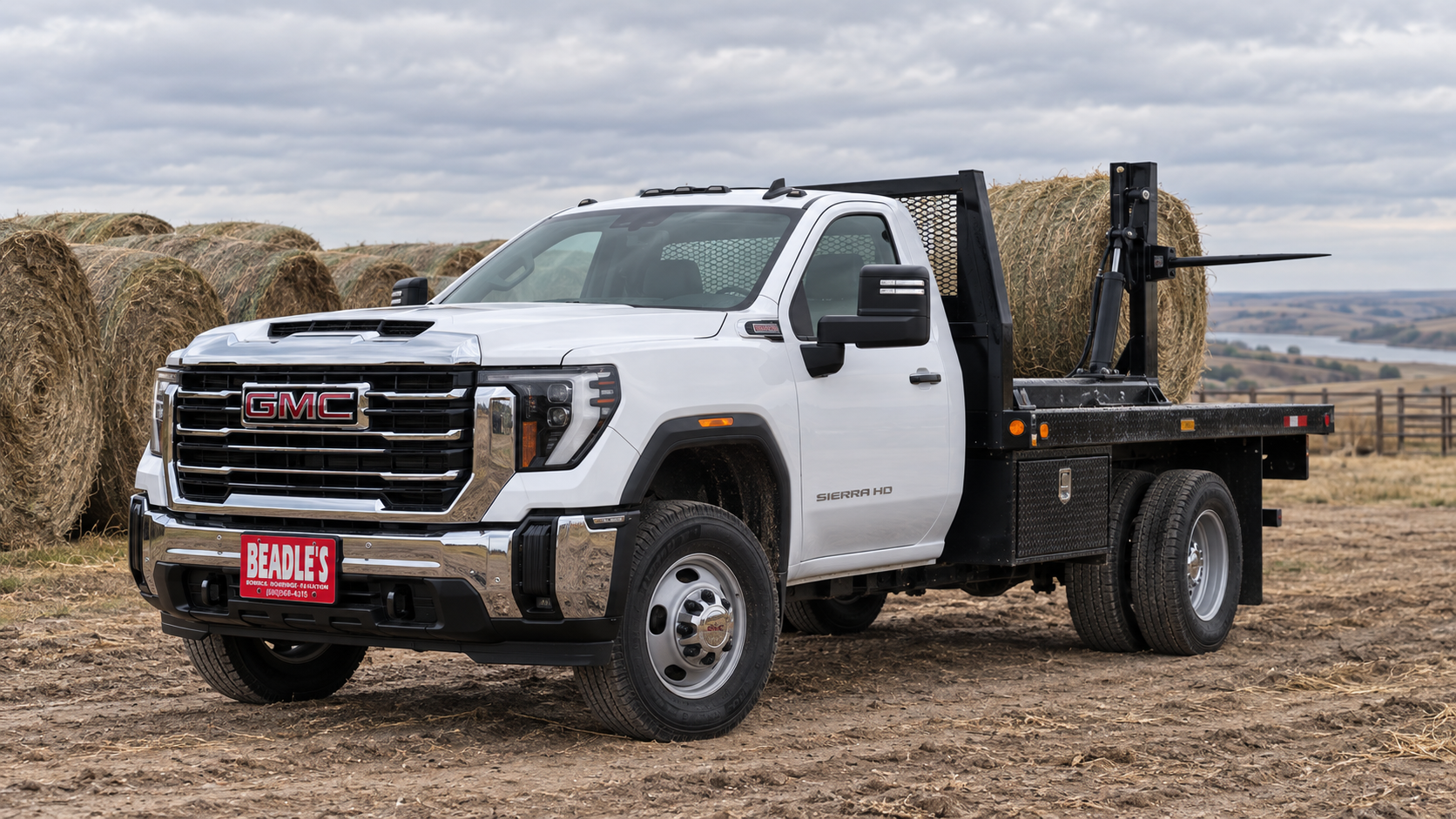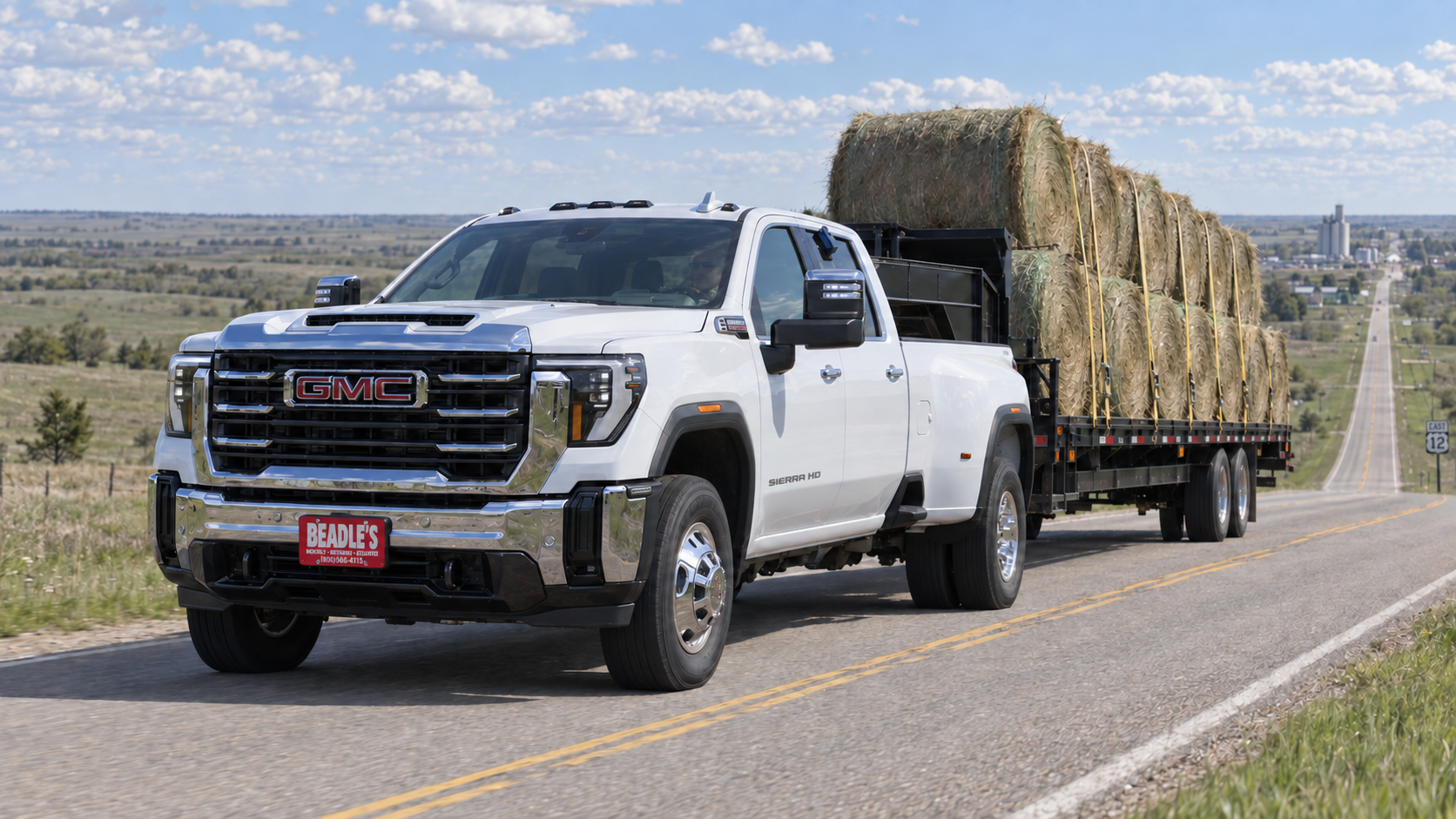





Almost every one-ton conversation at Beadle Chevrolet GMC opens the same way. Somebody walks in with a trailer they already own, or one they are about to sign for, and asks whether they need the dually. That is the right question to ask first, because on a 2026 GMC Sierra 3500 HD the second set of rear wheels is not a styling choice. It changes the gooseneck rating, the payload, the weight the rear axle is allowed to carry, and how wide the truck is when you pull into your own shop.
Short version: on a Crew Cab long bed 4WD with the Duramax, the truck most outfits here order, dual rear wheels take the gooseneck rating from 21,460 pounds to 31,000 pounds and the payload from 4,195 pounds to 5,647 pounds, properly equipped. They also make the truck 14.77 inches wider and firmer riding with an empty bed. Here is what changes, what it costs you the other six days of the week, and the three questions that actually settle it.
What Does the Dually Actually Change on a 2026 Sierra 3500 HD?
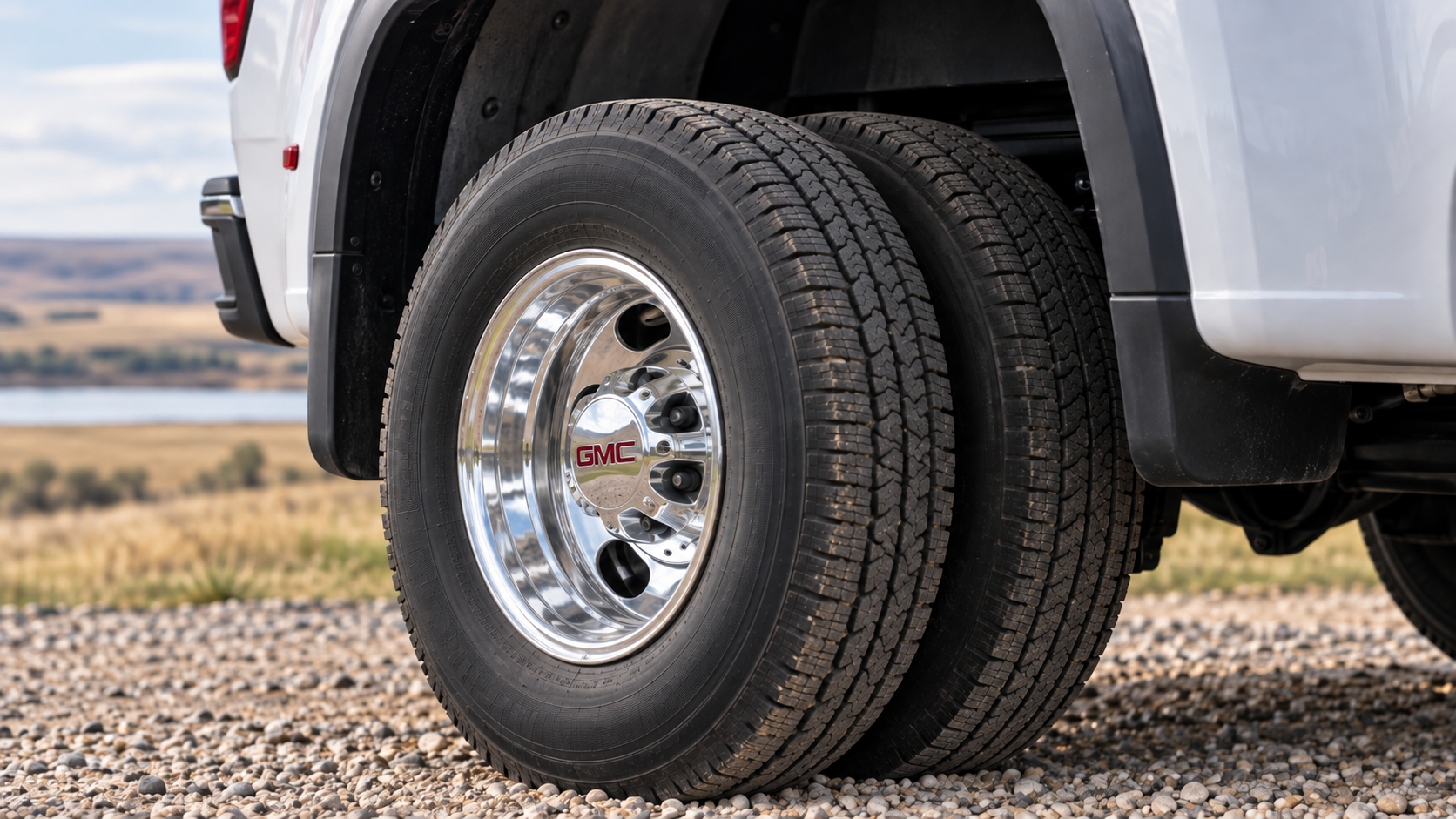
Dual rear wheels put four tires under the back of the truck on a wider axle, and with them comes the 14,000-pound GVWR, the highest gross weight rating in the 2026 Sierra 3500 HD lineup. The rear axle goes from 7,250 pounds to 10,400. That rating is where the extra towing and payload come from, not the tires by themselves.
Two ordering rules come attached. A dually is always a long-bed truck, because GM ties dual rear wheels to the long bed and the 14,000-pound GVWR. So a Crew Cab standard bed is a single-rear-wheel truck by definition: if you want a crew cab dually, you are buying the 8-foot bed and 266.77 inches of truck.
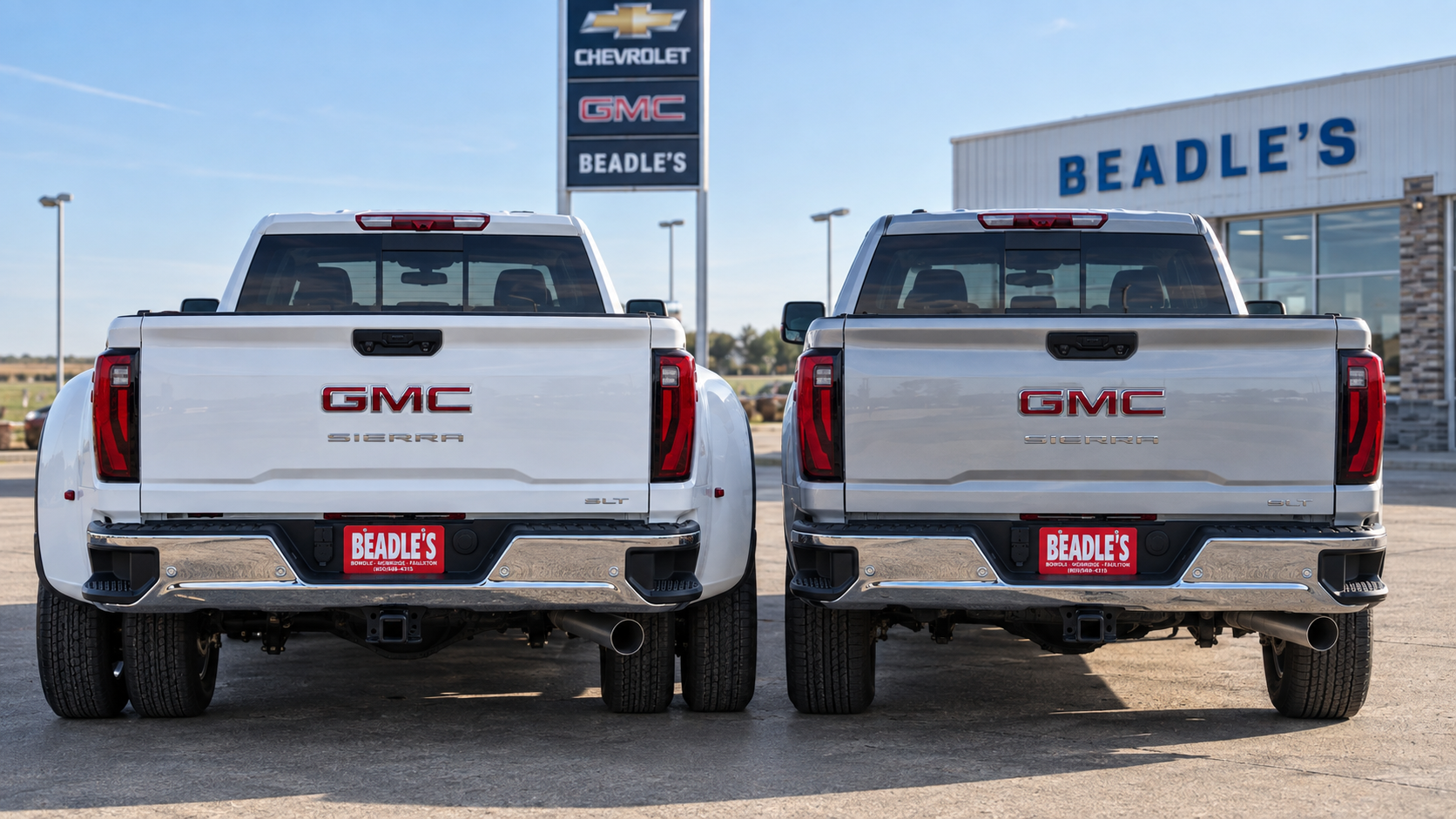
The other big change is width. GM publishes the body width of a single-rear-wheel Sierra 3500 HD at 81.85 inches and a dually at 96.62 inches, both measured without mirrors. That is 14.77 inches more truck across the rear fenders, and it is the number that decides whether this truck lives in your shop or outside it. Rear ground clearance drops a little too, from 11.14 inches on a Crew Cab long bed single-rear-wheel to 10.39 inches on the dually.
The wheel and tire menu changes with it. A Pro, SLE, or SLT dually leaves the factory on 17-inch painted steel wheels with LT235/80R17E tires, wearing painted center caps on the Pro and chrome skins on the SLE and SLT. A Denali or Denali Ultimate dually, and any SLE or SLT that orders the 18-inch polished forged wheel, rides on LT235/80R18 tires instead. There is no 20-inch wheel on a 3500 HD dually, and the Denali and Denali Ultimate duallys use the Z85 suspension package. The full side-by-side sits in the dually section of our 2026 Sierra 3500 HD buyers guide.
What Do the Numbers Look Like on the Truck People Actually Buy?
The truck that moves out of this lot is a Crew Cab long bed 4WD Duramax, usually an SLE or an SLT. Ordered that way, the dually is rated for 31,000 pounds on a gooseneck against 21,460 pounds for the same truck on single rear wheels, and it carries 5,647 pounds of payload against 4,195, properly equipped. Conventional bumper-pull towing is the one place the two trucks tie.
| 2026 Sierra 3500 HD Crew Cab long bed 4WD | Single rear wheel | Dual rear wheel |
|---|---|---|
| Gooseneck towing, Duramax | 21,460 lb | 31,000 lb |
| Conventional towing, Duramax | 20,000 lb | 20,000 lb |
| Payload, Duramax | 4,195 lb | 5,647 lb |
| Payload, 6.6L gas V8 | 4,412 lb | 6,378 lb |
| GVWR | 12,250 lb | 14,000 lb |
| Rear axle rating | 7,250 lb | 10,400 lb |
| Combination rating, Duramax | 30,000 lb | 40,000 lb |
| Body width, no mirrors | 81.85 in | 96.62 in |
| Rear ground clearance | 11.14 in | 10.39 in |
One line in that table does the most work: conventional towing is 20,000 pounds either way with the Duramax. If you pull a bumper-pull equipment trailer and nothing else, the dually buys you almost nothing on the tow rating. It earns its keep on a gooseneck, where the rating jumps by better than 9,500 pounds, and in payload, where it adds roughly 1,450 pounds with the diesel and nearly 2,000 with the gas V8.
Every figure there is a GM rating for a standard-equipped truck with a driver and the required trailering gear. Options, passengers, a bale bed, and a full fuel tank all come out of payload, which is why the trailering information label in the driver door jamb of the exact truck is the final word, not this table. The gooseneck math, worked against a real stock trailer and a real hay flatbed, is in the gooseneck towing post.
Which Three Questions Actually Settle It?
Three, and they go in this order: what does your trailer weigh loaded, what does the pin put on the truck, and how often do you haul it that way. Answer those honestly and the truck picks itself. Skip them and you will be shopping again in two years.
One: what does the loaded trailer weigh? Not the empty weight on the title, and not what the neighbor says his weighs. Run it across the elevator scale loaded the way you actually haul. A 40-foot tandem-dual aluminum stock trailer full of fats or a 40-foot flatbed stacked two-high with big rounds will clear the single-rear-wheel gooseneck rating on its own, and that answers the question before you get to the other two.
Two: what does the pin weight do to payload? GM puts the recommended gooseneck kingpin load at 15 to 25 percent of the trailer weight, and a loaded stock trailer with the cattle standing forward sits at the top of that band. This is where most three-quarter-ton owners got surprised, and it is the same trap one notch up. Pin weight is payload, carried on the same rear axle that went from 7,250 pounds to 10,400.
Three: how often are you at that weight? A truck that runs a heavy gooseneck twice a year and hauls kids and feed the rest of the time is a different truck from one that goes to the sale barn loaded every Tuesday. Margin is worth paying for when you use it weekly.
If those answers come back well under the single-rear-wheel numbers, there is one more conversation worth having before you spend the money, and that is whether a three-quarter-ton covers it. We wrote that one out in the 2500 HD versus 3500 HD post.
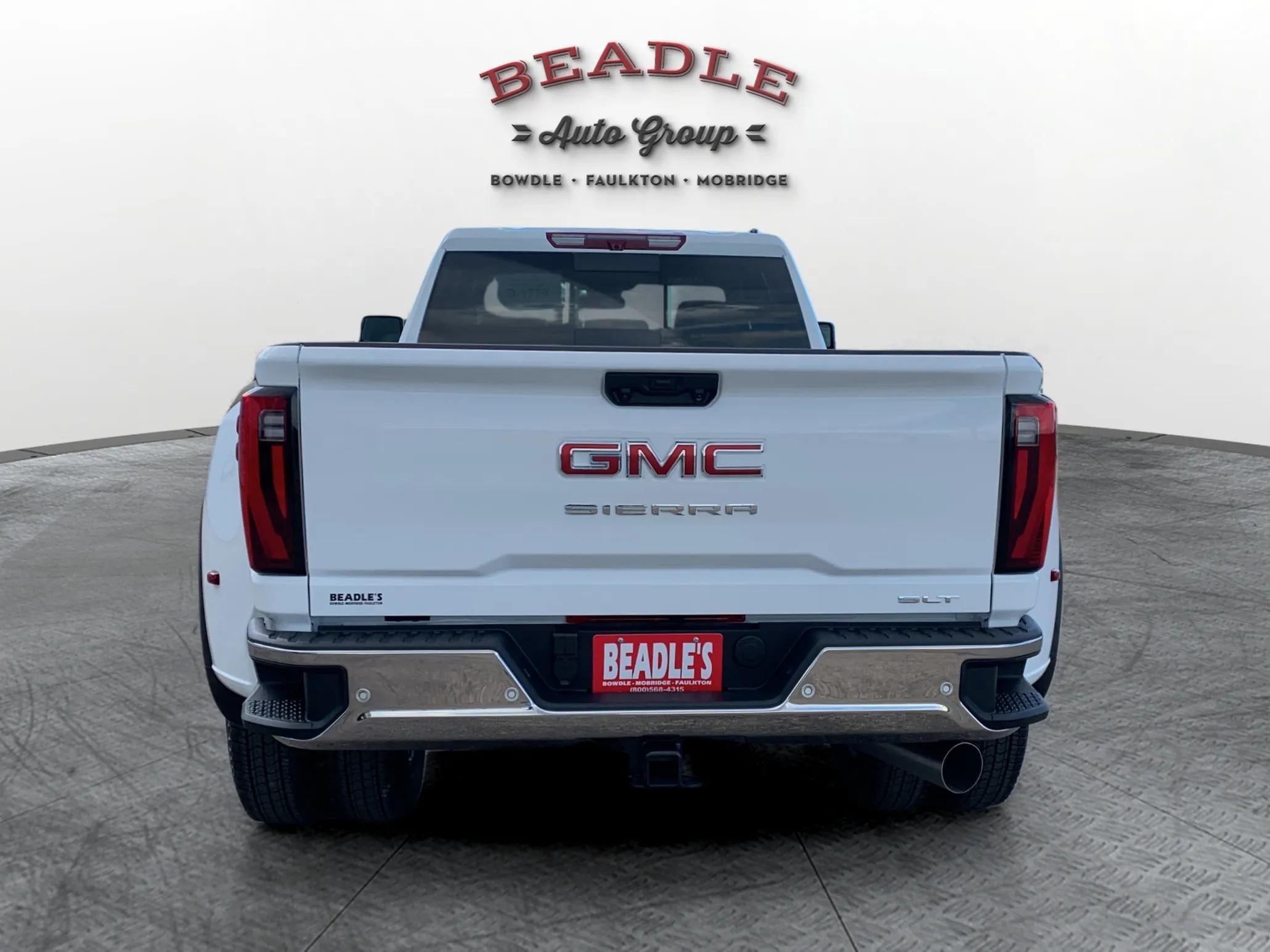
Straight from the rear is the honest angle on a dually: 96.62 inches across the fenders, against 81.85 on a single-rear-wheel truck.
What Does a Dually Cost You Day to Day?
Four things, and I would rather you hear them from me than find them out in your own driveway: it rides harder empty, it is wider everywhere you go, it wears six tires, and it gives up a little ground clearance in the back. None of that is a reason to skip the dually if you need it. All of it is a reason not to buy one you do not.
The ride is what people notice first. A dually is sprung to carry 14,000 pounds, so with an empty bed it walks over washboard gravel more than a single-rear-wheel truck does. Put the trailer on and it settles down and tracks straight, which is the whole point. If the truck spends most of its life empty, that trade runs the wrong direction for you.
Measure before you buy, not after
The 96.62-inch figure is the body, fender to fender, with the mirrors folded out of the equation. Your shop door, the gate into the corral, the drive-through at the co-op, and the automatic wash in town all care about a number bigger than that once the trailering mirrors are out. Take a tape to the openings you use every week before you sign anything. A Crew Cab long bed also needs 57 feet of road curb to curb to turn around, dually or not.
Tires are simple arithmetic: six instead of four, in their own sizes, LT235/80R17E on the 17-inch steel wheels and LT235/80R18 on the 18-inch polished forged wheels. Ask our parts counter what a set runs rather than budgeting from a number you read somewhere. Rear ground clearance of 10.39 inches instead of 11.14 is a small thing on a county road and a real thing in a rutted pasture approach.
One more that surprises people: a dually narrows the option sheet. No 20-inch wheel, no 22-inch dealer wheel, and the X31 off-road content is single-rear-wheel only. The snow plow prep and camper package is offered on all six trims, duallys included, so a blade is still on the table for snow contracts.
Which 2026 Sierra 3500 HD Trims Come as a Dually?
Five of the six: Pro, SLE, SLT, Denali, and Denali Ultimate can all be ordered with dual rear wheels on a long bed at 14,000 pounds GVWR. The AT4 is the exception, a single-rear-wheel truck only, and there is no AT4X in the 3500 HD line, so the off-road trim and the dually never meet.
A few ordering details worth knowing before you pick a trim. Two-wheel drive is a Pro-only proposition on this truck; every other trim is 4WD. The Denali Ultimate comes only with the Duramax. An SLT dually ordered with the Premium package has to take the 18-inch polished forged wheels. The Max Trailering Package is a Pro, two-wheel-drive, Regular Cab, dually-only option on the 3500 HD, so the crew cab trucks on our lot are rated on their own springs rather than on that package.
Yes, you can have a Denali dually, and people do. It is the answer for a buyer who wants Forge leather, the Bose system, and the head-up display in front of a trailer whose pin weight a single-rear-wheel truck cannot carry. The Denali and Denali Ultimate duallys are rated 30,800 and 30,700 pounds on a gooseneck, properly equipped. Payload varies by equipment on those trims; see the door-jamb label.
On our lot as this is written we have two SLT Crew Cab long bed 4WD Duramax duallys, one Volcanic Red Tintcoat and one Summit White, and an Onyx Black Denali Crew Cab standard bed 4WD Duramax on single rear wheels. That is a fair sample of both sides of this decision parked forty feet apart. If your trailer is a big camper rather than a stock trailer, the Denali towing post works through that version of the same question.
How to Check Your Trailer Against Both Trucks
Five steps, one trip to the scale, and the argument is over.
- Weigh the trailer loaded: hitch up the way you actually haul, run the whole rig across the elevator scale, and write down the loaded trailer weight. That single number rules out one of the two trucks most of the time.
- Weigh the pin: weigh the truck alone, then weigh it hitched with the trailer loaded and only the truck on the platform. The difference is your pin weight. Expect it in the 15 to 25 percent range of the loaded trailer, higher when the load sits forward.
- Add the cab and the bed: pin weight plus driver, passengers, fuel, tools, mineral, dog, and anything bolted to the truck. Compare that total to 4,195 pounds on a Crew Cab long bed 4WD Duramax single rear wheel and 5,647 pounds on the dually.
- Check the combination: loaded truck plus loaded trailer against 30,000 pounds on the single-rear-wheel Duramax and 40,000 on the dually. Long hauls on Highway 12 and US 83 are where that ceiling shows up.
- Measure your openings: shop door, corral gate, wash bay, and the spot the truck parks at home, against 96.62 inches plus mirrors. Then read the trailering information label in the driver door jamb of the specific truck and make sure the paperwork agrees with the plan.
Is the Dually the Right 2026 Sierra 3500 HD for You?
| Worth it if | Skip it (order single rear wheel) if |
|---|---|
| Your loaded gooseneck runs past 21,460 pounds, or the pin weight alone is past 4,195 You haul at or near that weight weekly, not twice a season You want stability behind a 40-foot trailer in a Highway 12 crosswind A bale bed, flatbed, service body, or hotshot deck is going on the truck You have the width at home, at the shop, and where you back in |
Your trailer and pin weight both clear the single-rear-wheel numbers with room left The truck is also the family truck and spends most weeks empty You pull a bumper-pull trailer, where both trucks are rated 20,000 pounds with the Duramax Your shop door, gate, or parking spot will not take 96.62 inches plus mirrors You want the AT4, a standard-bed crew cab, or a 20-inch wheel |
Key Takeaways
- On a Crew Cab long bed 4WD Duramax, the dually is rated 31,000 pounds on a gooseneck against 21,460 for the single-rear-wheel truck, properly equipped.
- Payload on that same pair is 5,647 pounds dually and 4,195 single rear wheel with the Duramax; the gas V8 reads 6,378 and 4,412.
- Conventional bumper-pull towing is 20,000 pounds either way with the Duramax, so a dually buys you nothing there.
- A dually is 96.62 inches wide against 81.85, always a long bed at 14,000 pounds GVWR, and never an AT4.
- Weigh the loaded trailer and the pin once, then check both against the trailering information label in the driver door jamb.
Frequently Asked Questions
How much wider is a Sierra 3500 HD dually, and will it fit my shop door?
GM publishes 96.62 inches of body width on a dually and 81.85 inches on a single-rear-wheel Sierra 3500 HD, a difference of 14.77 inches. Both are measured without mirrors and without accessories, so plan on more than that with the trailering mirrors extended. A 14-foot shop door is not a problem; a narrow older door, a car wash bay, or a corral gate can be. Measure your openings before you order.
Does a Sierra 3500 HD dually ride worse when it is empty?
Yes, and anyone who tells you otherwise has not driven one down a washboard section line with nothing in the bed. The springs and rear axle are built to carry 14,000 pounds, so an unloaded dually is firmer. Loaded, that reverses: the dually is the calmer truck behind a heavy gooseneck. Buy for the loaded condition if that is what the truck does for a living.
What wheels and tires does a 2026 Sierra 3500 HD dually come on?
A Pro, SLE, or SLT dually comes on 17-inch painted steel wheels with LT235/80R17E all-terrain tires, with painted center caps on the Pro and chrome skins on the SLE and SLT. A Denali or Denali Ultimate dually, and any SLE or SLT ordered with the 18-inch polished forged wheel, runs LT235/80R18 tires. No 20-inch wheel is offered on a dually. Replacement is six tires, not four, so ask our parts counter for current pricing when the time comes.
Can you get a Denali dually, and is there an AT4 dually?
You can order a dually on the Pro, SLE, SLT, Denali, and Denali Ultimate, always on a long bed at 14,000 pounds GVWR. The AT4 is single rear wheel only, and the 3500 HD has no AT4X, so the off-road trim and the dually never meet. The Denali Ultimate is Duramax only. Denali and Denali Ultimate duallys use the Z85 suspension and come on the 18-inch polished forged wheels with Denali center caps.
My Take on Single Rear Wheel Versus Dually
I have sold this decision both directions in the same week and been right both times, because it is not a question about trucks. It is a question about your trailer and your calendar. If you move a loaded 40-foot gooseneck to the sale barn every week, buy the dually and quit doing arithmetic on the shoulder of Highway 12. If your heaviest trip comes twice a year and the truck otherwise hauls a toolbox and a kid to practice, the single-rear-wheel 3500 HD is a better truck to live with and still carries more than most people expect.
What I will not do is let somebody order a dually because it looks the part and then find out the shop door is 8 feet wide. Bring me the loaded weight of your trailer, the pin weight if you have it, and the width of the tightest opening you use every week. Those three numbers beat a year of second-guessing, and if the answer is single rear wheel, that is a win too.
Full towing and payload tables, trims, packages, and dimensions for both configurations are in the 2026 GMC Sierra 3500 HD buyers guide. Or come stand between the two of them at Beadle Chevrolet GMC, 2200 US Hwy 12 in Mobridge, or call or text 605-845-7277 and we will pull the door-jamb labels on both.
About the Author
Lexy Tabbert — Beadle Chevrolet, Mobridge, SD
Lexy Tabbert is the Director of Sales and Marketing at Beadle Chevrolet in Mobridge, South Dakota. She covers Chevrolet and GMC vehicles, trim comparisons, and buyer guidance — helping families, ranchers, and ag operators across the region find the right truck and configuration for their needs. Learn more about Lexy.