Blog

All Mobridge Chevrolet Dealer
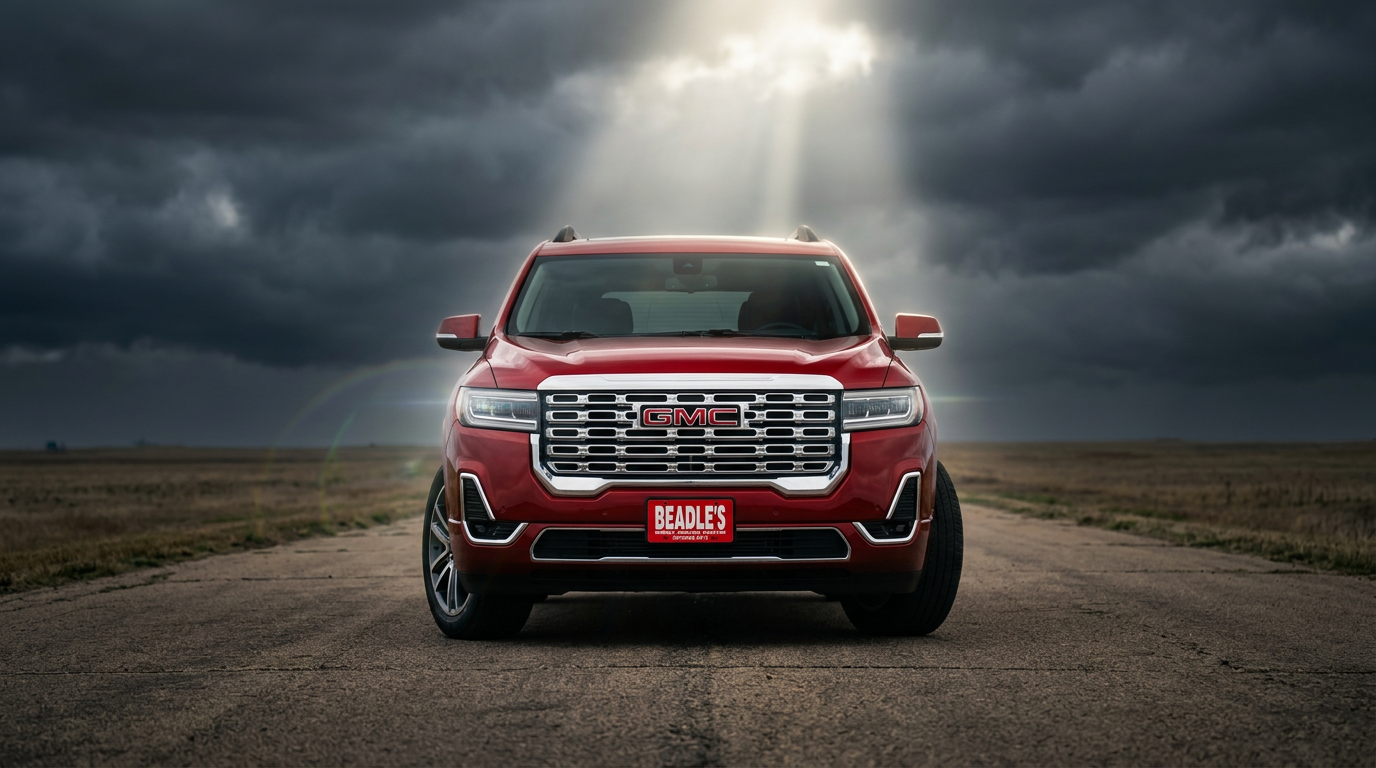
2026 Chevrolet Silverado 1500 in action on a South Dakota highway highlighting engine performance

2026 Silverado 1500 Engine Options: TurboMax vs. 5.3L V8 vs. 6.2L V8 vs. Duramax Diesel — Which One Is Right for You?

2026 Silverado 1500 Engine Options: TurboMax vs. 5.3L V8 vs. 6.2L V8 vs. Duramax Diesel — Which One Is Right for You? By Lexy Tabbert, Beadle Chevrolet — April 9, 2026 Four engines. One truck. The 2026 Chevrolet Silverado 1500 is one of the few half-tons on the market that gives you a genuine choice — not just a base option and an upgrade, but four meaningfully different powertrains designed for different buyers and different jobs. The 2.7L TurboMax, the 5.3L V8, the 6.2L V8, and the 3.0L Duramax diesel each make sense for someone. The challenge is figuring out which one makes sense for you. Here's what each engine actually delivers, who it's built for, and where it falls short — so you can walk into Beadle Chevrolet knowing exactly what you need. ============================================================ T2 — Top CTA Row ============================================================ View Silverado 1500 Inventory Get Pre-Qualified Today Call 605-705-4343 ============================================================ T3 — Table of Contents ============================================================ In This Article Four Engines at a Glance 2.7L TurboMax: Built for Everyday Life 5.3L V8: The Balanced Workhorse 6.2L V8: Maximum Power in a Half-Ton 3.0L Duramax Diesel: The Long-Haul Engine Which Engine Fits Your South Dakota Life? Frequently Asked Questions ============================================================ T4 — Section 1: Four Engines at a Glance ============================================================ Four Engines at a Glance Before going deep on each engine, here's where all four stand side by side. All towing figures represent maximum ratings when properly equipped with the Max Trailering Package. Engine Horsepower Torque Transmission Max Tow* Best For 2.7L TurboMax (L3B) 310 hp 430 lb-ft 8-speed auto 9,500 lbs Daily driving, light towing 5.3L V8 EcoTec3 (L84) 355 hp 383 lb-ft 10-speed auto 11,400 lbs Occasional heavy towing, V8 feel 6.2L V8 EcoTec3 (L87) 420 hp 460 lb-ft 10-speed auto 13,200 lbs Performance, premium trims 3.0L Duramax Diesel (LZ0) 305 hp 495 lb-ft 10-speed auto 13,300 lbs Long hauls, frequent towing, fuel economy *Maximum tow ratings when properly equipped with the Max Trailering Package. Configuration, cab style, and drivetrain affect actual capacity. Confirm your specific rating with Beadle Chevrolet. A few things stand out immediately. The Duramax diesel produces the most torque in the lineup — 495 lb-ft — while also delivering the best fuel economy. The 6.2L V8 makes the most horsepower. The TurboMax makes the least power on paper but moves the most efficiently through city traffic. The 5.3L V8 sits in the middle on every metric, which is exactly why it accounts for the majority of Silverado 1500 sales. ============================================================ T4 — Section 2: TurboMax ============================================================ 2.7L TurboMax: Built for Everyday Life The 2.7L TurboMax (engine code L3B) is a turbocharged four-cylinder that produces 310 hp and 430 lb-ft of torque. It pairs with an 8-speed automatic transmission — one step down from the 10-speed that the V8 and diesel use. Maximum towing capacity is up to 9,500 lbs when properly equipped, which comfortably handles most pontoon boats, single-axle campers, and lighter utility trailers you'll encounter around the Lake Oahe area. The TurboMax delivers the best gasoline fuel economy in the Silverado 1500 lineup, which matters if most of your miles are commuting to Mobridge or running errands rather than pulling a loaded trailer. The turbocharged torque curve also means it doesn't feel small at the bottom of the rpm range — torque comes in early and stays there through the power band. Where the TurboMax falls short: It is not compatible with the Z71 Off-Road Package, and it is not available on the Trail Boss or ZR2 trim variants. If you want a Silverado 1500 built for rough terrain, gravel ranch roads, or serious off-road use, you will need to step to the 5.3L V8 or 3.0L Duramax diesel. The TurboMax is also not the right choice if your regular loads push above 9,000 lbs — the 5.3L V8 gives you a meaningful safety margin for that work. TurboMax — Right For You If: Most of your miles are daily driving with occasional light towing under 9,000 lbs Fuel economy is a higher priority than maximum towing margin You're buying a Work Truck, Custom, LT, or RST without off-road packages Skip the TurboMax If: You want the Trail Boss, ZR2, or Z71 Off-Road Package You regularly tow livestock trailers, heavy campers, or loads above 9,000 lbs You want a true V8 character — the turbocharged four-cylinder is a fundamentally different engine feel ============================================================ T4 — Section 3: 5.3L V8 ============================================================ 5.3L V8: The Balanced Workhorse The 5.3L V8 EcoTec3 (L84) is the most popular engine in the Silverado 1500 lineup for a reason. At 355 hp and 383 lb-ft of torque paired with a 10-speed automatic, it tows up to 11,400 lbs when properly equipped with the Max Trailering Package. That's enough for a 2-horse slant trailer, a loaded flatbed, or most campers and fifth-wheels in the 10,000–11,000 lb range. The 5.3L V8 is also the broadest-availability engine in the lineup. It's offered across multiple trims — including LT, Custom Trail Boss, LT Trail Boss, RST, LTZ, and ZR2 — and it's compatible with the Z71 Off-Road Package. That makes it the natural choice for buyers who want a Trail Boss or ZR2 build with proven off-road ability. The V8 also features Dynamic Fuel Management (DFM), which deactivates cylinders under light loads to conserve fuel. You won't notice it in daily driving, but it does contribute to better real-world economy than its displacement suggests on paper. The trade-off: If you consistently tow above 11,400 lbs — long-haul livestock, multi-horse trailers, or commercial-grade equipment — the 5.3L is already close to its ceiling. For that work, the 6.2L V8 or Duramax diesel gives you a real margin. The 5.3L also doesn't match the Duramax's fuel economy on long highway pulls, where diesel's torque advantage reduces the effort — and fuel burn — of sustained towing. 5.3L V8 — Right For You If: You want a Trail Boss or ZR2 build — the 5.3L is available where the TurboMax isn't You tow regularly in the 8,000–11,000 lb range and want a proven V8 platform You want broad trim availability without paying for the 6.2L premium Skip the 5.3L If: Your typical loads sit above 11,000 lbs — you'll want the 6.2L V8 or Duramax diesel for that headroom You're putting 25,000+ miles per year on the truck and fuel economy is a real cost — the Duramax diesel pulls ahead over distance ============================================================ T4 — Section 4: 6.2L V8 ============================================================ 6.2L V8: Maximum Power in a Half-Ton The 6.2L V8 EcoTec3 (L87) is the most powerful gasoline engine GM puts in the Silverado 1500. At 420 hp and 460 lb-ft of torque, it's also the most fun to drive — the 10-speed automatic keeps it in the power band on highway on-ramps and feels genuinely quick for a full-size truck. Maximum towing capacity reaches 13,200 lbs when properly equipped with the Max Trailering Package in the right configuration. The 6.2L is available on the RST, LTZ, and High Country trims — the upper half of the lineup. If you're buying a premium-tier Silverado 1500 and want the best gasoline engine experience, this is the one. It also uses Dynamic Fuel Management to shut down cylinders under low demand. The honest trade-off: The 6.2L costs more at purchase, and it burns more gasoline than either the 5.3L or TurboMax under everyday conditions. If you're buying the 6.2L because you want the maximum towing number, it's worth comparing it directly to the Duramax diesel. Both engines approach 13,000+ lbs of towing capacity, but the Duramax gets there through torque rather than horsepower — and it returns significantly better fuel economy on long highway pulls. For buyers who want a gasoline engine with no Diesel Exhaust Fluid maintenance and a more traditional driving feel, the 6.2L is the right call. For buyers doing sustained long-haul towing, the diesel math often wins. 6.2L V8 — Right For You If: You want the highest horsepower in a half-ton gasoline truck and enjoy that performance feel You're buying an RST, LTZ, or High Country and want maximum capability without diesel maintenance Your towing is occasional — the 6.2L's advantage over the 5.3L is most valuable when you actually need to push past 11,400 lbs Skip the 6.2L If: You're towing heavily every week over long distances — the Duramax's fuel economy advantage compounds quickly at those miles You want an off-road-focused build on the Trail Boss or ZR2 — the 6.2L is not available on Trail Boss variants ============================================================ T5 — Mid Image Break ============================================================ ============================================================ T4 — Section 5: Duramax Diesel ============================================================ 3.0L Duramax Diesel: The Long-Haul Engine The 3.0L Duramax diesel (LZ0) is the engine that no other half-ton currently offers. Ford discontinued the PowerStroke diesel in the F-150. Ram dropped the EcoDiesel from the 1500. The 2026 Silverado 1500 is the only light-duty pickup truck on the market with a half-ton diesel option — and it's a meaningful one. The Duramax produces 305 hp and 495 lb-ft of torque — more torque than any other engine in the lineup, and it delivers that torque lower in the rpm range than any gasoline engine can. When you're pulling a loaded 3-horse slant trailer up I-90 on the way back from a livestock auction, the difference between 383 lb-ft and 495 lb-ft is something you feel in your back. Maximum towing capacity reaches 13,300 lbs when properly equipped with the Max Trailering Package. Fuel economy is where the diesel's advantage compounds. The Duramax is EPA-rated at an estimated 23 mpg city and 28 mpg highway in 4WD configurations — significantly better than either V8 option. For a driver putting 30,000 miles per year on a Silverado, that gap translates to real dollars at the pump over the life of the truck. The Duramax also comes with an engine block heater (K05) as standard equipment — a critical detail for South Dakota winters. When January temperatures drop well below zero in Mobridge, a block heater is the difference between a quick confident start and a slow cold-soak crank. The diesel also comes standard with an 850 cold-cranking amp battery versus the 730 CCA battery on gasoline-powered Silverado 1500 trucks. Diesel's real trade-off: The Duramax requires Diesel Exhaust Fluid (DEF) to meet emissions standards. The DEF tank holds approximately 4.5 gallons and needs to be refilled roughly every 5,000 to 7,000 miles depending on driving conditions. DEF is widely available at most fuel stations on major highways, but if you're regularly far from a supply point, you need to plan ahead. The diesel also carries a higher purchase price than the gasoline options — the payback timeline depends on your annual mileage and diesel vs. gasoline price differential in your area. The Duramax is available on the LT, LT Trail Boss, RST, LTZ, High Country, and ZR2 trims. It is not offered on the Work Truck or Custom. Duramax Diesel — Right For You If: You tow heavy loads regularly — the 495 lb-ft torque advantage is most obvious under sustained load You drive high annual mileage (20,000+ miles/year) and fuel economy is a meaningful cost factor You need the engine block heater and heavy-duty cold-start capability for South Dakota winters You want the only half-ton diesel on the market — there is no direct competitor Skip the Duramax If: Most of your driving is short-trip local use — diesel engines are most efficient on sustained highway miles, not stop-and-go routes DEF availability is a genuine concern in your work area and you'd rather not manage that maintenance task Your budget is tight — the diesel commands a premium over the TurboMax and 5.3L V8 ============================================================ T4 — Section 6: SD Use Case Matching ============================================================ Which Engine Fits Your South Dakota Life? The right engine depends on what you're actually doing with the truck. Here's how the four options map to the most common buyer situations in the Mobridge area. Your Situation Best Engine Choice Why Daily Mobridge commute + occasional boat launch at Lake Oahe 2.7L TurboMax Best fuel economy; pontoon boats and ski boats under 9,000 lbs are well within range Towing a 2-horse trailer to weekend events or hauling equipment to the farm 5.3L V8 11,400 lb max tow when properly equipped; covers most ranch and recreation trailers; broad trim availability including Trail Boss RST or LTZ build focused on performance and capability with a gasoline engine 6.2L V8 420 hp and 13,200 lb max tow when properly equipped; the gasoline alternative to the diesel for near-maximum capability Long-haul cattle or livestock trailer across SD and into neighboring states 3.0L Duramax Diesel 495 lb-ft torque, 13,300 lb max tow when properly equipped, best highway fuel economy — built for sustained heavy-load distance ZR2 or Trail Boss off-road build with serious capability 5.3L V8 or 3.0L Duramax Diesel TurboMax and 6.2L V8 are not available on Trail Boss variants; diesel adds standard block heater for cold-weather off-road use One thing worth saying directly: the TurboMax and 5.3L V8 cover the needs of most buyers. The 6.2L V8 and Duramax diesel are for buyers who have a specific reason to be at the top of the towing range, or who have a genuine long-term fuel economy case for the diesel premium. If your use case sits in the middle, save the upgrade cost and put it toward a higher trim level. For more detail on the 3.0L Duramax specifically — including DEF management, cold-weather performance, and a full cost comparison versus the 5.3L V8 — see our Duramax diesel deep dive. For towing capacity by engine, cab style, and configuration, the complete towing capacity guide has the full breakdown. ============================================================ T6 — Key Takeaways ============================================================ Key Takeaways The 2.7L TurboMax is the right engine for daily drivers and light towers — best gasoline fuel economy, 9,500 lb tow capacity when properly equipped The 5.3L V8 is the most versatile choice — 11,400 lb tow capacity when properly equipped, compatible with Trail Boss and Z71 Off-Road Package The 6.2L V8 delivers the highest horsepower (420 hp) and 13,200 lb tow capacity when properly equipped on premium trims — the gasoline choice for buyers needing maximum capability The 3.0L Duramax diesel leads the lineup in torque (495 lb-ft), towing (13,300 lbs when properly equipped), and fuel economy — and is the only half-ton diesel on the market The TurboMax is NOT available with the Z71 Off-Road Package or on Trail Boss and ZR2 trim variants The Duramax includes a standard engine block heater — an important practical advantage for South Dakota winters ============================================================ T7 — FAQ with inline microdata ============================================================ Frequently Asked Questions What engine comes standard on the 2026 Silverado 1500? The 2.7L TurboMax four-cylinder turbocharged engine is standard on most 2026 Silverado 1500 configurations, including the Work Truck, Custom, and base LT trim. The 5.3L V8, 6.2L V8, and 3.0L Duramax diesel are available as upgrades on select trims. Which 2026 Silverado 1500 engine has the highest towing capacity? The 3.0L Duramax diesel delivers the highest towing capacity in the 2026 Silverado 1500 lineup — up to 13,300 lbs when properly equipped with the Max Trailering Package. The 6.2L V8 follows at up to 13,200 lbs in properly equipped configurations. Is the 2.7L TurboMax available on the Trail Boss or ZR2? No. The 2.7L TurboMax is not compatible with the Z71 Off-Road Package, Trail Boss trim variants, or the ZR2. If you want an off-road-focused Silverado 1500, you will need to select the 5.3L V8 or 3.0L Duramax diesel, depending on the trim. Does the TurboMax four-cylinder get better fuel economy than the V8 engines? Yes. The 2.7L TurboMax is the most fuel-efficient gasoline engine in the 2026 Silverado 1500 lineup, delivering better estimated mpg than either the 5.3L or 6.2L V8. For the highest overall fuel economy, the 3.0L Duramax diesel is rated at an estimated 23 mpg city and 28 mpg highway in 4WD configurations. Which trims offer the 3.0L Duramax diesel in the 2026 Silverado 1500? The 3.0L Duramax diesel is available on the LT, LT Trail Boss, RST, LTZ, High Country, and ZR2 trims. It is not offered on the Work Truck or Custom trims. Contact Beadle Chevrolet at 605-705-4343 to confirm diesel availability and current inventory. /FAQPage ============================================================ T8 — First-Person Conclusion + Pillar Link ============================================================ I've had a lot of conversations at Beadle Chevrolet that started with "I just need a truck" and turned into a real conversation about engine choice once the buyer started thinking through what their week actually looks like. The TurboMax is genuinely capable and efficient. The 5.3L V8 is what most people end up with — and most people don't end up disappointed. The 6.2L is for the buyer who wants the top gasoline option and has the use case to back it up. The Duramax is for buyers who are putting serious miles and serious loads on a truck that needs to earn its keep. If you're still deciding, I'm happy to walk through it with you in person or over the phone. We keep a range of Silverado configurations in stock, and I can usually put you behind the wheel of more than one engine option on the same visit. For the full 2026 Silverado 1500 picture — trim levels, towing configurations, technology features, and more — the 2026 Silverado 1500 guide covers everything in one place. ============================================================ T9 — Bottom CTA Row ============================================================ View Silverado 1500 Inventory Get Pre-Qualified Today Call 605-705-4343 /max-width wrapper TEMPLATE 10: About the Author (LOCKED) About the Author Lexy Tabbert — Beadle Chevrolet, Mobridge, SD Lexy Tabbert is the Director of Sales and Marketing at Beadle Chevrolet in Mobridge, South Dakota. She covers Chevrolet and GMC vehicles, trim comparisons, and buyer guidance — helping families, ranchers, and ag operators across the region find the right truck and configuration for their needs. Learn more about Lexy.


2026 Chevrolet Silverado 1500 exterior on a South Dakota highway

2025 vs. 2026 Chevrolet Silverado 1500: What Changed and When the Upgrade Is Worth It

2025 vs. 2026 Chevrolet Silverado 1500: What Changed and When the Upgrade Is Worth It Published: April 8, 2026  | Author: Lexy Tabbert, Director of Sales and Marketing Every fall, Beadle Chevrolet customers ask some version of the same question: is the new model year worth it, or is a certified pre-owned truck from last year a smarter buy? It's the right question. The answer is different for every buyer — and it's worth working through clearly before you sign anything. This guide walks through what the 2026 Silverado 1500 offers as the current model year, how it compares to a 2025 from a warranty and financial standpoint, and which scenario makes the most sense for different buyer profiles in South Dakota. TEMPLATE 2: Top CTA Row View 2026 Silverado Inventory Pre-Qualify for Financing TEMPLATE 3: Table of Contents Jump to Section Why the Model Year Question Matters for Silverado Buyers What the 2026 Silverado 1500 Brings to the Lineup New 2026 vs. Certified 2025: The Financial Case for Each Who Should Buy the 2026 — and Who Should Consider a 2025 Frequently Asked Questions TEMPLATE 4A: Why Model Year Matters Why the Model Year Question Matters More Than Most Buyers Realize For a vehicle like the Silverado 1500, consecutive model years are rarely dramatic transformations. The current generation was refreshed for 2022, and since then, Chevrolet has refined the lineup year over year — adding features, adjusting packages, and updating the color palette — rather than rebuilding it from the frame up. The 2025 and 2026 share the same core architecture, the same four-engine lineup, and the same fundamental character. That means the model year decision is usually a financial and logistics question, not a performance question. Both trucks can pull the same loads, fit the same needs, and last the same number of years. The real variables are purchase price, warranty coverage, current incentive availability, and whether a specific feature or color you want became available in the newer model year. In Mobridge, where trucks are tools as much as transportation, most buyers care less about being "current year" and more about the value proposition. This guide is built around that framing. TEMPLATE 4B: What 2026 Offers — Spec/Feature Table What the 2026 Silverado 1500 Brings to the Lineup The 2026 Silverado 1500 carries forward the full powertrain lineup and core platform from the 2025. Chevrolet makes refinements each model year — color availability, package bundling, and feature accessibility by trim — that are best confirmed against the current order guide. Here is what the 2026 delivers as the current in-production model year. Feature / Category 2026 Silverado 1500 Status Engine Options 2.7L TurboMax, 5.3L V8, 6.2L V8, 3.0L Duramax diesel — full lineup available Transmission 10-speed automatic (engine-dependent pairing) Infotainment 13.4" diagonal touchscreen (on equipped trims) with Google built-in, wireless Apple CarPlay and Android Auto Driver Assistance Super Cruise hands-free driving available on LTZ and High Country; standard Chevy Safety Assist across all trims Towing Up to 13,300 lbs when properly equipped with Max Trailering Package; available Trailer Reverse Guidance and Trailering App Trim Range WT, Custom, Custom Trail Boss, LT, LT Trail Boss, RST, LTZ, High Country, ZR2 Factory Warranty 3 yr / 36K mi bumper-to-bumper; 5 yr / 60K mi powertrain; 5 yr / 60K mi roadside assistance Incentive Eligibility Eligible for current manufacturer rebates, GM Financial special rates, and farm/business incentive programs Multi-Pro Tailgate Available on most trims; standard on higher configurations Color Availability Current 2026 palette — confirm specific colors available on your preferred trim with Beadle Chevrolet Year-over-year refinements to packages, trim content, and available colors are best confirmed directly with Beadle Chevrolet at 605-705-4343 or at chevrolet.com — our team has the full 2026 specifications on hand. TEMPLATE 4C: Financial Comparison — Callout Boxes New 2026 vs. Certified 2025: The Financial Case for Each The financial comparison is rarely as simple as "the 2025 is cheaper." Incentives, warranty coverage, trade-in value, and total cost of ownership all factor into which truck delivers better value over time. Here's how each scenario plays out. The Case for the New 2026 A new 2026 Silverado 1500 gives you the full factory warranty — 3 years / 36,000 miles bumper-to-bumper and 5 years / 60,000 miles powertrain — starting the day you drive off the lot. You are also eligible for current manufacturer incentives: Chevrolet typically offers cash rebates, special APR financing through GM Financial, and, in some programs, ag or commercial incentives that are not available on used vehicles. For a working truck that needs to be reliable on day one and every day after, the warranty peace of mind is worth real money. If a major component fails in month 30, the new-truck buyer pays nothing. The used-truck buyer runs the risk calculation themselves. The Case for a Certified 2025 A Chevrolet Certified Pre-Owned 2025 Silverado 1500 carries its own warranty coverage — the Chevrolet CPO program includes a comprehensive limited warranty and extends powertrain protection beyond the original factory coverage, with terms that vary based on the vehicle's mileage and original sale date. A certified 2025 in a mid-grade trim may represent meaningful savings versus the comparable new 2026 MSRP. For buyers who don't put extraordinary miles on a truck, or who want a specific trim level at a lower entry point, a certified 2025 is a legitimate alternative — not a compromise. Confirm current CPO warranty terms and available inventory at Beadle Chevrolet. What Most Buyers Overlook: Incentive Timing Manufacturer incentives on new vehicles fluctuate monthly. A strong rebate month on the 2026 can close the gap with a certified 2025 significantly — sometimes to within $1,000–$2,000 on comparable configurations. Buying at the wrong time of year on a new truck is a real cost. Check current incentives before assuming the used truck is cheaper. Beadle Chevrolet posts current factory incentive programs and can walk you through the all-in comparison for any specific stock number. TEMPLATE 5: Mid Image Break The 2026 Silverado 1500 is the current production model — eligible for all current incentive programs and carrying a full factory warranty. TEMPLATE 4A: Who Should Choose Who Should Buy the 2026 — and Who Should Consider a 2025 The right answer depends on four variables: your annual mileage, how long you plan to keep the truck, whether current incentives close the price gap, and whether a specific feature available only on the 2026 matters to your situation. Strong Case for the New 2026 High-mileage operators who put 25,000–40,000 miles per year on a work truck benefit most from a full factory warranty. If you're covering that kind of ground across South Dakota ranch routes, highway trips to Bismarck, and seasonal equipment hauling, the powertrain warranty alone justifies the new-truck premium. When a drivetrain repair on a truck out of warranty costs $5,000–$8,000, five years of coverage represents real protection. Buyers who want a specific configuration — a particular trim, engine, color, or package combination — also lean toward new. The 2026 can be ordered exactly to spec. A certified 2025 is what's on the lot, which may or may not include the exact setup you want. Strong Case for a Certified 2025 Buyers who drive moderate miles — say, 10,000–15,000 per year — and plan to keep the truck for five to seven years often find that a certified 2025 with CPO warranty coverage is a better financial decision. If you're buying an LTZ-equipped truck and the certified 2025 saves $4,000–$5,000 over the comparable 2026, that's money that can go toward a better trim level, additional equipment, or simply into savings. The Silverado's core platform didn't change between 2025 and 2026 — you're getting the same truck for less. Second-owner farm or ranch use is another scenario where a certified 2025 makes strong sense. If the truck will be used primarily for around-the-property work — moving equipment, pulling trailers on private land, short-range daily tasks — the warranty window is less critical than the purchase price. The money saved is real; the difference in capability is minimal. TEMPLATE 5b: Worth It / Skip It New 2026 or Certified 2025: Quick Decision Guide Use this side-by-side to identify which scenario fits your situation before you walk into the dealership. Buy the New 2026 If... Consider a Certified 2025 If... You drive 20,000+ miles per year You want full factory warranty from day one Current incentives significantly reduce the price gap You need a specific trim, color, or configuration to order You plan to keep the truck 7+ years The truck will be a primary business or farm vehicle under daily load You drive 10,000–15,000 miles per year A specific certified 2025 in your preferred trim is available The savings over the 2026 are $3,000 or more CPO warranty terms adequately cover your remaining ownership period You plan to keep the truck 5–6 years The truck is for lighter-duty ranch or secondary use TEMPLATE 6: Key Takeaways Key Takeaways • The 2025 and 2026 Silverado 1500 share the same core platform, the same four-engine lineup, and the same fundamental capability — the model year decision is primarily financial and logistical, not performance-based. • The new 2026 comes with a full 3-year / 36,000-mile bumper-to-bumper and 5-year / 60,000-mile powertrain warranty starting from your purchase date — the most complete coverage available. • Manufacturer incentives on the 2026 vary monthly. Before assuming a certified 2025 is cheaper, check current rebates and special financing rates — the gap may be smaller than expected. • High-mileage operators (20,000+ miles per year) typically get the most value from a new 2026 — the warranty coverage directly offsets the probability of repair costs during the coverage window. • Moderate-mileage buyers (10,000–15,000 miles per year) who find a certified 2025 in their preferred trim with significant savings should take that option seriously — it is the same truck for less. • The best way to compare is to ask Beadle Chevrolet for a side-by-side on a specific 2026 stock number against a specific certified 2025 — the all-in numbers make the decision clear. TEMPLATE 7: FAQ Frequently Asked Questions What changed on the 2026 Silverado 1500 compared to the 2025? Chevrolet refines the Silverado 1500 lineup each model year with color palette updates, package reconfigurations, and feature availability adjustments. The 2026 shares its core powertrain lineup with the 2025 — the same four engine options (2.7L TurboMax, 5.3L V8, 6.2L V8, and 3.0L Duramax diesel) carry over. For the complete list of 2026-specific changes, confirm with Beadle Chevrolet or visit chevrolet.com — our team has the full 2026 specifications on hand. Is it worth buying a new 2026 Silverado over a 2025? For most buyers, the decision comes down to three factors: current manufacturer incentives on the 2026, the price premium over a certified 2025, and warranty coverage. The 2026 comes with GM's full factory warranty (3 years/36,000 miles bumper-to-bumper; 5 years/60,000 miles powertrain) and is eligible for current financing and rebate programs. A certified 2025 may carry a lower sticker price but a shorter warranty window. When current incentives are strong, the out-of-pocket difference often narrows significantly — making the 2026 the smarter long-term value. Does the 2026 Silverado 1500 have Super Cruise? Yes. Super Cruise hands-free driver assistance is available on the 2026 Silverado 1500 on equipped trims, including LTZ and High Country. Super Cruise enables hands-free driving on compatible divided highways and requires a compatible OnStar subscription and data plan. Confirm which specific stock numbers at Beadle Chevrolet include Super Cruise before purchasing. What warranty comes with a new 2026 Chevrolet Silverado 1500? New 2026 Silverado 1500 trucks come with GM's standard warranty: 3 years/36,000 miles bumper-to-bumper coverage, 5 years/60,000 miles powertrain coverage, and 5 years/60,000 miles roadside assistance. The 3.0L Duramax diesel engine receives coverage under the same powertrain terms. Confirm current warranty details with Beadle Chevrolet, as coverage terms may be updated by the manufacturer. Can I still buy a 2025 Silverado 1500 new at a dealership? Some dealerships carry 2025 Silverado 1500 models as new carryover inventory, often at discounted prices to clear lot space for incoming 2026 stock. These are technically new vehicles with zero miles and carry a full factory warranty from the original purchase date, but trim and color selection is typically limited. Ask Beadle Chevrolet about current 2025 carryover availability and clearance pricing — the savings on a carryover can be substantial. TEMPLATE 8: First-Person Conclusion From Lexy The model year question is one I get almost every week at the dealership. My honest answer is always the same: it depends entirely on the numbers, not on which year is newer. I've seen buyers get a great deal on a certified 2025 that was the smarter move for their situation, and I've seen buyers get enough in rebates on a 2026 that the new truck was the obvious call. Neither answer is always right. What I'd suggest is coming in and letting us run the actual comparison — your specific trade, the current incentives on a 2026 that fits your specs, and any certified 2025 inventory we have that matches. The numbers make the decision clear. The full 2026 lineup breakdown is on the 2026 Chevrolet Silverado 1500 overview, and we can work from there. — Lexy Tabbert, Director of Sales and Marketing Beadle Chevrolet, Mobridge, SD TEMPLATE 9: Bottom CTA Row View Silverado 1500 Inventory Pre-Qualify Today Call Beadle Chevrolet: 605-705-4343 TEMPLATE 10: About the Author (LOCKED) About the Author Lexy Tabbert — Beadle Chevrolet, Mobridge, SD Lexy Tabbert is the Director of Sales and Marketing at Beadle Chevrolet in Mobridge, South Dakota. She covers Chevrolet and GMC vehicles, trim comparisons, and buyer guidance — helping families, ranchers, and ag operators across the region find the right truck and configuration for their needs. Learn more about Lexy.

2026 Chevrolet Silverado 1500 Duramax diesel exterior in South Dakota

2026 Silverado 1500 Duramax Diesel: Specs, Towing Capacity, and When the Diesel Is Worth It

2026 Silverado 1500 Duramax Diesel: Specs, Towing Capacity, and When the Diesel Is Worth It Published: April 8, 2026  | Author: Lexy Tabbert, Director of Sales and Marketing The 3.0L Duramax diesel in the 2026 Silverado 1500 is not a niche option for diesel enthusiasts. It is a practical work tool with 495 lb-ft of torque that arrives low in the RPM range, fuel economy that outpaces both V8 options by a significant margin, and a max towing ceiling that ties the 6.2L V8 at 13,300 lbs. For the right buyer — typically someone who puts serious miles on a truck, tows regularly near capacity, or already runs diesel equipment — it is the engine to choose. This guide covers what the diesel actually does, who it is built for, and the South Dakota-specific factors that make diesel a natural fit for Mobridge-area ranchers, farmers, and long-haul drivers — or a poor fit if those criteria don't match your situation. TEMPLATE 2: Top CTA Row View Silverado 1500 Inventory Pre-Qualify for Financing TEMPLATE 3: Table of Contents Jump to Section What Is the 3.0L Duramax Diesel in the Silverado 1500? Duramax Diesel vs. Gas Engines: Full Specs Comparison Who Should Choose the Duramax in South Dakota? South Dakota Diesel Considerations Before You Decide Frequently Asked Questions TEMPLATE 4A: What Is the Duramax? What Is the 3.0L Duramax Diesel in the 2026 Silverado 1500? The 3.0L Duramax is an inline six-cylinder turbocharged diesel engine — not a V8, and not carried over from the heavy-duty Silverado lineup. It was purpose-built for the half-ton Silverado 1500, designed to deliver torque at low RPM, extract maximum range from a tank of diesel, and handle sustained towing loads without the heat buildup that affects gasoline engines under continuous work. The engine uses a variable geometry turbocharger that adjusts boost pressure based on load and pairs exclusively with the 10-speed Hydra-Matic automatic transmission, which keeps the engine in its peak torque window across the widest possible range of operating conditions — whether that's pulling a loaded gooseneck at 65 mph on US-12 or crawling a steep boat ramp in 4WD Low. As part of its emissions system, the engine uses Selective Catalytic Reduction (SCR) technology, which requires Diesel Exhaust Fluid (DEF). This is a practical consideration for rural South Dakota drivers covered in detail in the next section. For most operators, DEF management is straightforward — the truck provides ample warning before any tank runs low, and DEF is available at most truck stops and farm supply stores in the region. TEMPLATE 4B: Specs Table Duramax Diesel vs. Gas Engines: Full Specs Comparison The 2026 Silverado 1500 offers four engine choices. Here's how the Duramax diesel compares to each gas option across the numbers that matter most for work and towing. Engine Horsepower Torque Max Towing* Est. Hwy MPG (2WD) 2.7L TurboMax I4 310 hp 430 lb-ft ~9,500 lbs ~24 mpg 5.3L V8 EcoTec3 355 hp 383 lb-ft 11,400 lbs ~21 mpg 6.2L V8 EcoTec3 420 hp 460 lb-ft 13,300 lbs ~19 mpg 3.0L Duramax I6 Diesel 305 hp 495 lb-ft 13,300 lbs ~33 mpg *Max towing with Max Trailering Package properly equipped. Figures vary by cab, bed, and drivetrain configuration — confirm your specific truck's rating with the glove box tow guide or Chevy's towing calculator. MPG estimates are approximate EPA values for 2WD configurations; 4WD figures are slightly lower. Verify 2026 EPA ratings at fueleconomy.gov. The Duramax's advantage is not horsepower — the 6.2L V8 beats it there by 115 hp. Its advantage is the combination of maximum torque at low RPM, identical towing ceiling, and dramatically better fuel economy. The diesel produces its full 495 lb-ft between 1,500 and 3,000 RPM, meaning maximum pulling force is available immediately from a dead stop — exactly what steep ramp exits and loaded highway grades demand. TEMPLATE 4C: Who Should Choose Diesel Who Should Choose the Duramax in South Dakota? The diesel premium runs approximately $3,000–$4,000 over the equivalent gas engine option, depending on trim. Whether that investment pays off depends almost entirely on how you use the truck. Three buyer profiles stand out as strong candidates. High-Mileage Ranch and Farm Operators If you're logging 20,000–30,000 miles annually between farm runs, equipment hauling, and highway trips to Bismarck or Pierre, the diesel's fuel economy advantage compounds quickly. At 30,000 miles per year, the difference between 21 mpg (5.3L V8) and 33 mpg (diesel) represents roughly 550 fewer gallons of fuel annually. At $4/gallon diesel, that's around $2,200 in savings per year — covering the upfront premium in under two years, before factoring in diesel's typical longevity advantage. Many South Dakota farm operators also already have diesel on the property, making refueling logistics simple. Regular Heavy Towers (9,000–13,300 lbs) Operators towing large livestock trailers, equipment skids, multi-car haulers, or heavy commercial loads will notice the diesel's low-RPM torque advantage on every trip. The 5.3L V8 with the Max Trailering Package manages loads up to 11,400 lbs, but as you push toward that ceiling, the engine is working near its limit. The diesel towing the same 10,000 lb load is operating well within its rated capacity, running cooler and at lower sustained RPM. For weekly or daily towing in the 9,000–13,300 lb range, the diesel is the right engineering choice. Long-Range Highway Drivers South Dakota distances are not small. Mobridge to Rapid City is nearly 250 miles. Mobridge to Sioux Falls is over 300. For Beadle Chevrolet customers who make regular long-distance runs — whether for work, agricultural business, or recreation — the diesel's highway fuel economy translates to fewer stops and lower per-mile cost on every trip. A properly equipped 2WD diesel can cover 600–700 miles on a single tank at highway speed. That range matters when the next diesel pump is 50 miles away and you're pulling. TEMPLATE 5: Mid Image Break The Duramax diesel's low-RPM torque advantage shows up on the job — not just on a spec sheet. TEMPLATE 4A: SD Diesel Considerations South Dakota Diesel Considerations Before You Decide Diesel is not a set-it-and-forget-it decision in a northern Great Plains climate. There are practical factors specific to South Dakota that every buyer should understand before choosing the Duramax. Cold-Weather Starting Modern diesel engines with glow plugs start reliably down to approximately -20°F under normal conditions. Mobridge winters regularly push below that threshold — the area sees -30°F to -40°F wind chills during the harshest cold snaps. For consistent cold starts in those conditions, a block heater is the standard solution. All current Duramax Silverados are block heater-compatible. Plugging in overnight when temperatures drop below -15°F is standard practice for diesel owners in the region and adds a few seconds to your routine, not minutes. DEF Management in Rural Areas Diesel Exhaust Fluid is required by the Duramax's emissions system. The DEF tank holds approximately 5 gallons and needs refilling every 5,000–7,000 miles under typical load. The truck's dashboard provides a range countdown that begins warning you at approximately 1,000 miles remaining — there is no sudden shutdown without ample advance notice. DEF is stocked at Fleet Farm, Walmart, O'Reilly Auto Parts, and most truck stops in the region. Beadle Chevrolet also carries it. For farm operators with a maintenance account, it is often easiest to add DEF to the regular parts order. Diesel Fuel Availability on the Corridor Diesel fuel is consistently available in Mobridge and along US-12 and US-83. The more rural the route, the more useful it is to track fuel on the truck's trip computer before leaving the main corridor. The diesel's long range advantage means you rarely need to refuel mid-trip on most South Dakota hauls, but planning ahead on any route that deviates from main highways is simply good practice. What Most Buyers Don't Factor In: Long-Term Ownership Cost Diesel engines typically last longer between major service intervals and hold their resale value better than comparable gasoline trucks in work-truck markets. In South Dakota's ag and ranch community, a well-maintained diesel half-ton is consistently in demand on the used market. The diesel premium at the point of purchase is often partially recovered at trade-in or sale — a factor worth modeling over a 5–7 year ownership cycle before dismissing the upfront cost difference. TEMPLATE 5b: Worth It / Skip It Is the Duramax Diesel Worth the Upgrade? The honest answer: it depends on two things — annual mileage and regular towing weight. Use this guide to determine which side of the line you fall on. Duramax Diesel Worth It If... 5.3L V8 Is the Smarter Choice If... You drive 20,000+ miles per year You regularly tow between 9,000–13,300 lbs You have diesel on-farm or at your shop You make 200+ mile highway runs frequently You plan to own the truck 5–7+ years You want maximum low-RPM torque for ramps and grades You drive under 15,000 miles per year Your heaviest tow is under 9,000 lbs consistently Upfront cost is the primary constraint Most of your driving is local or in-town You prefer simpler maintenance (no DEF) You're buying for occasional use, not daily work TEMPLATE 6: Key Takeaways Key Takeaways • The 3.0L Duramax I6 produces 495 lb-ft of torque at low RPM — delivering maximum pulling force from a dead stop, which matters on ramp grades and loaded highway pulls more than peak horsepower does. • With the Max Trailering Package, the diesel tows up to 13,300 lbs — identical to the 6.2L V8 ceiling — while delivering approximately 33 mpg on the highway versus the V8's estimated 19 mpg. • For ranch and farm operators already running diesel equipment, the Duramax Silverado integrates naturally — same fuel, familiar maintenance rhythm, and a resale market that values diesel trucks in ag country. • DEF is required and must be refilled approximately every 5,000–7,000 miles. It is available at most truck stops and stores in the Mobridge area, and the truck provides 1,000-mile advance warning before the tank runs low. • In South Dakota winters, a block heater is recommended for reliable cold starts below -15°F — a simple overnight plug-in that takes the risk out of extreme cold-weather mornings. • If your annual mileage is under 15,000 and your heaviest tow stays under 9,000 lbs, the 5.3L V8 is the more practical choice — simpler, capable, and without the diesel premium. TEMPLATE 7: FAQ Frequently Asked Questions How much can the 2026 Silverado 1500 Duramax diesel tow? The 2026 Silverado 1500 with the 3.0L Duramax I6 diesel tows up to 13,300 lbs when properly equipped with the Max Trailering Package. That matches the towing ceiling of the 6.2L V8 gas engine. Without the Max Trailering Package, rated capacity is lower — always confirm your specific truck's towing capacity using the tow guide in the glove box or the Chevy Towing Guide by VIN. Does the Silverado 1500 diesel require Diesel Exhaust Fluid? Yes. The 3.0L Duramax uses Diesel Exhaust Fluid (DEF) as part of its emissions control system. The DEF tank holds approximately 5 gallons and typically needs refilling every 5,000–7,000 miles depending on driving conditions and load. DEF is available at most truck stops, auto parts stores, and Walmart locations. The truck displays a dashboard warning well in advance of running low. Is the Duramax diesel available on 4WD Silverado 1500? Yes. The 3.0L Duramax diesel is available with both 2WD and 4WD drivetrains on the 2026 Silverado 1500. For most South Dakota drivers dealing with snow, mud, gravel, and wet ramps, the 4WD diesel configuration is the most practical choice. Confirm 4WD diesel availability on specific stock numbers at Beadle Chevrolet. How does the Silverado diesel fuel economy compare to the gas V8? The 3.0L Duramax diesel delivers significantly better highway fuel economy than the 5.3L and 6.2L V8 options. EPA estimates for the diesel run approximately 23 city and 33 highway on 2WD configurations, compared to roughly 15–16 city and 20–22 highway for the 5.3L V8. For drivers covering 200+ miles per trip on South Dakota highways, the fuel difference adds up over a full season of towing. Which 2026 Silverado 1500 trims offer the Duramax diesel engine? The 3.0L Duramax diesel is available on select mid-grade and upper trims of the 2026 Silverado 1500, including the LT, LTZ, and High Country. It is not available on the base WT or specialty off-road trims like the Trail Boss and ZR2. Confirm diesel availability on a specific trim or stock number with Beadle Chevrolet before ordering. TEMPLATE 8: First-Person Conclusion From Lexy We sell a lot of Silverados at Beadle Chevrolet, and the diesel question comes up constantly — usually from people who've run diesel equipment their whole life and want to know if the half-ton diesel is as capable as they're hoping. The honest answer is that it depends on what you're doing with the truck. For the right buyer, the Duramax is genuinely the best engine in the Silverado 1500 lineup. For the wrong buyer, the 5.3L V8 is a better fit and a simpler ownership experience. The engine choices, towing configurations, and trim availability across the full 2026 Silverado 1500 lineup are laid out in detail on the 2026 Chevrolet Silverado 1500 overview. If you want to talk through a specific truck or configuration for your operation, we're at 605-705-4343. — Lexy Tabbert, Director of Sales and Marketing Beadle Chevrolet, Mobridge, SD TEMPLATE 9: Bottom CTA Row View Silverado 1500 Inventory Pre-Qualify Today Call Beadle Chevrolet: 605-705-4343 TEMPLATE 10: About the Author (LOCKED) About the Author Lexy Tabbert — Beadle Chevrolet, Mobridge, SD Lexy Tabbert is the Director of Sales and Marketing at Beadle Chevrolet in Mobridge, South Dakota. She covers Chevrolet and GMC vehicles, trim comparisons, and buyer guidance — helping families, ranchers, and ag operators across the region find the right truck and configuration for their needs. Learn more about Lexy.

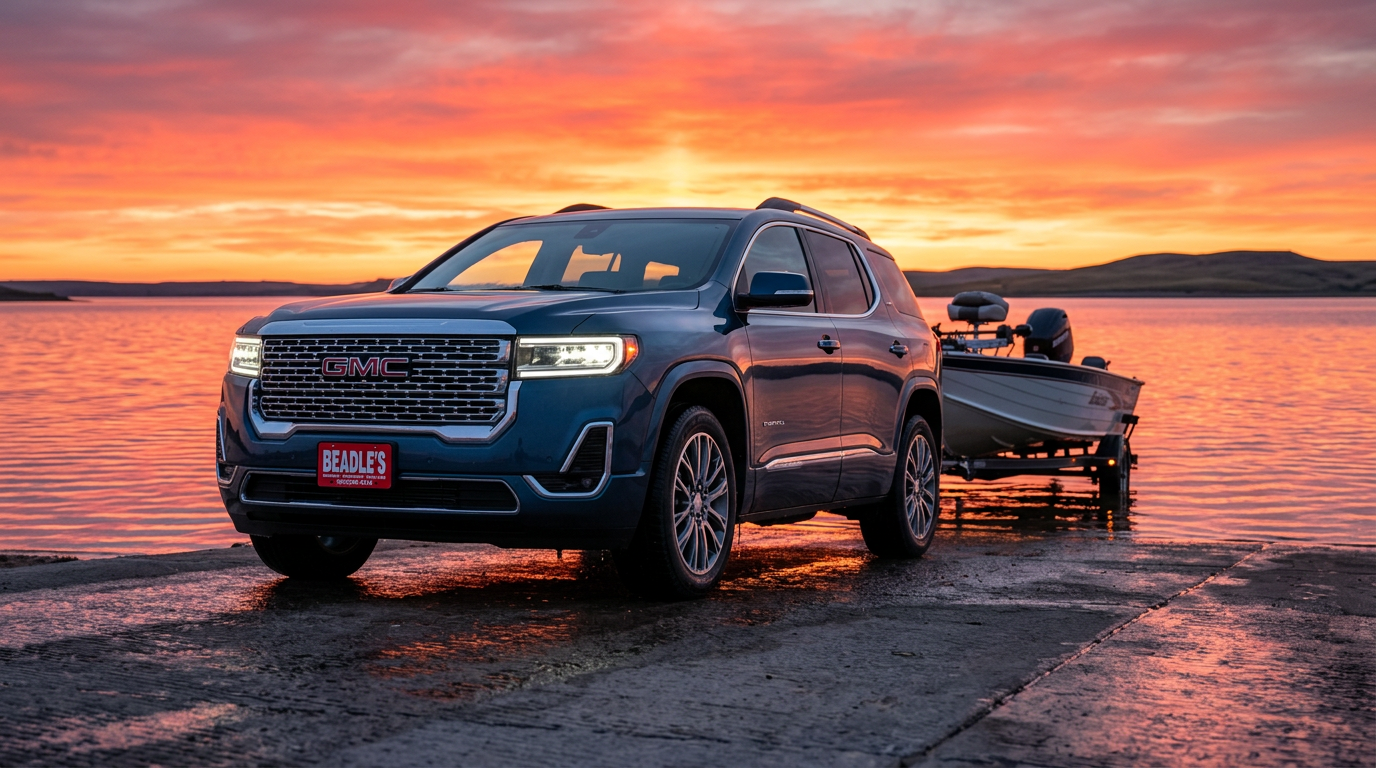
2026 Silverado 1500 at Lake Oahe boat launch near Mobridge South Dakota

Lake Oahe Boat Towing: The Mobridge Local's Guide to Launching with a Silverado 1500

Towing to Lake Oahe: How the Silverado 1500 Handles Mobridge's Biggest Recreation Season Published: April 8, 2026  | Author: Lexy Tabbert, Director of Sales and Marketing Lake Oahe doesn't care how capable your truck looks in the parking lot. What matters is whether it can back a loaded pontoon trailer down a wet concrete ramp at 6 a.m., hold position while you float the boat off, then pull the empty trailer back up without losing grip. Or haul a 24-foot cabin cruiser across 60 miles of South Dakota highway without trailer sway every time the wind picks up on the open prairie. This is a guide written for Mobridge drivers who use their truck at the lake — with real weights, real ramps, and real configurations from Beadle Chevrolet. TEMPLATE 2: Top CTA Row View Silverado 1500 Inventory Pre-Qualify for Financing TEMPLATE 3: Table of Contents Jump to Section Why Lake Oahe Demands More From a Tow Vehicle What Boats Launch at Lake Oahe — and What They Weigh Which Silverado 1500 Configuration Is Right for Your Boat? What the Ramp Experience Actually Demands Towing on South Dakota Highways to the Lake Frequently Asked Questions TEMPLATE 4A: Why Lake Oahe Demands More Why Lake Oahe Demands More From a Tow Vehicle Lake Oahe is one of the largest reservoirs in the United States — 231 miles long, stretching from Bismarck, ND to Pierre, SD, with Mobridge sitting near the midpoint. It is not a small fishing pond. The open water generates real wind, real chop, and real current near the dam. Boats on Oahe are not small either — the lake's size and quality attract cabin cruisers, large pontoons, and serious walleye rigs that need real towing equipment behind them. The Mobridge Marina launch ramp on the south side of the US-12 bridge is the primary entry point for most local boaters. West Whitlock Recreation Area, about 20 miles south, handles a large share of the pontoon traffic. Both ramps share characteristics that matter for your truck: concrete surfaces that get slick with algae and boat wash, steep grades on certain ramps, and gravel approach roads that turn soft after spring rains. Getting to the ramp also requires towing. Most Mobridge-area residents are 20–60 miles from storage facilities or home — meaning every Lake Oahe trip involves a real highway tow, not a short suburban hop. That distance matters for engine temperature, fuel consumption, and trailer sway stability on the open plains. TEMPLATE 4B: Boat Weights Table What Boats Launch at Lake Oahe — and What They Actually Weigh The weight of your boat on the highway is not the dry weight on the spec sheet. It is boat plus trailer plus fuel plus gear plus any water that found its way into the bilge. The table below shows realistic combined weights for the most common boat types on Lake Oahe. These are the numbers that determine which Silverado 1500 you need. Boat Type Typical Size Combined Weight (Loaded) Recommended Engine Walleye / Bass Boat 17–20 ft 2,000–4,500 lbs TurboMax or 5.3L V8 Pontoon (Standard) 20–22 ft 4,500–7,000 lbs 5.3L V8 Pontoon (Large / Tri-toon) 23–28 ft 7,000–10,000 lbs 5.3L V8 or Duramax Diesel Deck Boat / Bowrider 19–24 ft 3,500–6,000 lbs 5.3L V8 Cabin Cruiser (Smaller) 22–25 ft 6,000–10,000 lbs 5.3L V8 or Duramax Diesel Cabin Cruiser (Larger) 25–30 ft 10,000–13,000 lbs Duramax Diesel + Max Trail Pkg Personal Watercraft (2 on trailer) — 1,800–3,500 lbs Any engine Combined weight = boat dry weight + trailer weight + fuel (approx. 6 lbs/gallon) + gear and equipment. Always weigh your actual rig before choosing a towing configuration — or ask us to confirm capacity on a specific stock number. TEMPLATE 4C: Right Configuration Callout Which Silverado 1500 Configuration Is Right for Your Boat? The honest answer depends on two numbers: your boat's combined loaded weight, and how often you're making the haul. Here's how to match the right Silverado to the most common Lake Oahe setups. Walleye and Bass Boat Owners A dedicated walleye rig in the 18–20 foot range typically comes in at 3,000–4,500 lbs combined. Any Silverado 1500 engine handles this load, including the 2.7L TurboMax. If you're making multiple trips per week during the spring run and want the best fuel efficiency for the haul, the TurboMax is the most economical choice. If you also pull livestock or equipment the rest of the year, the 5.3L V8 gives you more range without pushing the engine. Standard Pontoon Owners (20–22 ft) This is the most common boat type at Mobridge Marina. A 20-foot pontoon with trailer, fuel, and a full day's gear runs between 4,500 and 7,000 lbs. The 5.3L V8 handles this range with 4,000–6,900 lbs of margin below its 11,400 lb limit. You don't need the diesel for this setup — but if you also pull a horse trailer or camper with the same truck, the diesel's flexibility makes it worth the step up. Large Pontoon or Cabin Cruiser Owners (23 ft+) A 24-foot tri-toon with trailer loaded for a weekend can push 9,000–10,500 lbs. A larger cabin cruiser on a tandem-axle trailer approaches 12,000 lbs or more. At this weight, the Duramax diesel with the Max Trailering Package is the right tool — not because the V8 necessarily can't handle it on flat highway, but because the ramp grades, the summer heat, and the return trip fully loaded demand an engine with torque reserves. The diesel's 495 lb-ft at low RPM is exactly what steep ramp launches need. TEMPLATE 5: Mid Image Break Most Mobridge-area residents tow 20–60 miles to reach storage or the lake — the highway haul matters as much as the ramp. TEMPLATE 4E: Ramp Experience What the Ramp Experience Actually Demands From Your Truck Boat ramp performance is not the same as highway towing performance. A truck can tow 11,000 lbs on flat pavement without breaking a sweat and still struggle on a wet, steep, or uneven ramp with a heavy boat. Here's what to expect at the most common Lake Oahe launches. Wet Concrete Traction Boat ramp concrete gets slick — from algae growth, boat wash, and early morning dew. The Silverado 1500's 4WD AutoTrac system engages automatically when the wheels slip, shifting torque to the tires with grip. For particularly slick conditions, switching to 4WD High manually before you back down eliminates the hesitation. This is standard on all 4WD Silverado trims and especially useful at West Whitlock, where the approach has gravel and the concrete extends steeply into the water. Backing Precision The available Trailer Reverse Guidance system on equipped Silverados shows a guide overlay on the backup camera that steers the trailer left or right based on where you turn the wheel. For solo ramp launches without a spotter, this dramatically reduces the number of pull-forwards needed to line up correctly. It is available as part of the Trailering Package and is standard on higher trims. What Most Buyers Overlook: Ramp Grade vs. Rated Tow Capacity A truck rated to tow 11,400 lbs on flat pavement is working significantly harder on a 15% ramp grade — the effective load on the drivetrain is much higher when you factor in grade resistance. If your loaded boat is consistently near your truck's maximum tow rating, the ramp will expose that margin every single time. Build in at least 15–20% headroom between your loaded weight and your truck's rated capacity for comfortable ramp performance. After the launch, pulling the empty trailer back up the ramp is straightforward with any Silverado configuration. The challenge is the loaded pull-out after a day on the water — particularly if the boat picked up water, gear got added, or you're launching in the heat of July with a full tank of gas. That's when ramp margin shows its value. TEMPLATE 4A: Highway Towing to the Lake Towing on South Dakota Highways to the Lake The stretch of US-12 east and west of Mobridge is open, straight, and frequently windy. Trailer sway is a real concern on this road — especially with a tall pontoon on a single-axle trailer running broadside to a southwest wind. Every 2026 Silverado 1500 includes Trailer Sway Control as part of the standard stability system, which detects oscillation and applies selective braking to correct it before the driver has to react. For the return trip — particularly in summer — pay attention to your coolant and transmission temperatures if you're towing near your rated capacity. The Silverado's available Trailering App on Google built-in displays these readouts in real time. On a 90-degree July day hauling a heavy cabin cruiser up the hill on the south end of the bridge, this information is genuinely useful. If temperatures climb, slowing to 55 mph drops heat significantly without adding much time to a local haul. One configuration point worth noting for frequent towing: the integrated trailer brake controller, included with the Max Trailering Package and available as a standalone add-on, allows you to adjust trailer brake gain directly from the cab. For a loaded pontoon coming down a hill toward a congested marina area, having independent trailer brake control is a practical safety feature — not just a spec on a window sticker. TEMPLATE 5b: Worth It / Skip It — Diesel for Lake Towing Is the Duramax Diesel Worth It for Lake Oahe Towing? For most standard pontoon and walleye boat owners, the 5.3L V8 is enough. For large boat owners or drivers who tow year-round with the same truck, the diesel's advantages compound. Diesel Worth It for Lake Towing If... 5.3L V8 Is Enough If... Your boat + trailer exceeds 9,000 lbs loaded You tow to the lake more than once a week in season You also pull livestock or equipment with the same truck You want maximum ramp torque on steep grades You store the boat 40+ miles from the water Your pontoon or fishing rig is under 8,000 lbs loaded You primarily launch at Mobridge Marina (manageable grade) Boat towing is the truck's primary or only towing use You prefer a lower purchase price You make fewer than 20–25 lake trips per season TEMPLATE 6: Key Takeaways Key Takeaways • The 5.3L V8 Silverado handles the majority of Lake Oahe boat types — walleye rigs, standard pontoons, deck boats, and smaller cabin cruisers — at up to 11,400 lbs when properly equipped with the Max Trailering Package. • Large pontoons (23 ft+), tri-toons, and cabin cruisers above 9,000 lbs loaded belong in the Duramax diesel with the Max Trailering Package. • Build at least 15–20% headroom between your loaded boat weight and your truck's rated capacity — ramp grades increase effective load significantly beyond highway towing. • 4WD AutoTrac and available Trailer Reverse Guidance are the two most practically useful features at the ramp — both available on 4WD Silverado trims. • Every 2026 Silverado 1500 includes Trailer Sway Control standard — relevant on the open, wind-exposed stretches of US-12 east and west of Mobridge. • Always use loaded weight — boat + trailer + fuel + gear — not the boat's dry weight spec sheet number when matching to towing capacity. TEMPLATE 7: FAQ Frequently Asked Questions What size truck do I need to tow a pontoon boat to Lake Oahe? For a standard 20–22 foot pontoon with trailer — typically 4,500–7,000 lbs loaded — the 2026 Silverado 1500 with the 5.3L V8 handles it comfortably, with several thousand pounds of margin below its 11,400 lb max rating. For larger pontoons (24 ft+) or boats over 9,000 lbs, the Duramax diesel and Max Trailering Package provide the additional capacity and low-RPM torque for confident towing on steep ramps. Is the Silverado 1500 good for launching at Mobridge Marina? Yes. The Silverado 1500 with 4WD handles the Mobridge Marina launch ramp and West Whitlock boat ramp confidently. The 4WD AutoTrac system provides traction on wet concrete, and available Trailer Reverse Guidance assists with backing precision. For steep or slick conditions, 4WD High engaged manually before backing down removes any hesitation. What is the walleye fishing season on Lake Oahe near Mobridge? Lake Oahe's walleye fishing peaks in spring (April through May) and fall (September through November), with consistent summer fishing through the warmer months. Ice fishing runs December through February depending on ice conditions. Mobridge is widely regarded as one of the top walleye fishing destinations in the country — the lake's size, depth, and cold Missouri River water produce consistent trophy walleye. Can the Silverado 1500 tow a cabin cruiser on Lake Oahe? It depends on the boat and trailer weight. Most cabin cruisers in the 22–24 foot range run 6,000–10,000 lbs combined with trailer and gear. The 5.3L V8 Silverado handles the lower end of that range, and the Duramax diesel reaches 13,300 lbs for larger setups. Cabin cruisers consistently above 13,500 lbs belong on a Silverado 2500HD or 3500HD. Always confirm your combined loaded weight before choosing a configuration. Does the Silverado 1500 have trailer sway control? Yes — Trailer Sway Control is standard on every 2026 Silverado 1500. When the system detects trailer oscillation, it automatically applies selective braking to correct the vehicle and trailer before the driver needs to react. This is particularly relevant on the open, wind-exposed stretches of US-12 east and west of Mobridge where crosswinds are common. TEMPLATE 8: First-Person Conclusion From Lexy Lake Oahe season is a big deal in Mobridge. We have customers who are out there every weekend from ice-out in April through the walleye run in fall, and they need a truck that handles the ramp as reliably as it handles the highway. The questions I hear most at the dealership aren't about max towing numbers — they're about whether a specific truck can handle a specific boat on a specific ramp without drama. That's the real question, and the answer is almost always about choosing the right configuration, not just any Silverado. If you know what you're towing, we can match you to the right engine, package, and trim before you're standing at the bottom of the ramp wishing you'd gone to the diesel. The full year-specific breakdown — including every engine, towing configuration, and available technology — is on the 2026 Chevrolet Silverado 1500 overview. — Lexy Tabbert, Director of Sales and Marketing Beadle Chevrolet, Mobridge, SD TEMPLATE 9: Bottom CTA Row View Silverado 1500 Inventory Pre-Qualify Today Call Beadle Chevrolet: 605-705-4343 TEMPLATE 10: About the Author (LOCKED) About the Author Lexy Tabbert — Beadle Chevrolet, Mobridge, SD Lexy Tabbert is the Director of Sales and Marketing at Beadle Chevrolet in Mobridge, South Dakota. She covers Chevrolet and GMC vehicles, trim comparisons, and buyer guidance — helping families, ranchers, and ag operators across the region find the right truck and configuration for their needs. Learn more about Lexy.

2026 Silverado 1500 towing livestock trailer on South Dakota ranch road

How Much Can the 2026 Silverado 1500 Tow? The Complete South Dakota Guide

2026 Silverado 1500 Towing Capacity: The Complete South Dakota Guide Published: April 8, 2026  | Author: Lexy Tabbert, Director of Sales and Marketing The 2026 Chevrolet Silverado 1500 tops out at 13,300 pounds of towing capacity — but that number only applies to one specific configuration. The engine you choose, the cab size you spec, and whether you add the Max Trailering Package all determine what your particular truck can actually pull. If you're towing a livestock trailer to a sale barn, launching a pontoon at Lake Oahe, or hauling a fifth-wheel camper down I-90, the right Silverado configuration matters more than the headline number. This guide breaks down every engine, every configuration variable, and every towing scenario relevant to South Dakota buyers — so you leave knowing exactly which Silverado 1500 is built for what you're pulling. TEMPLATE 2: Top CTA Row View Silverado 1500 Inventory Pre-Qualify for Financing TEMPLATE 3: Table of Contents Jump to Section What Is the Maximum Towing Capacity? How Does Each Engine Affect Towing Capacity? What Is the Max Trailering Package? What Can the Silverado Tow in South Dakota? How Do Cab Size and Bed Length Affect Towing? Trail Boss and ZR2: What to Know About Off-Road Trim Towing Frequently Asked Questions TEMPLATE 4B: Max Capacity with Table What Is the Maximum Towing Capacity of the 2026 Silverado 1500? The 2026 Chevrolet Silverado 1500 is rated to tow up to 13,300 pounds — achieved with the 3.0L Duramax diesel engine, Max Trailering Package, Crew Cab body style, Standard Bed, and 20-inch wheels in a rear-wheel-drive configuration. That is the ceiling. Most configurations land somewhere between 9,500 and 13,300 lbs depending on the options you choose. The table below shows maximum towing capacity by engine. These are OEM-rated figures from General Motors with the proper configuration and Max Trailering Package where applicable. Your specific truck's capacity is confirmed on the window sticker. Engine Horsepower Torque Max Tow Rating 2.7L TurboMax 310 hp 430 lb-ft 9,500 lbs 5.3L V8 355 hp 383 lb-ft 11,400 lbs 6.2L V8 420 hp 460 lb-ft 13,200 lbs 3.0L Duramax Diesel 305 hp 495 lb-ft 13,300 lbs Max tow ratings assume proper configuration with Max Trailering Package where available. The 6.2L V8 reaches 13,200 lbs on RST trim with the Max Trail Package. Always confirm your specific truck's window sticker for the exact rating. TEMPLATE 4B: Engine Comparison for Towing How Does Each Engine Affect Towing Capacity? Each of the four Silverado 1500 engines has a distinct towing personality. Raw capacity numbers tell part of the story — but so does how the engine delivers its power and how it holds up on long hauls. 2.7L TurboMax — 9,500 lbs Max The TurboMax is the Silverado's standard four-cylinder turbocharged engine, and at 430 lb-ft of torque it tows more confidently than the numbers suggest. It handles two-horse bumper-pull trailers, smaller pontoon boats, and enclosed cargo trailers with no issues. What it does not do is serve as a dedicated towing engine for heavy loads — anything pushing 9,000 lbs should move up to a V8. The TurboMax is also not available on the Custom Trail Boss or ZR2. 5.3L V8 — 11,400 lbs Max The 5.3L V8 is the most popular Silverado engine for a reason. It handles the majority of South Dakota towing scenarios — three-horse slant-load trailers, larger pontoon boats, travel trailers in the 8,000–10,000 lb range — with power to spare. At 355 hp and 383 lb-ft, it's a proven, reliable choice for buyers who tow regularly but don't need to be at the very top of the capacity range. Available on nearly every trim level. 6.2L V8 — 13,200 lbs Max The 6.2L V8 is the most powerful gas engine in the lineup at 420 hp and 460 lb-ft of torque. Paired with the Max Trail Package on RST, it reaches 13,200 lbs — just 100 lbs short of the Duramax's ceiling. It's the right call for buyers who want maximum gas performance without switching to diesel, and it's available on RST, LTZ, and High Country trims. 3.0L Duramax Diesel — 13,300 lbs Max The Duramax diesel reaches 13,300 lbs at the top end when properly equipped with the Max Trailering Package — but its real advantage for South Dakota towing isn't the ceiling, it's the torque. At 495 lb-ft available at low RPM, the diesel pulls heavy loads with less effort and less engine stress than any gas engine in the lineup. Long hauls from Mobridge to Rapid City or Aberdeen pulling a loaded livestock trailer are where diesel drivers feel the difference most. And as of 2026, it is the only diesel engine available in any half-ton pickup — Ram dropped the EcoDiesel, Ford dropped the PowerStroke. TEMPLATE 4D: Max Trail Package — Source Box What Is the Max Trailering Package and Do You Need It? The Max Trailering Package (RPO Z82) is an add-on package available on most Silverado 1500 trims that unlocks the highest towing capacity for a given engine. Without it, your truck is rated for a lower tow limit even with the same engine. If you are buying a Silverado specifically to maximize towing capacity, this is the package that gets you to the top number. What the Max Trailering Package Includes The package typically includes an upgraded rear axle ratio, an integrated trailer brake controller, a gooseneck/fifth-wheel prep package, 20-inch wheels (where required), and additional trailering camera and technology features such as Hitch Guidance with Hitch View and Trailer Length Indicator. The specific contents vary slightly by trim and engine combination — confirm on the window sticker or Chevrolet Build and Price tool for your configuration. Not every Silverado buyer needs the Max Trailering Package. If your heaviest regular tow is a two-horse bumper-pull or a 20-foot pontoon, the standard towing capability on the 5.3L V8 is more than adequate without the package. The Max Trail Package matters most when you're near the top of what a half-ton can handle — fifth-wheel campers, heavy gooseneck livestock trailers, or boats with large multi-axle trailers. TEMPLATE 5: Image Break The Silverado 1500's payload and towing capabilities work together — what you carry in the bed reduces what you can tow behind it. TEMPLATE 4A: South Dakota Towing Use Cases What Can the Silverado 1500 Tow in South Dakota? Most towing guides talk in abstract numbers. South Dakota drivers pull specific equipment, and here's how those loads match up to Silverado configurations. Lake Oahe Boats and Watercraft A standard bass boat or fishing setup (boat + trailer) typically runs 2,500–4,500 lbs — well within TurboMax range. A 20–22 foot pontoon fully loaded with gear and fuel comes in between 5,000–8,000 lbs — handled comfortably by the 5.3L V8. Larger cabin cruisers or boats on multi-axle trailers pushing 9,000–12,000 lbs combined call for the 6.2L V8 or Duramax diesel. See our dedicated guide on towing to Lake Oahe from Mobridge for a full breakdown of watercraft weights and launch ramp considerations. Livestock Trailers A bumper-pull two-horse trailer empty runs about 2,500–3,500 lbs. Add two horses and the loaded weight sits around 4,500–6,500 lbs — fully within the 5.3L V8's range with room to spare. A three-horse slant load trailer loaded with horses and tack comes in around 7,000–9,000 lbs. A gooseneck four-horse or stock trailer loaded for a cattle sale can approach 12,000–15,000 lbs — the upper end requires the diesel and Max Trail Package, and loads above 13,300 lbs require moving to a heavy-duty platform. Campers and RVs A small travel trailer (16–20 ft, 3,500–5,500 lbs) is no problem for any Silverado 1500 engine. A mid-size travel trailer (22–28 ft, 6,000–9,000 lbs) is well within the 5.3L V8 range. A larger travel trailer or smaller fifth-wheel in the 10,000–13,000 lb range is where the 6.2L V8 or Duramax diesel earns its keep. The Silverado 1500 is not designed for fifth-wheels above about 13,500 lbs — those loads belong on a 2500HD or 3500HD. Farm Equipment and Utility Trailers Skid steers, compact tractors, grain wagons, and utility equipment vary widely. A compact utility tractor on a bumper-pull trailer can run 6,000–9,500 lbs — manageable with the 5.3L V8 or diesel. Moving equipment that regularly approaches or exceeds 10,000 lbs is where the diesel's low-RPM torque advantage becomes tangible on long hauls between operations. TEMPLATE 4C: Configuration Variables How Do Cab Size, Bed Length, and Drivetrain Affect Towing Capacity? The engine gets most of the attention, but several other configuration choices affect your actual tow rating. The same engine in two different configurations can have meaningfully different towing limits. Configuration Variables That Affect Tow Rating Cab Size: Crew Cab configurations typically offer the highest tow ratings due to wheelbase length. Regular Cab and Double Cab ratings may be slightly lower depending on configuration. Bed Length: Standard Bed (6'6") and Short Bed (5'8") availability varies by cab. The Max Trailering Package may require specific bed/cab combinations to reach the highest rating. Drivetrain: 2WD configurations are generally rated slightly higher than 4WD for towing due to lower weight. The difference is typically minor — often under 500 lbs — but it appears on the window sticker. Axle Ratio: Higher numeric axle ratios (e.g., 3.73 vs. 3.42) increase towing capacity but reduce fuel economy on the highway. The Max Trailering Package includes the appropriate axle ratio upgrade. Wheel Size: Reaching the maximum tow rating on certain configurations requires 20-inch wheels. This is part of why the Max Trail Package includes wheel specifications. The bottom line: the number on the window sticker is the only authoritative source for your specific truck. When in doubt, ask us to pull the towing capacity for the specific stock number you're looking at. Every truck is different. TEMPLATE 5b: Worth It / Skip It — Duramax Diesel for Towing Is the Duramax Diesel the Right Towing Engine for You? The diesel is the best towing engine in the Silverado 1500 lineup — but it's not the right choice for every buyer. Here's a quick framework. Diesel Worth It If... 5.3L V8 Is Enough If... You tow more than 3 times per week Your loads regularly exceed 10,000 lbs You haul long distances (100+ miles loaded) Cold starts in hard winters matter to you You want the only remaining diesel half-ton You tow occasionally (weekends, seasonal) Your loads are consistently under 9,000 lbs Most hauls are local or short distance You prefer a lower upfront purchase price Gas infrastructure is more convenient for you TEMPLATE 4E: Trail Boss / ZR2 Towing Warning Trail Boss and ZR2: What to Know About Off-Road Trim Towing The Trail Boss and ZR2 trims are built for off-road capability, and each makes a different trade-off when it comes to towing. The Custom Trail Boss and LT Trail Boss give up relatively little for their Z71 off-road hardware. With the Duramax diesel and Max Trail Package, the LT Trail Boss is rated up to 11,400 lbs — a respectable number for a truck that also handles ranch roads, muddy fields, and boat launch ramps confidently. For buyers who need both go-anywhere capability and real towing, the Trail Boss is the right answer. ZR2 Towing Trade-Off The ZR2 runs the Duramax diesel as standard equipment, but its towing capacity is capped at approximately 8,700–8,800 lbs. The Multimatic DSSV dampers and lifted off-road suspension geometry that make the ZR2 exceptional off-road limit the towing configuration. If you buy a ZR2 expecting diesel-level towing performance, the actual rating will disappoint. The ZR2 is a capable off-road truck that happens to tow reasonably well — it is not a towing-first truck. For buyers deciding between Trail Boss and ZR2 with towing as a factor, see our full Trail Boss vs. ZR2 comparison for South Dakota. TEMPLATE 6: Key Takeaways Key Takeaways • The 2026 Silverado 1500 tops out at 13,300 lbs with the Duramax diesel, Max Trailering Package, and Crew Cab/Standard Bed configuration. • The 5.3L V8 handles the majority of South Dakota towing needs — boats, livestock trailers, and campers — at up to 11,400 lbs. • The Duramax diesel is the only diesel engine available in any half-ton pickup as of 2026 — 495 lb-ft of torque at low RPM is its towing advantage over gas engines. • The Max Trailering Package is required to reach the highest rating for a given engine — without it, your tow limit is lower even with the same powertrain. • The ZR2's towing is capped at approximately 8,700–8,800 lbs despite running the diesel — the off-road suspension geometry limits the configuration. • Always confirm towing capacity on your specific truck's window sticker — cab, bed, drivetrain, axle ratio, and wheel size all affect the final number. TEMPLATE 7: FAQ Frequently Asked Questions What is the maximum towing capacity of the 2026 Chevrolet Silverado 1500? The 2026 Silverado 1500 reaches a maximum of 13,300 pounds when equipped with the 3.0L Duramax diesel, Max Trailering Package, Crew Cab body style, Standard Bed, and 20-inch wheels. Gas engine configurations range from 9,500 lbs (TurboMax) to 13,200 lbs (6.2L V8 on RST with Max Trail). Your specific truck's rating is on the window sticker, as it varies by engine, cab, bed, drivetrain, and axle ratio. Can the 2.7L TurboMax Silverado tow a boat or livestock trailer? Yes. The TurboMax is rated to 9,500 lbs — enough for a pontoon boat (5,000–8,000 lbs loaded), a two-horse bumper-pull trailer (3,500–5,000 lbs), or a smaller travel trailer. For three-horse slant loads, gooseneck trailers, or heavier boats, step up to the 5.3L V8 or diesel for better towing margins. Is the Duramax diesel worth it just for towing? For frequent, heavy, or long-distance towing, yes. The diesel produces 495 lb-ft of torque at low RPM, handles loads up to 13,300 lbs, comes with a standard engine block heater for cold South Dakota starts, and is the only diesel available in a half-ton pickup in 2026. For occasional towing under 9,000 lbs, the 5.3L V8 is capable and costs less upfront. What trailers can I tow with the 5.3L V8 Silverado? The 5.3L V8 is rated up to 11,400 lbs — covering three-horse slant loads, larger pontoon boats and cabin cruisers up to about 10,000 lbs combined, and travel trailers in the 8,000–10,000 lb range. For fifth-wheel campers or heavy gooseneck livestock trailers near or above 11,000 lbs, the diesel's additional margin is worth considering. Can the Silverado 1500 tow a fifth-wheel trailer? Yes, with the proper gooseneck/fifth-wheel prep package. Maximum capacity reaches 13,300 lbs with the Duramax diesel and Max Trailering Package — enough for most half-ton compatible fifth-wheels. For loads consistently above 14,000 lbs, a Silverado 2500HD or 3500HD is the more appropriate platform. Does the Trail Boss or ZR2 have lower towing capacity? The Trail Boss trims tow up to 11,400 lbs with the diesel and Max Trail Package — a solid number for buyers who want off-road capability without giving up real towing. The ZR2 is different: its towing is capped at approximately 8,700–8,800 lbs even though it runs the Duramax diesel. The Multimatic DSSV off-road suspension limits the towing configuration. If towing capacity is a priority, the Trail Boss is the better choice over the ZR2. TEMPLATE 8: First-Person Conclusion From Lexy I've worked at Beadle Chevrolet long enough to know that most South Dakota buyers don't come in asking about max towing ratings in the abstract — they come in knowing exactly what they pull, and they want to know if a specific truck will handle it. The answer is almost always yes, but the right configuration matters. A customer who buys a TurboMax because it was on the lot when they wanted a 5.3L is going to feel that gap the first time they back a heavy horse trailer down a gravel hill. My suggestion is always to start with the heaviest thing you'll ever regularly pull, add about 15% for margin, and choose the engine and package that covers that number comfortably. The Silverado 1500 has the range to match almost every half-ton towing need in the region — you just need to spec it right. If you want help figuring out which configuration fits your use, call us or stop in. We pull the towing capacity for the specific stock number every time — every truck is different. You can also see the full year-specific breakdown on the 2026 Chevrolet Silverado 1500 overview. — Lexy Tabbert, Director of Sales and Marketing Beadle Chevrolet, Mobridge, SD TEMPLATE 9: Bottom CTA Row View Silverado 1500 Inventory Pre-Qualify Today Call Beadle Chevrolet: 605-705-4343 TEMPLATE 10: About the Author (LOCKED) About the Author Lexy Tabbert — Beadle Chevrolet, Mobridge, SD Lexy Tabbert is the Director of Sales and Marketing at Beadle Chevrolet in Mobridge, South Dakota. She covers Chevrolet and GMC vehicles, trim comparisons, and buyer guidance — helping families, ranchers, and ag operators across the region find the right truck and configuration for their needs. Learn more about Lexy.

2026 Chevrolet Blazer exterior front quarter

2025 vs 2026 Chevrolet Blazer: What Changed and Does It Matter?

Hero Image Intro Section The 2026 Chevrolet Blazer lineup brings meaningful changes to trim structure, powertrain options, and standard safety features. The Premier trim has been discontinued, engine availability has shifted, and Chevrolet introduced an all-new panoramic sunroof option. For buyers in Mobridge and across South Dakota, understanding these year-over-year differences is crucial when deciding whether a leftover 2025 represents better value or if the new 2026 is worth the upgrade. At Beadle Chevrolet, we've built detailed spec sheets on both model years to help you make an informed decision. This guide covers every significant change, from discontinued options to new packages, safety enhancements, and pricing shifts that matter to your purchase. Top CTA Section View Blazer Inventory Pre-Qualify Now Table of Contents On This Page Trim Structure Changes Engine Availability Shifts New Features & Packages Safety Enhancements Pricing & Value Should You Buy 2025 or 2026? Frequently Asked Questions Section 1: Trim Structure Changes What Changed in 2026: Trim Structure Simplified The 2025 Chevrolet Blazer offered four trim levels: 2LT, 3LT, RS, and Premier. For 2026, Chevrolet discontinued the Premier trim, reducing the lineup to three standard options: 2LT, 3LT, and RS. This consolidation reflects market demand and allows Chevrolet to focus engineering and marketing resources on the core performance and luxury tiers. The Premier trim—positioned between the RS and luxury offerings—served a narrow segment. By removing it, Chevrolet simplified the decision-making process for buyers while making the RS more attractive as the premium performance option. For those who were eyeing a 2025 Premier, the 2026 RS with the new Enhanced Convenience Package and Driver Confidence II Package now delivers similar luxury and safety features at a lower price point. For a complete breakdown of 2026 Blazer trim specifications and features, explore our full trim comparison guide. Summary Table Feature 2025 2026 Impact Trim Count 4 (2LT, 3LT, RS, Premier) 3 (2LT, 3LT, RS) Simplified 2LT Engine 2.0T or V6 2.0T only V6 removed RS Engine 2.0T or V6 V6 only (308 hp) V6 standard Panoramic Sunroof Not available 3LT, RS only NEW option Driver Confidence Pkg (2LT) Optional Standard Added value 3LT Power Liftgate Standard Manual only Removed 3LT Roof Rails Standard Not available Discontinued RS Rear Heated Seats Standard Enhanced Pkg Now optional Section 2: Engine Availability Engine Availability Shifts: More V6 Focus One of the most significant powertrain changes between 2025 and 2026 is the consolidation of engine options. In 2025, buyers had flexibility across trims, but 2026 tightens the lineup to streamline production and inventory. 2025 Blazer Engine Options 2LT: 2.0L Turbo (228 hp) or 3.6L V6 (308 hp) 3LT: 2.0L Turbo (228 hp) or 3.6L V6 (308 hp) RS: 2.0L Turbo (228 hp) or 3.6L V6 (308 hp) 2026 Blazer Engine Options 2LT: 2.0L Turbo (228 hp) only 3LT: 2.0L Turbo (228 hp) only RS: 3.6L V6 (308 hp) only What does this mean for buyers? The 2026 strategy clearly positions the V6 as the performance-focused engine reserved for the RS trim. If you want V6 power and haven't committed to an RS, a leftover 2025 2LT or 3LT with the V6 engine might be your last chance to get that larger displacement option at a potentially discounted price. The 2.0T remains a solid, efficient choice for the 2LT and 3LT trims in 2026, offering adequate acceleration and better fuel economy for daily driving across Mobridge and the surrounding region. Image Break 1 Section 3: New Features & Packages New Features & Packages: Enhanced Convenience & Safety The 2026 Blazer introduces two major new packages and one all-new exterior feature designed to increase comfort, connectivity, and driver assistance capabilities on the RS trim. Panoramic Sunroof (NEW for 2026) Available on 3LT and RS trims only, the panoramic sunroof is an entirely new offering for the 2026 Blazer. This feature was not available on any 2025 model. The large glass panel enhances interior brightness and creates an open-air feel, particularly desirable for South Dakota drivers who appreciate the clearer sightlines and cabin ambiance during our extended sunlit months. Enhanced Convenience Package (RS) New for 2026, this package bundles four premium comfort features: Memory seat settings (NEW across entire lineup) Rear heated seats (previously standard on 2025 RS) Ventilated front seats Power tilt/telescoping steering wheel For families with multiple drivers or luxury-focused buyers, memory settings represent a substantial convenience upgrade. This feature automatically adjusts seat position, mirror angles, and steering wheel tilt to each driver's preference. Driver Confidence II Package (RS) This new suite of advanced driver-assistance features is exclusive to the 2026 RS and represents a significant leap in safety technology: HD Surround Vision (360-degree camera perspective) Rear Camera Mirror (digital display replaces traditional mirror) Adaptive Cruise Control (maintains distance from vehicles ahead) Enhanced Automatic Emergency Braking (AEB) Safety Alert Seat (haptic warnings for collision risk) These technologies address the practical needs of drivers on rural South Dakota highways, where lane keeping and collision avoidance systems provide genuine safety value during long-distance travel. Driver Confidence Package Now Standard on 2LT In 2025, the foundational Driver Confidence Package was optional on the 2LT trim. For 2026, Chevrolet made it standard equipment, including: Lane Change Alert Rear Park Assist Rear Cross Traffic Alert This upgrade means every 2026 2LT Blazer includes essential blind-spot monitoring and parking assistance at no additional cost, raising the baseline safety standard for the entry-level trim. Section 4: Safety Upgrades Safety Enhancements: 2026 Blazer Raises the Bar Beyond the new packages, the 2026 Blazer incorporates updated safety technology across the lineup. The Driver Confidence II Package on the RS represents the most comprehensive upgrade, but all trims benefit from baseline improvements in collision avoidance and driver monitoring systems. For buyers prioritizing occupant protection—especially families with young children or those who frequently navigate rural highways—the 2026 RS with Driver Confidence II offers a compelling safety case. The Safety Alert Seat, which provides haptic warnings through the driver's seat when a collision risk is detected, adds an intuitive, physical alert layer beyond visual and audio warnings. The standard Driver Confidence Package on all 2026 2LT trims also brings rear cross-traffic alert, which Mobridge drivers who tow trailers or park in tight spaces will appreciate. Section 5: Pricing & Value Pricing & Value: Does 2026 Justify the Changes? Let's look at the numbers. Chevrolet set 2026 pricing lower than comparable 2025 trims, a strategy that reflects the removal of some standard features on the higher trims but the addition of others: MSRP Comparison (FWD, before destination) Trim 2025 MSRP 2026 MSRP Difference 2LT ~$36,500 $34,300 -$2,200 3LT ~$41,200 $39,700 -$1,500 RS ~$44,800 $43,600 -$1,200 The 2026 entry price is notably lower, making it an attractive option for budget-conscious buyers. However, several 2025-exclusive features must be considered: 3LT Power Liftgate: Standard on 2025, now manual-only on 2026. Aftermarket installation could add $500–$800. 3LT Roof Rails: Available on 2025, discontinued on 2026. Third-party rails add $300–$600. RS Rear Heated Seats: Standard on 2025, now require the Enhanced Convenience Package on 2026. When you factor in these removed standards, the effective 2026 price advantage narrows, particularly on the 3LT and RS. However, the 2026 2LT gains the standard Driver Confidence Package, which offsets the lower price. Image Break 2 Section 6: 2025 vs 2026 Decision Guide Should You Buy a Leftover 2025 or the New 2026 Blazer? This is the question we hear most from Mobridge and regional customers. The answer depends on your priorities, use case, and what specific features matter most to you. Buy a 2025 Blazer If You Want: V6 power on 2LT or 3LT. The last model year offering the 3.6L V6 on base and mid-tier trims. If you prioritize highway acceleration and towing capability, a 2025 V6 2LT or 3LT may cost less to acquire, even at full MSRP, than a 2026 RS with the mandatory V6. Premium features without packaging. Power liftgate on 3LT, rear heated seats on RS. In 2025, these were standard; in 2026, some require package purchases. Maximum dealer incentives. Leftover 2025 inventory typically carries deeper discounts as dealers clear stock for new model years. Savings of $3,000–$5,000 or more are not uncommon on 2025 vehicles. Iridescent Pearl Tricoat paint. This color was discontinued for 2026. If you love this finish, a 2025 is your only option. Roof rails on 3LT. Standard on 2025, not available on 2026. Useful for cargo carriers and roof racks. Simpler purchase process. You know the market has settled. No questions about 2026 reliability or real-world ownership costs. Buy a 2026 Blazer If You Want: Panoramic sunroof. This is new for 2026 on 3LT and RS. If an open cabin feel matters, 2025 cannot deliver it. Advanced safety on RS. Driver Confidence II, HD Surround Vision, Rear Camera Mirror, and Safety Alert Seat are all exclusive to 2026 RS. Rural and highway drivers will appreciate these features. Standard Driver Confidence on 2LT. The 2026 2LT includes lane change alert, rear park assist, and rear cross-traffic alert as baseline equipment. 2025 buyers had to pay for this package. Memory seat settings. New for 2026 RS Enhanced Convenience Package. Invaluable if multiple drivers share the vehicle. Lower starting MSRP. The 2026 2LT starts at $34,300 FWD—$2,200 less than comparable 2025 models. Latest design and warranty. 2026 includes the most current Chevrolet design language and full factory warranty coverage from the model year you take delivery. Fuel economy confidence. Streamlined engine lineup and optimized 2.0T calibration may offer slightly better efficiency. Our Recommendation For most buyers, the 2026 Blazer represents better value when you account for total cost of ownership and warranty coverage. Yes, incentives on 2025 models may be deeper, but those savings often come with used-market mileage (even if the vehicle is technically new), potential warranty questions, and the loss of exclusive 2026 features. That said, if you: Need the V6 on a 2LT or 3LT trim, and Can find a significantly discounted 2025 model...a 2025 could still make financial sense. But compare total-cost-of-ownership figures (finance rate, warranty scope, projected maintenance) before committing. Key Takeaways Key Takeaways Premier trim discontinued: 2026 Blazer lineup reduced to 2LT, 3LT, and RS. Engine availability changed: 2LT and 3LT locked to 2.0T; RS exclusive to V6 (308 hp). New features for 2026: Panoramic sunroof, Enhanced Convenience Package, Driver Confidence II Package on RS. Safety upgraded: Driver Confidence Package now standard on 2LT; RS gets advanced collision avoidance and Surround Vision. Pricing lower: 2026 MSRP down $1,200–$2,200 per trim, but some 2025 standards moved to packages. Power liftgate removed from 3LT: Was standard on 2025, manual-only on 2026. Roof rails discontinued on 3LT: Not available on 2026 (were standard on 2025). FAQ Section Frequently Asked Questions Can I still get a V6 on the 2026 2LT or 3LT? No. For 2026, the 2.0L Turbo is the only engine available on 2LT and 3LT trims. The 3.6L V6 (308 hp) is exclusive to the RS trim. If V6 power is essential to your purchase, a 2025 2LT or 3LT with V6 may still be available at Beadle Chevrolet. Contact us to check current leftover inventory. Is the panoramic sunroof worth the upgrade cost on 3LT? That depends on your preferences and South Dakota's sunny climate. A panoramic sunroof adds brightness, improves the sense of interior space, and supports resale appeal in used markets. However, it also adds weight (slightly reducing efficiency), increases insurance in some cases, and requires maintenance. For Mobridge drivers who appreciate open-air motoring, the cost is justified. For practical, budget-focused buyers, the standard roof is perfectly capable. What's the cost difference between the 2026 RS and a 2025 RS with all the same features? The 2026 RS starts at $43,600 (FWD). A 2025 RS with V6 engine, rear heated seats (standard), power liftgate (not available on RS), and rear cross-traffic alert starts around $44,800. The 2026 is nominally $1,200 less, but to match the 2025's included features, you'd need to add the Enhanced Convenience Package ($1,200–$1,500) and Driver Confidence II ($1,500–$2,000), bringing the real total closer to $46,300–$47,100. However, the 2026 gains the new advanced safety suite (Surround Vision, Rear Camera Mirror, Adaptive Cruise, Safety Alert Seat), which is exclusive to 2026. It's a trade-off: more advanced tech on 2026 vs. simpler, cheaper setup on 2025. Should I be concerned about early 2026 model reliability? The 2026 Blazer uses proven platforms and engines from Chevrolet's recent model years. The 2.0L Turbo and 3.6L V6 have been battle-tested since 2019, and Chevrolet has addressed initial issues from early 2020–2021 production. The new features (panoramic sunroof, Rear Camera Mirror, Surround Vision) come from other Chevrolet models with established track records. That said, any new model year can have minor teething issues. Our service team at Beadle Chevrolet is fully trained on 2026 diagnostics and has access to all TSBs and recalls. For peace of mind, the full factory warranty covers you either way. Can I get a 2026 Blazer with all-wheel drive? Yes. Both 2025 and 2026 Blazer trims offer available all-wheel drive. FWD pricing is listed above; AWD adds approximately $2,000–$2,500 depending on the trim and any packages. AWD is particularly valuable for South Dakota winters. Speak with our sales team about AWD incentives and availability. What happened to the 2025 Premier trim? Is there a 2026 equivalent? The Premier trim was discontinued by Chevrolet for 2026. It occupied a niche between the RS and full luxury offerings, and market data showed weak sales volume. For buyers who wanted the Premier's softer styling and luxury features, the 2026 RS with the Enhanced Convenience Package offers a similar experience—memory seats, ventilated front and rear heated seats, and power steering wheel—at a lower price. The RS also gains exclusive advanced safety technology that the 2025 Premier did not have, making the 2026 RS the new premium choice. Conclusion Our Final Take: 2025 vs. 2026 I've spent the last month comparing these two model years in our showroom inventory, and here's what I'm telling customers who walk through the door undecided. The 2026 Blazer is the better vehicle—full stop. The new safety packages, standard Driver Confidence on 2LT, the panoramic sunroof, and memory seat settings represent genuine quality-of-life upgrades. Yes, you lose some 2025 standards (power liftgate on 3LT, roof rails, V6 on 2LT and 3LT), but you're gaining more in return. The MSRP is lower, too. For families on a budget, the 2026 2LT at $34,300 is an exceptional entry point, especially with the standard Driver Confidence Package included. That's real value. That said, if you're a V6 purist and find a 2025 with substantial dealer incentives, the numbers can work in your favor. Or if you need that Iridescent Pearl Tricoat paint or roof rails for cargo, 2025 is your path. Here in Mobridge, we work with families who spend serious time on the road—heading to Rapid City, Pierre, or out across the ranch. For those drivers, the 2026 RS with Driver Confidence II and Surround Vision is worth every penny. The Safety Alert Seat alone might save your life on a distracted-driving moment on Highway 212. My advice? Test drive both if you can. Feel the difference in the new safety systems. See if the panoramic sunroof speaks to you. For a deep dive into everything the new model offers, explore the complete 2026 Chevrolet Blazer overview. Then let the numbers guide your final call. Either way, the Blazer is an excellent choice for South Dakota driving. — Lexy Tabbert Director of Sales & Marketing Beadle Chevrolet, Mobridge, SD Bottom CTA Section View Inventory Pre-Qualify Contact Us Author Block (LOCKED) About the Author Lexy Tabbert — Beadle Chevrolet, Mobridge, SD Lexy Tabbert is the Director of Sales and Marketing at Beadle Chevrolet in Mobridge, South Dakota. She covers Chevrolet vehicles, trim comparisons, and buyer guidance — helping families, ranchers, and ag operators across the region find the right truck and configuration for their needs. Learn more about Lexy.
2026 Chevy Blazer exterior comparison

2026 Chevrolet Blazer vs Traverse: Which Chevy SUV Fits Your Life?

Hero Image Intro Section Choosing between the 2026 Chevrolet Blazer and Traverse comes down to your family size, lifestyle, and what adventures await. Both are excellent midsize SUVs from Chevy, but they're built for different needs. The Blazer delivers agile handling, sleek styling, and a competitive price for couples and small families. The Traverse offers a third row, maximum cargo capacity, and the space to haul your whole crew—plus gear for Lake Oahe weekends or Black Hills getaways. As the Director of Sales and Marketing at Beadle Chevrolet, I work with Mobridge families every week who are asking this exact question. Let's break down the specs, the real-world differences, and guide you to the right choice for your life. Top CTA Section View Blazer Inventory Get Pre-Qualified Table of Contents On This Page How do the Blazer and Traverse compare on size? Which has more cargo space? How does seating differ (2-row vs 3-row)? Which tows more? How do they compare on price and engines? When should you choose the Blazer? When should you choose the Traverse? Size Comparison Section How Do the Blazer and Traverse Compare on Size? The Traverse is the larger vehicle in almost every dimension. It's roughly 8 inches longer (212" vs 191.88"), sits taller, and has a wider stance. That extra length accommodates the third row of seating and significantly more interior volume. The Blazer prioritizes agility and style. Its compact footprint makes it easier to maneuver in Mobridge traffic, park at local shops, and navigate tight ranch roads. Ground clearance sits at 7.5–7.6 inches—solid for South Dakota terrain. For couples, young professionals, or small families without a third child, the Blazer's size is ideal. You get rugged SUV capability without the bulk. Comparison Table Specification 2026 Blazer 2026 Traverse Length 191.88" ~212" Wheelbase 113" Longer Ground Clearance 7.5–7.6" 8.3" Seating 5 passengers (2 rows) Up to 8 (3 rows) Passenger Volume 107.8 cu ft 131+ cu ft Max Cargo (behind front row) 64.2 cu ft 98.5 cu ft Engine Options 2.0T or V6 2.5L Turbo only Towing Capacity Up to 4,500 lbs Up to 5,000 lbs Starting MSRP $34,300 ~$36,500 Cargo Space Section Which Has More Cargo Space? The Traverse wins decisively here. With 64.2 cubic feet behind the second row and 98.5 cubic feet with both rear rows folded, it's purpose-built for hauling. That matters if you're loading lumber at the hardware store, camping gear for multiple families, or equipment for Black Hills adventures. The Blazer offers 30.5 cubic feet behind the rear seat and 64.2 cubic feet with the rear seat folded—plenty for groceries, luggage, and weekend trips. For couples or families with one or two kids, it's more than adequate. You won't feel cramped on typical South Dakota road trips. Think of it this way: Choose the Blazer if cargo is occasional. Choose the Traverse if you regularly max out your trunk and need to fold seats. Image Break Seating Section How Does Seating Differ (2-Row vs 3-Row)? This is the biggest functional difference. The Blazer seats five people across two rows. The Traverse seats up to eight with its optional third row—making it the go-to choice for larger families. For Mobridge school carpools with three kids or more, the Traverse is a game-changer. Third-row access is practical, and rear passengers have genuine headroom. The Blazer's two-row setup means another child needs a separate vehicle or third-party ride service. The Blazer's advantage: adult rear passengers get spacious legroom in a true second row—not the cramped jump seats you'd find in a three-row vehicle. Every seat feels intentional, and cabin comfort is higher because you're not pushing a third row into a compact footprint. Visit our 2026 Blazer overview to explore all trim levels and seating configurations, or read our full interior and cargo guide for detailed photos and measurements. Towing Section Which Tows More? The Traverse tows up to 5,000 pounds. The Blazer—especially with the V6 AWD configuration—reaches 4,500 pounds. Both are respectable for recreational use: small trailers, jet skis, or a compact RV. For most South Dakota owners, the difference is academic. Lake Oahe boat trips? Both handle it. Ranch utility? The Traverse provides more cushion, but the Blazer V6 won't disappoint. If towing is a regular, heavy-duty task, upgrade to the Traverse or step up to a full-size Tahoe or Suburban. The Blazer is the agile, fun choice—not the workhorse. Engines & Price Section How Do They Compare on Engines and Price? Engine Options Blazer: Two choices. The 2.0L Turbo delivers 228 horsepower with excellent fuel economy—ideal if you prioritize efficiency and lighter daily driving. The 3.6L V6 produces 308 horsepower, offering more authority for passing, towing, and spirited driving. Both pair with an 9-speed automatic and come with standard AWD option across all trims. Traverse: One engine: the 2.5L Turbo with 315 horsepower. It's a solid middle ground—more power than the Blazer's 2.0T, but turbocharged (which can mean premium fuel depending on driving habits). The Traverse's single-engine strategy simplifies choice but removes the efficiency option the Blazer offers. Pricing The Blazer starts at $34,300 (before destination) and ranges to $46,500 for fully loaded trims. The Traverse starts around $36,500, making it roughly $2,000–$3,000 more at entry level. That said, the Traverse delivers a third row and maximum cargo out of the box—value proposition depends on your needs. Budget-conscious shoppers often find great Blazer values on the lower trims. Growing families might justify the Traverse's slight premium for seven or eight seats and long-term flexibility. Image Break Choose Blazer Section When Should You Choose the Blazer? Choose the Blazer if: You're a couple or small family (1–2 kids). Five seats is plenty, and the cabin feels premium, not crowded. You value fuel economy. The 2.0T turbo sips gas on highway drives to the Black Hills or Nebraska. You prioritize handling and agility. The Blazer steers and maneuvers like a sport-tuned crossover, not a family hauler. Budget is a factor. Starting at $34,300, it's the more affordable entry into Chevy SUVs. You want modern styling. The Blazer's sleek lines and bold presence appeal to younger buyers and design-forward shoppers. You do light towing or recreational hauling. 4,500 lbs covers boats, trailers, and ATVs without overengineering. Choose Traverse Section When Should You Choose the Traverse? Choose the Traverse if: You have or plan for three or more kids. The third row is a practical necessity, not a luxury. You regularly haul large cargo. 98.5 cu ft fully folded beats the Blazer's 64.2 by a wide margin. You need towing capacity. The extra 500 lbs (up to 5,000 total) and engine torque provide more confidence on South Dakota roads. You transport multiple families or groups. School events, Lake Oahe outings, or multi-generational trips are easier with eight seats. Versatility is key. The Traverse adapts to cargo mode, passenger mode, or mixed duty without compromise. You want a midsize SUV that doesn't feel compact. The Traverse is spacious and substantial—a real family vehicle, not a crossover dressed up. For more details on the Traverse, visit our 2026 Traverse overview page. Key Takeaways Key Takeaways Size & Agility: Blazer is compact and nimble; Traverse is spacious and substantial. Pick based on your driveway, parking preference, and comfort with proportions. Seating: Blazer maxes at 5 (2 rows); Traverse offers up to 8 (3 rows). Non-negotiable if you have three kids or haul multiple families regularly. Cargo: Traverse dominates (98.5 cu ft max). Blazer (64.2 cu ft) is adequate for couples and small families—more than enough for typical needs. Towing: Both competent. Traverse edges out at 5,000 lbs; Blazer V6 handles 4,500 lbs. Pick Traverse if towing is frequent or loads are heavy. Engines: Blazer offers efficiency (2.0T) or power (V6). Traverse is one 2.5L Turbo option—solid and balanced. Price: Blazer starts $34,300; Traverse ~$36,500. Budget and feature needs determine value. Bottom line: Blazer for couples, small families, and efficiency-seekers. Traverse for larger families, cargo haulers, and those who need maximum flexibility. FAQ Section Frequently Asked Questions Is the Blazer good for families? Yes, for small families (1–2 kids). The Blazer seats five comfortably with spacious rear legroom. If you have three or more children, the Traverse's third row becomes essential for daily convenience and longer trips. Which gets better gas mileage? The Blazer's 2.0L Turbo is designed for efficiency and will typically outperform the Traverse's 2.5L Turbo on the highway. For detailed EPA estimates, check each model's spec sheet or ask our sales team at Beadle Chevrolet. Real-world mileage depends on driving habits, terrain, and load. Can I get AWD on both? Yes. All-wheel drive is available across every Blazer trim. The Traverse also offers AWD for enhanced traction in snow and gravel roads—essential for South Dakota winters. FWD options exist on both, but AWD is the smart choice for our region. Which is better for resale value? Both hold value well as Chevrolet SUVs. The Traverse may retain slightly more if larger family vehicles are in demand in your area. However, the Blazer's styling and growing popularity are boosting its resale appeal to younger buyers. Maintenance, mileage, and condition matter far more than model choice for long-term value. What's the warranty coverage? Both 2026 models include Chevrolet's standard 3-year/36,000-mile basic warranty and 5-year/60,000-mile powertrain warranty. Speak with our team about extended warranty options or certified pre-owned coverage if you're shopping used inventory. Conclusion The Lexy Take: Honest Guidance on Blazer vs Traverse I sell both of these vehicles every week here at Beadle Chevrolet, and I genuinely love them for different reasons. Here's my honest take: If you walk into our showroom with a couple's mentality—whether you're newlyweds, empty-nesters, or a DINK household (double income, no kids)—I show you the Blazer. It's sleek, efficient, and hits the sweet spot between capability and style. You'll smile every time you drive it. It's modern, it's confident, and the price point lets you allocate your budget toward features, warranty, or even a fun camping trip. If you walk in with three kids in tow, or if you're planning to expand your family, the Traverse becomes clear. Yes, it's roomier and more utilitarian. But that third row isn't a gimmick—it's liberation. You're not solving the "where does the third kid sit?" problem anymore. You're loading up a genuine eight-seat family vehicle. Lake Oahe weekends? Black Hills road trips? Hauling gear for the whole family plus grandparents? The Traverse laughs at those scenarios. Price matters, too. The Blazer's $2,000–$3,000 starting advantage might fund your first year of premiums, maintenance, or a roof rack upgrade. Don't underestimate that flexibility. At the end of the day, there's no wrong answer. Both are excellent Chevy SUVs. The question is: what's your life right now, and what might it look like in five years? Answer that honestly, and the right vehicle becomes obvious. I'm here to help you find it—stop by Beadle Chevrolet in Mobridge, or reach out anytime. Let's get you into the perfect ride. Bottom CTA Section View Blazer Inventory Explore Traverse Contact Us Author Block (LOCKED) About the Author Lexy Tabbert — Beadle Chevrolet, Mobridge, SD Lexy Tabbert is the Director of Sales and Marketing at Beadle Chevrolet in Mobridge, South Dakota. She covers Chevrolet vehicles, trim comparisons, and buyer guidance — helping families, ranchers, and ag operators across the region find the right truck and configuration for their needs. Learn more about Lexy.
2026 Blazer dashboard technology Mobridge SD

2026 Chevrolet Blazer Technology: Infotainment, Connectivity, and Smart Features

Hero Image Intro Section The 2026 Chevrolet Blazer brings modern tech into every drive through its Infotainment 3 Plus and Premium systems. Whether you're navigating the rolling hills around Mobridge or cruising across South Dakota's highways, the Blazer's dashboard puts connectivity, entertainment, and smart features at your fingertips. With wireless Apple CarPlay, Android Auto, premium audio options, Wi-Fi hotspot capability, and OnStar connectivity, this midsize SUV delivers the technology today's drivers expect—all standard or available through trim-specific packages. We'll walk you through the Blazer's complete technology suite, from infotainment system differences to audio quality, wireless charging, and the advanced features that make every journey smarter and more connected. Top CTA Browse Blazer Inventory Get Pre-Qualified Today Table of Contents In This Article What Infotainment System Does the Blazer Have? Is Apple CarPlay and Android Auto Wireless? What Audio System Comes Standard? What Tech Features Vary by Trim Level? How Does OnStar Keep You Connected? What Charging and Connectivity Options Are Inside? Frequently Asked Questions H2 Section 1: Infotainment What Infotainment System Does the Blazer Have? Every 2026 Chevrolet Blazer comes equipped with either the Infotainment 3 Plus or Infotainment 3 Premium system—Chevrolet's modern, intuitive touchscreen platform designed for drivers who want control without clutter. The Infotainment 3 Plus (IOS) is standard on 2LT and 3LT models and features a responsive 10.2-inch HD touchscreen with AM/FM radio, Bluetooth connectivity for up to two devices, and integrated voice recognition. Apple CarPlay and Android Auto come standard—and they're wireless on every Blazer trim. The Infotainment 3 Premium (IOT) elevates the experience with turn-by-turn navigation, expanded app memory, and deeper integration of connected services. This system is standard on RS trim and available on 3LT models with the Sound & Technology Package. For long drives across South Dakota or trips to the Black Hills, navigation takes the guesswork out of unfamiliar routes. Both systems respond to voice commands, making it safe to control calls, music, and navigation without taking your eyes off the road—especially valuable when driving through areas with spotty rural cell coverage. Image Break 1 H2 Section 2: Apple CarPlay & Android Auto Is Apple CarPlay and Android Auto Wireless? Yes. Wireless Apple CarPlay and Android Auto come standard on all 2026 Chevrolet Blazer trim levels. This means the moment you get in the driver's seat, your phone's interface mirrors to the 10.2-inch touchscreen without plugging in a cable. The wireless connection is seamless: access your favorite navigation apps (Google Maps, Apple Maps, Waze), stream music and podcasts, send hands-free messages, and control calls through voice commands. For drivers navigating rural South Dakota routes where landmarks and cell signals can be unpredictable, having your trusted navigation app on the big screen makes every mile more confident. Wired USB connections remain available at the instrument panel for data transfer if needed, but wireless is the default—cleaner, faster, and more convenient for today's driver. The 4.2-inch driver information center (2LT/3LT) or the expansive 8-inch reconfigurable display (RS) keeps key metrics and navigation info visible at a glance while your phone's interface controls the big screen. H2 Section 3: Audio Systems What Audio System Comes Standard? The standard audio setup across 2LT and 3LT models is a solid 6-speaker system paired with AM/FM radio and full compatibility with SiriusXM satellite radio. For casual listeners and daily commuters, this delivers clear, balanced sound across all genres—talk radio, news, music, and podcasts. For audiophiles and serious music lovers, the Bose 8-speaker premium audio is standard on the RS trim and available on 3LT models with the Sound & Technology Package. Bose is known for rich, immersive sound with advanced noise cancellation—perfect for enjoying your favorite albums, podcasts, or audiobooks on those long highway drives across the plains. All Blazer models include a SiriusXM 360L trial subscription at delivery, giving you access to 400+ channels of satellite radio, plus streaming on your mobile device when paired via Bluetooth. Whether you're streaming from your phone through CarPlay, tuning into SiriusXM, or using voice commands to control playback, the Blazer's audio architecture ensures your entertainment stays front and center—from Mobridge to anywhere your adventure takes you. Image Break 2 H2 Section 4: Tech Features by Trim What Tech Features Vary by Trim Level? While wireless Apple CarPlay, Android Auto, and Wi-Fi hotspot come standard on all trims, specific technology features unlock as you move up the lineup—giving you the flexibility to choose the right level of connectivity and convenience for your budget and lifestyle. 2LT and 3LT Base Technology Infotainment 3 Plus (IOS) with 10.2" HD touchscreen Wireless Apple CarPlay and Android Auto (standard all trims) 6-speaker audio system (2LT/3LT) 4.2-inch driver information center Built-in Wi-Fi hotspot (requires data plan) OnStar Basics with 8 years complimentary service 2 rear charging USB ports (type-A + type-C), 2 data USB ports at instrument panel 3LT Sound & Technology Package Upgrades Infotainment 3 Premium (IOT) with turn-by-turn navigation Bose 8-speaker premium audio system Wireless charging pad (inside front center console) Premium USB ports with SD card reader 120V outlet (rear of front console) RS Standard Technology Infotainment 3 Premium (IOT) with integrated navigation Bose 8-speaker premium audio system (standard) Wireless charging pad (front center console) 8-inch reconfigurable driver information center Premium USB ports with SD card reader 120V outlet (rear of front console) — standard for 2026 Panoramic sunroof (new for 2026, also available on 3LT) For South Dakota families and ag operators, the 3LT with Sound & Technology Package or the RS trim delivers the most connected experience—navigation when you need it, wireless charging to keep your phone alive, and premium audio for long drives across the state. H2 Section 5: OnStar How Does OnStar Keep You Connected? OnStar Basics comes standard on every 2026 Chevrolet Blazer for eight years at no additional cost. This connectivity service works seamlessly in the background, offering peace of mind and practical support whether you're exploring the Black Hills or navigating rural highways with spotty cell service. What OnStar Includes Automatic Crash Response: If your Blazer detects a collision, OnStar advisors are alerted immediately and can request emergency services on your behalf Emergency Services: One button connects you to a live agent 24/7 if you need roadside assistance, directions, or emergency support Remote Services: Lock or unlock your vehicle remotely, check vehicle diagnostics, or get door unlock assistance if you've locked your keys inside Navigation and Directions: Advisors can send turns to your navigation system for detours, alternate routes, or destinations Vehicle Diagnostics: The Blazer sends health data to OnStar, alerting you to potential maintenance needs before they become major issues Connected Apps: Access vehicle controls and information through the OnStar mobile app on your smartphone For drivers in regions with limited cellular infrastructure, OnStar's built-in connectivity ensures you're never truly stranded—whether you're on a rural gravel road near Mobridge or exploring remote areas across South Dakota. H2 Section 6: Charging & Connectivity What Charging and Connectivity Options Are Inside? In an era where your smartphone is your connection to work, navigation, and entertainment, the 2026 Chevrolet Blazer provides multiple ways to charge and connect your devices throughout the cabin. USB Connectivity All Blazer models include two USB charging ports (type-A and type-C) in the rear center console, keeping passengers connected on longer journeys. The instrument panel has two USB data ports for syncing your phone or connecting devices. On 3LT with Sound & Tech Package and RS trims, premium USB ports with SD card reader allow you to transfer photos, music, and files directly from compatible devices. Wireless Charging Wireless charging comes standard on the RS trim and is available on 2LT (via Convenience Package) and 3LT (via Sound & Technology Package). The charging pad sits in the front center console—convenient for phones, smartwatches, or earbuds. Place your compatible device on the pad, and it charges without cables, reducing clutter and extending the lifespan of charging ports. 120V Outlet The 120V power outlet (located at the rear of the front console) is standard on the RS trim and available on 3LT with the Sound & Technology Package. This outlet works with power inverters or plugged-in devices, letting you run a laptop, tablet charger, or small appliance while on the road—especially useful during long South Dakota road trips or when the Blazer doubles as a remote office. Wi-Fi Hotspot Built-in Wi-Fi hotspot is standard on all Blazer trims (requires an active Chevrolet data plan subscription). This built-in hotspot transforms your vehicle into a mobile internet access point, letting up to ten devices—laptops, tablets, phones—connect simultaneously. For families traveling through rural areas with unreliable cell coverage, or ag operators needing connectivity between remote job sites, the in-vehicle hotspot is a game-changer. Between wireless Apple CarPlay, Android Auto, Wi-Fi hotspot, multiple USB ports, wireless charging, and the 120V outlet, the Blazer ensures you stay powered and connected no matter where your South Dakota adventures lead. Key Takeaways Key Takeaways • Wireless Apple CarPlay and Android Auto are standard on all trims —no cables required, just pair and drive with your favorite apps on the 10.2-inch touchscreen. • Choose between Infotainment 3 Plus (standard 2LT/3LT) and Infotainment 3 Premium with navigation (RS and 3LT with package) —both deliver intuitive control and voice recognition. • Audio options range from standard 6-speaker to premium Bose 8-speaker systems —paired with SiriusXM satellite radio standard on all models. • OnStar Basics includes 8 years of complimentary service —automatic crash response, emergency support, and remote vehicle control give you peace of mind across rural South Dakota. • Multiple charging options—wireless charging pad, 120V outlet, USB ports, and built-in Wi-Fi hotspot —keep your devices powered from Mobridge to the Black Hills. • The 3LT with Sound & Tech Package and RS trims unlock the full tech suite —navigation, Bose audio, wireless charging, and 120V outlet included. FAQ Section Frequently Asked Questions Is Apple CarPlay and Android Auto wireless on the Blazer? Yes, wireless Apple CarPlay and Android Auto are standard on all 2026 Chevrolet Blazer trim levels. Simply enable wireless CarPlay or Android Auto on your phone, select the Blazer's system from available devices, and your phone's interface appears on the 10.2-inch touchscreen. No cables, no hassle—just seamless connectivity from Mobridge to your next destination. What's the difference between Infotainment 3 Plus and Premium? Infotainment 3 Plus (standard on 2LT and 3LT) includes a 10.2-inch HD touchscreen, AM/FM radio, Bluetooth for two devices, and voice recognition. Infotainment 3 Premium (standard on RS, available on 3LT with Sound & Tech Package) adds turn-by-turn navigation, more app memory, and deeper integration of connected services. For drivers who frequently navigate unfamiliar routes, Premium is the better choice. Can I charge my phone wirelessly in the Blazer? Wireless charging is available on all trims. The RS includes it standard; on 2LT it's available via the Convenience Package, and on 3LT via the Sound & Technology Package. The wireless charging pad sits in the front center console—place your compatible smartphone, smartwatch, or earbuds on the pad to charge without cables. Does the Blazer have a built-in hotspot? Yes. All 2026 Chevrolet Blazer models include a built-in Wi-Fi hotspot (requires an active Chevrolet data plan). This hotspot lets up to ten devices—phones, tablets, laptops—connect simultaneously. It's invaluable for families traveling through rural South Dakota where cellular coverage is limited, or professionals who need reliable internet connectivity while on the road. What does OnStar do, and how long is it complimentary? OnStar Basics is standard for 8 years at no cost on every Blazer. It provides automatic crash response, 24/7 emergency support, remote vehicle control (lock/unlock), navigation assistance, and vehicle diagnostics. For drivers in remote regions, OnStar's always-on connectivity is a critical safety feature. Does the Blazer have a 120V outlet? The 120V outlet (located at the rear of the front console) is standard on the RS trim. On 3LT, it's available with the Sound & Technology Package. This outlet works with power inverters or plugged-in devices, allowing you to run a laptop, tablet charger, or small appliance—perfect for long drives or when your Blazer becomes a remote workspace. Conclusion A Technology Suite Built for Real Driving When I help families, ranchers, and ag operators here in Mobridge choose a Chevrolet Blazer, one thing stands out: the technology feels modern without being overwhelming. Whether it's wireless Apple CarPlay guiding you through the Black Hills, OnStar's peace of mind when you're far from cell towers, or the built-in Wi-Fi hotspot keeping you connected across rural South Dakota, the Blazer puts connectivity where you need it—no fuss, no clutter. The choices matter: if you're a daily commuter in town, the 2LT with its Infotainment 3 Plus and wireless CarPlay delivers everything you'll need. If you're logging longer highway miles or want integrated navigation without reaching for your phone, the 3LT with Sound & Technology Package or the RS trim brings that next level of capability. Either way, Chevrolet's not asking you to sacrifice quality or connectivity—you're getting both, standard on every trim. The 2026 Chevrolet Blazer proves that technology should enhance your drive, not complicate it. For the full picture — trims, pricing, performance, and capability — explore the complete 2026 Chevrolet Blazer overview. From the moment you slide behind the wheel, you'll appreciate how thoughtfully these features are integrated. Stop by Beadle Chevrolet, sit in the driver's seat, and feel the difference yourself. Bottom CTA View Inventory Get Pre-Qualified Contact Beadle Author Block (LOCKED) About the Author Lexy Tabbert — Beadle Chevrolet, Mobridge, SD Lexy Tabbert is the Director of Sales and Marketing at Beadle Chevrolet in Mobridge, South Dakota. She covers Chevrolet vehicles, trim comparisons, and buyer guidance — helping families, ranchers, and ag operators across the region find the right truck and configuration for their needs. Learn more about Lexy.
2026 Chevrolet Blazer exterior safety side view South Dakota

2026 Chevrolet Blazer Safety Features: What Comes Standard and What's Available

Hero Image Intro Paragraphs When you're navigating South Dakota's highways—whether it's winter weather on I-90, deer crossings near the Black Hills, or gravel roads across the prairie—you want a vehicle that has your family's back. The 2026 Chevrolet Blazer earned a 5-star overall NHTSA safety rating and comes packed with industry-leading protective technology. From standard Chevy Safety Assist on every trim to the advanced Driver Confidence II Package available on the RS, the Blazer is built to keep you and your loved ones safe in real-world driving conditions. In this guide, I'll walk you through every safety feature the Blazer offers—what's included from day one, what changed for 2026, and which packages unlock the most advanced protection systems. Whether you're a rancher hauling equipment, a parent shuttling kids to school, or someone who loves weekend adventures, understanding these features will help you choose the right Blazer configuration for your family's needs. Plus, I'll show you how the Blazer's safety systems work together to detect hazards and prevent accidents before they happen. Top CTA Row View Blazer Inventory Pre-Qualify for Financing Table of Contents In This Guide What's the Blazer's NHTSA Safety Rating? What Comes Standard on Every Trim? What Changed for 2026? Driver Confidence II Package How Does the Blazer Protect Families? Advanced Available Features Key Takeaways FAQ H2 Section 1: NHTSA Rating What's the Blazer's NHTSA Safety Rating? The 2026 Chevrolet Blazer earned a 5-star overall safety rating from the National Highway Traffic Safety Administration (NHTSA). That means it performed exceptionally well across all crash test scenarios: frontal collision, side impact, and rollover resistance. Here's what those stars represent: 5-Star Overall Rating: The highest possible score, indicating excellent protection in all crash scenarios. 5-Star Frontal Crash Protection: If your Blazer hits another vehicle or object head-on, the structure and airbags are designed to absorb energy and protect occupants. 5-Star Side Crash Protection: Critical for T-bone accidents at intersections—the Blazer's side-impact protection is top-rated. For South Dakota drivers, this matters. Deer crossings on Highway 12 and gravel road visibility challenges mean real-world hazards are part of your daily drive. The Blazer's structural integrity combined with its safety suite is engineered to protect your family when the unexpected happens. Image Break 1 H2 Section 2: Standard Features What Comes Standard on Every Trim? Chevrolet's philosophy is straightforward: essential safety technology shouldn't be optional. Every 2026 Blazer—whether it's an LS, LT, 2LT, 3LT, or RS—includes the Chevy Safety Assist suite at no extra cost. This is a major selling point for families and commercial operators in South Dakota who want baseline protection without having to spec additional packages. Chevy Safety Assist (Standard on All Trims) This bundled suite of advanced driver assistance systems works together to detect hazards and provide warnings: Automatic Emergency Braking (AEB): If the Blazer detects an imminent forward collision (pedestrian or vehicle), the system will automatically apply the brakes to prevent or reduce impact severity. Front Pedestrian Braking: Specifically monitors for pedestrians in front of the vehicle, adding an extra layer of protection in parking lots or school zones. Lane Keep Assist with Lane Departure Warning: If you drift out of your lane unintentionally, the system gently steers you back and alerts you. Perfect for long drives across the Great Plains where fatigue can be a factor. Following Distance Indicator: Displays your distance from the vehicle ahead, helping you maintain safe spacing. Forward Collision Alert: Warns you if you're approaching a vehicle too quickly, giving you time to react. IntelliBeam Headlamps: Automatically switches between high and low beams based on oncoming traffic and ambient light—useful in rural areas with minimal streetlights. Additional Standard Features Comprehensive Airbag System: Frontal, seat-mounted, knee, and head-curtain airbags protect occupants in multiple crash scenarios. HD Rear Vision Camera: Gives you a clear view of what's behind the Blazer when backing up—critical in parking lots or on tight rural properties. Teen Driver: A suite of safety controls that can limit vehicle speed, audio volume, and enable warnings for unsafe driving behaviors when young drivers are behind the wheel. Rear Seat Reminder: Alerts you if a rear passenger door was opened before driving, helping prevent forgotten children or pets. OnStar Basics (8 Years Standard): Includes Automatic Crash Response, which can alert emergency services if the Blazer is in a crash and you can't call 911 yourself. This comprehensive standard package means every Blazer owner, from Mobridge to the Black Hills, has access to modern safety technology without paying extra. H2 Section 3: 2026 Changes What Changed for 2026? Chevrolet made a significant safety upgrade for the 2026 model year: the Driver Confidence Package is now standard on the 2LT and 3LT trims. In previous years (2025 and earlier), this package was available only as an optional add-on, even on higher trims. This change improves baseline safety across mid-range and premium trim levels. Driver Confidence Package (Now Standard on 2LT and 3LT) The Driver Confidence Package includes three critical safety features: Lane Change Alert with Side Blind Zone Alert: Monitors the sides and rear of the vehicle. If another car is in your blind spot and you signal to change lanes, the system alerts you. On busy I-29 or I-90, this feature can prevent dangerous merges. Rear Park Assist: Uses sensors to detect obstacles behind the Blazer while reversing, with audible warnings as you get closer to objects. Rear Cross Traffic Alert: When backing out of a parking space or driveway, this system detects vehicles approaching from the side and alerts you before they enter your path. What this means for you: If you're shopping for a 2026 Blazer 2LT or 3LT, you'll get blind-spot monitoring and rear collision prevention included—no special package required. This is a win for ranchers, farmers, and families who do a lot of backing up in unpredictable environments. Image Break 2 H2 Section 4: Driver Confidence II Driver Confidence II Package: The Premium Safety Suite For those who want the most advanced safety technology available, the Driver Confidence II Package is exclusive to the RS trim. This package builds on the standard suite and adds premium features that rival luxury vehicles in terms of capability. What's Included in Driver Confidence II HD Surround Vision: Uses multiple cameras around the vehicle to create a 360-degree view on your infotainment screen. You can see the Blazer from a bird's-eye perspective, making it easier to park in tight spaces or avoid obstacles on ranch roads. Rear Camera Mirror: The traditional rearview mirror becomes a high-resolution camera feed, eliminating blind spots caused by passengers or cargo in the back seat. In a vehicle full of family or equipment, this is invaluable. Adaptive Cruise Control: Unlike standard cruise control, this system automatically adjusts your speed to maintain a safe following distance from the vehicle ahead. On long-distance drives—say, Mobridge to Rapid City—this reduces driver fatigue and maintains consistent highway safety. Enhanced Automatic Emergency Braking: The AEB system included in Safety Assist is upgraded with faster response times and greater accuracy, making it more effective at preventing collisions. Safety Alert Seat: Vibrations in the driver's seat alert you to hazards (lane departure, forward collision risk, blind spot activity) without requiring your eyes to leave the road. This haptic feedback is especially useful in low-visibility winter conditions. The RS trim with Driver Confidence II is built for those who spend significant time behind the wheel and want every technological advantage available. H2 Section 5: Family Protection How Does the Blazer Protect Your Family? Safety isn't just about individual features—it's about how they work together. The 2026 Blazer uses a layered approach to protection: avoidance (preventing accidents), mitigation (reducing impact severity), and crash protection (protecting occupants if an accident occurs). Accident Prevention (Avoidance Layer) The Chevy Safety Assist suite is designed to prevent accidents before they happen: Lane Keep Assist prevents unintended lane departures (common causes of rural highway accidents). Blind spot alerts on 2LT+ models prevent dangerous lane changes in heavy traffic. Automatic Emergency Braking with pedestrian detection handles split-second hazards you might not see. Rear Cross Traffic Alert prevents backing into hidden vehicles or pedestrians. Impact Mitigation (Reduction Layer) If an accident is unavoidable, these systems reduce the severity: Adaptive Cruise Control maintains safe spacing, reducing closing speeds in rear-end scenarios. Enhanced AEB on the RS applies brakes more aggressively if a collision is imminent. IntelliBeam headlamps improve visibility in all lighting conditions, helping you see hazards earlier. Occupant Protection (Crash Protection Layer) If a crash does occur, the Blazer is engineered to protect everyone inside: 5-star NHTSA ratings across all crash types demonstrate structural integrity. Multiple airbag system (frontal, seat-mounted, knee, head-curtain) cushions impact forces from different directions. Teen Driver mode limits vehicle speed when young drivers are behind the wheel, reducing severity of potential crashes. OnStar Automatic Crash Response calls for help immediately if you're unable to do so. For families navigating winter weather on I-90 or rural roads where help might be miles away, this comprehensive protection is reassuring. The Blazer is designed so that you—and your kids, parents, or passengers—can get home safely. H2 Section 6: Advanced Features What Advanced Safety Features Are Available? Beyond the standard and package-level safety features, there are additional options to enhance your Blazer's protective capabilities depending on trim and package selections. Adaptive Cruise Control by Trim Adaptive Cruise Control (which automatically adjusts speed to match traffic) is available across multiple trims, but through different packages: 2LT: Available via the Convenience Package. 3LT: Available via the Sound & Technology Package. RS: Included in the Driver Confidence II Package. HD Surround Vision Options The 360-degree camera system is available through different paths: 3LT: Can add HD Surround Vision through the Sound & Technology Package. RS: Included standard in Driver Confidence II Package. If you're comparing trims, these package options let you customize safety technology to match your driving habits and needs. For more detailed trim information, check out our complete Blazer trims comparison guide, which breaks down every option by model level. Key Takeaways Key Takeaways: 2026 Blazer Safety 5-Star NHTSA Rating: The Blazer earned the highest overall crash test score, with perfect marks for frontal and side impact protection. Chevy Safety Assist is Standard: Every trim gets Automatic Emergency Braking, Lane Keep Assist, pedestrian detection, and more—no extra charge. Driver Confidence Package is Standard on 2LT and 3LT (2026+): Blind spot alerts, rear park assist, and rear cross traffic alerts are now included on mid and premium trims—a major 2026 upgrade. Driver Confidence II on RS: The RS trim's exclusive safety suite adds 360-degree vision, adaptive cruise control, and haptic alerts for maximum protection on long drives. Layered Protection Philosophy: The Blazer combines accident prevention, impact mitigation, and crash protection to keep your family safe. OnStar Automatic Crash Response: If you're in a crash and can't call 911, OnStar can dispatch help to your location automatically (8 years standard). FAQ Frequently Asked Questions: Blazer Safety Features Is Automatic Emergency Braking on all Blazer trims? Yes. Automatic Emergency Braking is part of the Chevy Safety Assist suite, which comes standard on every 2026 Blazer—LS, LT, 2LT, 3LT, and RS. The system monitors forward collision risk and applies brakes automatically if you don't react in time. On the RS with Driver Confidence II, the AEB system is enhanced with faster response and greater accuracy. What's the difference between Driver Confidence and Driver Confidence II packages? Driver Confidence Package (now standard on 2LT and 3LT) includes lane change alerts, blind zone monitoring, rear park assist, and rear cross traffic alert. Driver Confidence II Package (RS-exclusive) adds HD Surround Vision (360-degree camera), rear camera mirror, adaptive cruise control, enhanced AEB, and a safety alert seat that vibrates to alert you to hazards. Driver Confidence II is a more comprehensive premium suite. Can I get HD Surround Vision on the 3LT without buying the RS? Yes. On the 3LT trim, HD Surround Vision is available as part of the Sound & Technology Package. This gives you the 360-degree camera system without stepping up to the RS trim, though you'll miss out on the other Driver Confidence II features like adaptive cruise control and the safety alert seat. For a full rundown of what's available on each trim, see our Blazer trims comparison. Does OnStar work in remote areas like rural South Dakota? OnStar uses cellular and satellite networks, so it works in most areas across South Dakota. Automatic Crash Response will detect a crash (using your Blazer's airbag sensors) and attempt to contact you automatically. If you can't respond, OnStar can dispatch emergency services to your GPS location. In truly remote areas where cell signal is absent, satellite connectivity may be your lifeline. It's included free for 8 years on every Blazer. How does Teen Driver mode help keep young drivers safe? Teen Driver is a suite of controls that parents can enable to monitor and restrict a young driver's behavior. You can set maximum vehicle speed, limit audio volume to reduce distraction, and enable alerts if the seatbelt isn't used or if the vehicle is driven over your set speed limit. The system also logs driving data so you can review trips and coach your teen on safer habits. It's standard on all 2026 Blazer trims. Conclusion My Take: Why Blazer Safety Matters in South Dakota I grew up driving these highways—I-90 through the Black Hills, Highway 12 across the prairie, and gravel roads that wind through ranch country. I've seen what winter weather, wildlife crossings, and unexpected hazards can do. That's why when I look at the 2026 Blazer's safety ratings and features, I see more than just numbers and acronyms. I see protection for you and your family. The 5-star NHTSA rating tells you the Blazer's structure is sound. The Chevy Safety Assist suite—standard on every trim—means you don't have to choose between affordability and safety. And for those who spend significant time driving, the upgraded features on 2LT+ and RS models offer technology that genuinely prevents accidents before they happen. What impressed me most for 2026 is the decision to make the Driver Confidence Package standard on 2LT and 3LT trims. Blind spot alerts and rear cross traffic warnings aren't luxuries anymore—they're essential. Especially when you're pulling into a gravel driveway at dusk or merging on a busy interstate. For a complete look at the 2026 Blazer — trims, pricing, performance, and more — explore the full 2026 Chevrolet Blazer overview. If you're ready to explore the Blazer's safety features in person or discuss which trim and package options make sense for your driving patterns, come see us in Mobridge. I'd love to walk you through the tech, answer your questions, and help you find the Blazer that's right for your family. Bottom CTA Row View Inventory Get Pre-Qualified Contact Sales About the Author About the Author Lexy Tabbert — Beadle Chevrolet, Mobridge, SD Lexy Tabbert is the Director of Sales and Marketing at Beadle Chevrolet in Mobridge, South Dakota. She covers Chevrolet vehicles, trim comparisons, and buyer guidance — helping families, ranchers, and ag operators across the region find the right truck and configuration for their needs. Learn more about Lexy.
2026 Chevrolet Blazer interior dashboard and front seats, Mobridge SD

2026 Chevrolet Blazer Interior: Cargo Space, Seating, and Family-Friendly Features

Hero Image Intro Paragraphs When you're shopping for an SUV that fits your family's lifestyle—whether you're hauling gear for a weekend at Lake Oahe or packing the kids for a school run through Mobridge—interior space and comfort are non-negotiable. The 2026 Chevrolet Blazer delivers exactly that: a thoughtfully designed 2-row cabin with 30.5 cubic feet of cargo space behind the second row, 64.2 cubic feet with seats folded, and seating for five passengers across a range of trim levels. Our inventory at Beadle Chevrolet in Mobridge reflects the real-world needs of South Dakota families and ranchers. In this deep dive, we'll explore the Blazer's cargo configurations, seating comfort across trim levels, family-focused safety features like the LATCH system and Teen Driver mode, and how Chevrolet's innovative liftgate options make loading a breeze. Plus, we'll compare the Blazer's interior to its larger sibling, the Traverse, so you can make the right choice for your family. Top CTA Row View 2026 Blazer Inventory Pre-Qualify for Financing Table of Contents Table of Contents Does the Blazer Have a Third Row? How Much Cargo Space Does the Blazer Have? Are the Seats Comfortable? Trim-by-Trim Breakdown What Family Features Come Standard? How Does the Liftgate Work? Blazer Interior vs. Traverse Interior Section 1: Third Row Does the Blazer Have a Third Row? No—the 2026 Chevrolet Blazer is a strictly 2-row, 5-passenger SUV. This is a key distinction for shoppers trying to decide between the Blazer and larger three-row options like the Chevrolet Traverse. The Blazer's two-row design is intentional: it prioritizes front-seat comfort, cargo flexibility, and a more nimble driving experience without the extra weight and length of a third row. For families with young children or those who rarely need five-plus passenger seating, the Blazer's 2-row layout is perfect. You get all the interior room you need for comfort and cargo without paying for—or maintaining—unnecessary space. That said, if your family regularly travels with six or more passengers, the Traverse offers a genuine third row that will better suit your needs. Our team at Beadle Chevrolet can help you compare both options to find what's right for your household. Section 2: Cargo Space How Much Cargo Space Does the Blazer Have? The 2026 Blazer delivers practical cargo capacity for everyday life in South Dakota. With the second row upright, you'll have 30.5 cubic feet behind the rear seats—enough for a week's worth of groceries, school sports equipment, or gear for a weekend exploring the Black Hills. Fold the rear seats flat, and that expands to an impressive 64.2 cubic feet, which easily accommodates winter snow gear, camping equipment, furniture, or feed bags for the farm. Here's what makes the Blazer's cargo solution so practical: you don't have to sacrifice passenger comfort to maximize cargo space. The 50/50 split rear seats fold flat independently, giving you the flexibility to carry both passengers and cargo on the same trip. Whether you're heading to the lake with a cooler and fishing gear, or taking a family road trip with luggage in one side and space for a passenger on the other, the Blazer adapts to your needs. The cargo area itself is well-shaped with no intrusive wheel wells, and the available hands-free power liftgate (available on RS trims) makes loading heavy items easier—especially valuable when you're juggling groceries, kids, and your coffee on a busy morning. Image Break 1 Section 3: Seating Comfort Are the Seats Comfortable? Trim-by-Trim Breakdown Seating comfort is where the Blazer really shines. Every trim level comes with an 8-way power driver seat with power lumbar support as standard—a feature that rivals much more expensive vehicles. The driver's seat adjustments include height, fore-and-aft movement, and recline, with dedicated lumbar support that helps reduce fatigue on longer drives to the Black Hills or cross-state road trips. 2LT Trim: The 2LT comes with premium cloth seating. The front passenger seat is 4-way manual adjustment—adequate for most drivers, with a fixed lumbar design. Heated front seats are standard across the Blazer lineup, which is essential for South Dakota winters when you're warming up the vehicle for those early morning school runs or ranch work. 3LT Trim: Step up to the 3LT, and you get perforated leather-appointed seating with improved comfort and easier cleaning. The front passenger seat upgrades to 6-way power adjustment, matching the driver's convenience level. You still get standard heated front seats, and the leather construction adds a more premium feel to daily drives and family road trips. RS Trim: The top-tier RS trim offers perforated leather-appointed seating with available red accents or sophisticated Nightshift Blue stitching—a custom touch that reflects your personality. If you opt for the Enhanced Convenience Package, the RS adds ventilated front seats (great for warm summer days) and rear heated seats, a luxury feature that makes rear-seat passengers more comfortable during winter months. The rear seats also have their own climate control on this package. All rows include rear air vents as standard, ensuring passengers in the back row stay comfortable whether you're running errands in Mobridge or taking a full-day family outing. The rear seats themselves are spacious and well-bolstered, with enough legroom for adults and plenty of room for growing teenagers. Image Break 2 Section 4: Family Features What Family Features Come Standard? Chevrolet designed the Blazer with families front and center. Several safety and convenience features come standard on every trim, reflecting the real-world needs of parents and caregivers across South Dakota. LATCH System (Standard): The Lower Anchors and Tethers for Children system is present on all Blazer trims, making it simple and secure to install child car seats in the rear seats. If you have young children, the LATCH system eliminates the guesswork of seat belt installation and gives you peace of mind knowing your child's car seat is properly secured during every school run, daycare drop-off, and family trip. Teen Driver Mode (Standard): This Chevrolet-exclusive feature allows parents to set customizable limits on vehicle speed, audio volume, and other functions when a young or new driver is behind the wheel. You can restrict maximum speeds, disable rear-window controls, and mute audio until the driver is more experienced. Teen Driver mode is especially valuable for parents in rural South Dakota communities where young drivers often log many highway miles. Buckle to Drive (Available): This available feature encourages safe driving habits by preventing the vehicle from exceeding a set speed until all occupants have fastened their seat belts. It's a subtle but effective way to reinforce safety culture in your family vehicle. Combined with the Blazer's standard heated front seats and available rear heated seats on higher trims, family-focused features make every trip—whether it's a quick jaunt to Lake Oahe or a longer journey across the state—safer, more comfortable, and more convenient. Section 5: Liftgate How Does the Liftgate Work? The 2026 Blazer offers two liftgate options depending on your trim level, each designed to make loading cargo easier whether you're packing groceries or outdoor gear. Manual Liftgate (2LT and 3LT): The standard manual liftgate is straightforward and reliable—just lift it open with the handle integrated into the liftgate panel. It's lightweight and easy to operate, and there's no technology to maintain. For most daily users, the manual liftgate is perfectly functional and cost-effective. Hands-Free Power Liftgate with Emblem Projection (RS): The RS trim offers an available hands-free power liftgate that opens and closes with a simple wave of your hand (when your key fob is nearby). No need to set down bags of groceries, juggle kids, or awkwardly reach up to close the liftgate—just gesture and let the power mechanism do the work. The emblem projection feature casts a subtle Chevrolet logo on the ground as you approach, adding a touch of premium appeal to your everyday routine. This hands-free feature is particularly valuable for busy families managing multiple children, pets, or heavy loads. On cold South Dakota mornings when you're already bundled up, the ability to open the liftgate without setting down a child or releasing your grip on groceries is genuinely practical and worth the investment. Image Break 3 Section 6: Blazer vs Traverse Blazer Interior vs. Traverse Interior: Which Is Right for You? Both the Chevrolet Blazer and Traverse are excellent family SUVs, but they serve different needs. Understanding the interior differences will help you choose the right vehicle for your household. Passenger Capacity: The Blazer seats five passengers across two rows, while the Traverse seats up to eight passengers across three rows. If your family regularly needs to transport more than five people, the Traverse's third row is essential. The Blazer is perfect for families with up to five members, or for those who prioritize comfort over maximum capacity. Cargo Space: The Blazer offers 30.5 cubic feet behind the second row and 64.2 cubic feet with seats folded. The Traverse, with its third row, has less behind the third row but more total space when you factor in the additional cargo area under the third-row seats and behind it. For most families, the Blazer's cargo capacity is more than adequate for weekly groceries, school gear, and weekend trips. Driving Experience: The Blazer is shorter (191.88 inches overall length) and easier to maneuver in tight parking lots and on narrow roads. The Traverse is larger and heavier, which affects fuel economy and handling. If you navigate Mobridge's downtown streets or gravel ranch roads, the Blazer's more nimble handling is a genuine advantage. Seating Comfort: Both vehicles offer premium seating options across trim levels. The Traverse's third row, while convenient, is best suited for children or shorter adults on longer trips. The Blazer's rear seat is roomier for adults thanks to the 2-row layout, making it more comfortable for family road trips where all passengers are adults or teens. For a deeper comparison of these two excellent SUVs, check out our full guide: 2026 Chevrolet Blazer vs. Traverse: Which SUV Is Right for Your Family? Bottom line: Choose the Blazer if you want a comfortable, fuel-efficient, easy-to-drive SUV for a family of up to five. Choose the Traverse if you regularly need third-row seating or extra cargo capacity for large families or frequent long-distance travel with lots of gear. Key Takeaways Key Takeaways: 2026 Chevrolet Blazer Interior The Blazer is a 2-row, 5-passenger SUV with no third-row option—it's designed for comfort and cargo flexibility, not maximum seating. Cargo capacity reaches 30.5 cu ft behind the rear seats and 64.2 cu ft with seats folded—practical for families, ranchers, and ag operators across South Dakota. Every Blazer comes with an 8-way power driver seat, heated front seats, LATCH system, and Teen Driver mode as standard. Higher trims (3LT, RS) add power front passenger seats, perforated leather, and available rear heated seats with ventilation on RS models. The RS trim's hands-free power liftgate with emblem projection makes loading cargo easier, especially in winter or when your hands are full. Compared to the Traverse, the Blazer offers a more nimble driving experience, better fuel economy, and more comfortable rear seating for adults—but fewer total seats. FAQ Section Frequently Asked Questions Can I fit a car seat in the back of the Blazer? + Yes. The Blazer comes with a standard LATCH system in the rear seats, making it easy and secure to install child car seats. Both rear seat positions have LATCH anchors, so you can install multiple car seats if needed. The rear seat is spacious enough to accommodate standard car seats without compromising comfort for other passengers. What's the difference between heated and ventilated front seats? + Heated seats warm up in cold weather, which is essential for South Dakota winters—they come standard on all Blazer trims. Ventilated seats cool your back and seat base on hot days by circulating air through perforated leather. The RS trim with the Enhanced Convenience Package offers both heated and ventilated front seats, plus rear heated seats, giving you year-round climate control for all passengers. Is the manual or power liftgate worth upgrading to? + If you load cargo frequently—groceries, school sports equipment, ranch supplies—the hands-free power liftgate on the RS trim is genuinely convenient. You can open and close it with a gesture when your hands are full or you're managing children. For occasional loading, the manual liftgate is reliable and cost-effective. Consider your daily routine: busy parents managing multiple kids often find the power liftgate worth it. Does the Blazer have third-row seating? + No, the Blazer is a 2-row, 5-passenger SUV. Chevrolet designed it this way to prioritize comfort and cargo space. If you regularly need third-row seating for six or more passengers, the Chevrolet Traverse is the better option. But for families of up to five, the Blazer's 2-row layout provides more spacious, comfortable seating than a three-row vehicle. Conclusion The Verdict: A Smart Interior for South Dakota Families I've spent years helping families across Mobridge, the Black Hills, and beyond find the right Chevrolet for their lifestyle. The 2026 Blazer's interior consistently impresses families who prioritize comfort, practical cargo space, and smart family features without unnecessary complexity. What stands out most? The standard 8-way power driver seat and heated front seats on every trim level. These aren't premium upgrades—they're standard across the lineup. And the Teen Driver mode gives parents peace of mind when young drivers get behind the wheel, which matters in rural South Dakota where teenagers often log significant highway miles. If your family is five or fewer, does most of your driving in and around Mobridge and South Dakota, and values a vehicle that's easy to park, fuel-efficient, and genuinely comfortable for both driver and passengers, the Blazer is an excellent choice. The two-row design isn't a limitation—it's a strength. You get all the interior room that matters without paying for or maintaining space you'll rarely use. Whether you're heading to the lake, packing for winter sports, or just running daily errands, the Blazer's interior—with its thoughtful seating configurations, available heated and ventilated seats, and practical cargo solutions—makes every trip more enjoyable. Ready to explore the Blazer's interior in person? Visit Beadle Chevrolet in Mobridge or browse our current inventory online. Our team is ready to walk you through every trim level and help you find the perfect Blazer for your family. — Lexy Tabbert Director of Sales and Marketing Beadle Chevrolet, Mobridge, SD Bottom CTA Row View Inventory Pre-Qualify Contact Us About the Author About the Author Lexy Tabbert — Beadle Chevrolet, Mobridge, SD Lexy Tabbert is the Director of Sales and Marketing at Beadle Chevrolet in Mobridge, South Dakota. She covers Chevrolet vehicles, trim comparisons, and buyer guidance — helping families, ranchers, and ag operators across the region find the right truck and configuration for their needs. Learn more about Lexy.
2026 Chevrolet Blazer AWD interior and winter controls in South Dakota

Is the 2026 Chevrolet Blazer Good in Snow? AWD and Winter Driving in South Dakota

Hero Image Intro Section South Dakota winters demand a vehicle that can handle everything from -20°F Mobridge nights to muddy spring thaw conditions. The 2026 Chevrolet Blazer arrives with available AWD, six intelligently mapped drive modes, and winter-specific features that make it a credible contender for harsh Midwest climates. But is AWD really necessary for South Dakota? How does the twin-clutch system perform on gravel county roads and packed snow? Let's explore what owners across the region need to know. Whether you're commuting Highway 12 in winter weather, accessing ranch roads, or pulling a boat trailer to Lake Oahe, the Blazer's drivetrain options and available winter tech are designed for real regional challenges. This guide breaks down AWD capability, drive mode strategy, and cold-weather performance—so you can decide if the 2026 Blazer fits your South Dakota driving reality. Top CTA Row Search Available Blazer Inventory Get Pre-Qualified Table of Contents Quick Navigation Is the Blazer Good in Snow? How the Twin-Clutch AWD System Works FWD vs. AWD: Is AWD Worth It in South Dakota? Drive Modes for South Dakota Conditions Gravel Roads and Ground Clearance Cold-Weather Features and Winter Equipment Key Takeaways H2 Section 1: Snow Capability Is the 2026 Chevrolet Blazer Good in Snow? The 2026 Blazer is engineered to handle winter precipitation and cold-weather driving, though real-world performance depends on your drivetrain choice and how you configure winter features. With available AWD, dedicated Snow/Ice drive mode, and standard heated seats, the Blazer addresses most winter commuting scenarios across South Dakota. In Mobridge winters—where temperatures regularly drop to -20°F and Highway 12 sees packed snow and black ice—the Blazer's winter capability shines with intelligent torque distribution and traction management. The standard front-wheel-drive model provides adequate snow traction with proper winter tires, while the optional AWD system adds a layer of security on icy surfaces and soft snow. The real differentiator is the Snow/Ice drive mode, which adjusts throttle response, transmission shift logic, and traction control to minimize wheel slip on slippery surfaces. Combined with 7.5" ground clearance (2LT) and the Blazer's low center of gravity, the midsize crossover is more stable than many truck-based alternatives when navigating winter roads. Strategic Image Break 1 H2 Section 2: Twin-Clutch AWD How the Twin-Clutch AWD System Works The Blazer's available AWD system uses a twin-clutch rear differential to distribute engine torque dynamically between the front and rear axles. This architecture allows the vehicle to send power to individual rear wheels—a technique called torque vectoring—that improves cornering stability and traction in slippery conditions. In practical terms, when you're navigating a muddy ranch access road or a gravel county road during spring thaw, the twin-clutch system continuously monitors wheel slip and road surface conditions. If the front wheels lose grip, the system automatically sends more power to the rear, and vice versa. On black ice or packed snow, this real-time adjustment happens in milliseconds—faster than any driver input. The AWD system adds $2,700–$2,900 to your Blazer's MSRP and is available on all trim levels (2LT, RS, and RS Max). Power is standard delivered to the front wheels, with rear engagement happening automatically based on driving conditions and the selected drive mode. This means you get the fuel efficiency of front-wheel drive during normal commuting, with instant AWD engagement when needed. For Mobridge winter driving, the twin-clutch system's responsiveness is a genuine safety asset on slick Highway 12 sections or unpaved access roads where traction is uncertain. H2 Section 3: FWD vs AWD Decision FWD vs. AWD: Is AWD Worth It in South Dakota? This is the question that separates practical choices from unnecessary upgrades. For South Dakota winters, the answer depends on your specific driving patterns and risk tolerance. FWD makes sense if: You commute primarily on cleared highways (Highway 12 usually gets treated and maintained). You live in Mobridge proper and avoid back roads in winter. You're comfortable with winter tires and understand FWD traction limits. You want maximum fuel economy. The standard FWD Blazer is genuinely capable on winter roads—many owners across the Dakotas drive FWD crossovers year-round without incident. AWD makes sense if: You regularly access unpaved ranch roads, logging roads, or gravel county roads in winter or during spring thaw. You pull a boat trailer to Lake Oahe and need confidence on slippery boat ramp approaches. You live in remote areas where road treatment is inconsistent. You want maximum traction confidence on black ice or packed snow. You're willing to invest $2,700–$2,900 for that peace of mind. You value the torque-vectoring advantage in emergency maneuvers. The honest assessment: Both drivetrains are winter-capable with proper tires and driver skill. AWD tilts the odds in your favor on unpaved surfaces and in extreme conditions. For rural South Dakota living, many owners find the extra investment justified. For urban/suburban Mobridge commuting alone, FWD is sufficient. Strategic Image Break 2 H2 Section 4: Drive Modes Drive Modes for South Dakota Conditions The 2026 Blazer includes six standard drive modes, all engineered with regional driving in mind. These modes adjust throttle responsiveness, transmission shift timing, traction control sensitivity, and AWD engagement—letting the vehicle adapt to whatever South Dakota throws at you. Tour Mode Your daily driver setting. Optimized for Highway 12 commutes on dry, treated pavement. Smooth throttle response, efficient shifting, and relaxed traction control. Use this for most of your Mobridge winter driving when roads are maintained. Sport Mode For responsive passing maneuvers on two-lane roads. Tighter throttle mapping and held gears longer through turns. Useful when you need confidence to pass another vehicle safely on winter roads, though this isn't a winter mode per se. AWD Mode Optimizes torque split for wet or mixed surface conditions. Default for unpredictable weather—partially snow, partially bare pavement. The system biases power delivery toward rear wheels without fully engaging Snow mode's traction management. Good for early spring when some roads are clearing. Snow/Ice Mode Your primary winter weapon. Reduces wheelspin by smoothing throttle input and adjusting traction control for packed snow, black ice, and slippery surfaces. This mode is essential for Highway 12 during storms or when ice conditions are present. The system prioritizes stability over acceleration. Tow/Haul Mode For pulling a boat trailer to Lake Oahe or hauling ranch equipment. Adjusts transmission logic for loaded towing, optimizes braking control, and manages engine braking on downhills. Winter applicability: when towing on icy boat ramp approaches, this mode keeps the vehicle stable under trailer load. Off-Road Mode Engineered for gravel county roads, muddy ranch access roads, and spring thaw conditions. Maximizes AWD engagement, adjusts traction control for low-grip surfaces, and optimizes wheel slip tolerance. This is where the Blazer's capability shines on unimproved roads during or after winter precipitation. For most Mobridge winters, you'll toggle between Tour (main roads), Snow/Ice (when precipitation falls), and Off-Road (gravel/unpaved access). The system responds instantly to your selection, giving you confidence that the vehicle's settings match road conditions. Strategic Image Break 3 H2 Section 5: Gravel Roads Gravel Roads and Ground Clearance If you access your property or hunting cabin via unpaved county roads, the Blazer's clearance and Off-Road mode capability matter. With 7.5" ground clearance (2LT trim) or 7.6" (RS trim), the Blazer sits lower than typical body-on-frame SUVs but higher than most car-based crossovers. This means you can handle moderate ruts and washboard surfaces without bottoming out—provided you're not pushing through deep mud holes. The real advantage is Off-Road mode combined with optional AWD. When you're crossing a muddy spring thaw road or navigating a washboard gravel surface, the system distributes torque to maximize traction on each wheel. The Blazer won't climb rocks like a truck, but for typical South Dakota ranch access roads—even in challenging conditions—it's remarkably capable. Consider the Blazer's 191.88" length and 113" wheelbase when evaluating ground clearance. A longer wheelbase can struggle on extremely broken terrain or steep grades (since the chassis is more likely to hang on obstacles). However, this same wheelbase provides stability on rolling prairie roads at highway speeds, a genuine advantage when you're crossing ranch property on gravel at 45+ mph. Bottom line: The Blazer is gravel-road capable, especially with AWD and Off-Road mode engaged. It's not a truck, and extreme obstacles are off-limits. But for realistic county road and ranch access driving in South Dakota, it delivers confidence. H2 Section 6: Cold-Weather Features Cold-Weather Features and Winter Equipment Mobridge winters demand more than just grip—they demand comfort and reliability. The Blazer packs several standard and available winter features that make harsh South Dakota cold more manageable. Standard Winter Features Heated Front Seats: Standard on all trims (2LT, RS, RS Max). Essential for -20°F Mobridge mornings. Reach maximum heat in seconds and adjust to your comfort level. Dramatically reduces the time you spend shivering on your commute. Remote Vehicle Start: Standard on all trims. Pre-warm the Blazer from your home or office before you step outside. Defrosts windshield, warms cabin, and thaws frozen door locks—a genuine quality-of-life upgrade in Dakota winters. RS-Trim Advantages Heated Steering Wheel: Standard on RS trims. Gloved hands won't slip, and you stay comfortable on long winter drives. Small feature, major comfort impact at -10°F. Heated Rear Seats: Available with Enhanced Convenience Package (RS trim). If passengers regularly join winter drives, rear heating keeps everyone warm. The Blazer's sealed cabin and modern HVAC system also contribute to winter comfort. Defrosting is fast and thorough—important when you're dealing with ice buildup on South Dakota mornings. The climate control integrates with remote start, meaning your cabin is already warm when you get in. For winter tire storage and recommedations: Equip your Blazer with genuine winter tires (not all-seasons) for the best traction in packed snow and on black ice. Winter tires have softer rubber compounds and specialized tread patterns that maintain grip at sub-freezing temperatures. The difference between quality winter tires and standard all-seasons is night and day in Mobridge winters. For more details on engine performance and how the Blazer's powertrain handles cold starts in sub-zero temperatures, see our complete guide to 2026 Blazer engine performance. Key Takeaways Section Key Takeaways Snow-Capable Standard: The FWD Blazer handles Mobridge winters well with winter tires. AWD ($2,700–$2,900) adds confidence on unpaved surfaces and extreme conditions. Twin-Clutch AWD Advantage: Real-time torque vectoring to individual rear wheels provides instant traction adjustment on slippery surfaces—faster and more responsive than older AWD systems. Six Drive Modes: Tour (daily highways), Sport (passing), AWD (mixed), Snow/Ice (black ice and storms), Tow/Haul (boat ramps and trailers), Off-Road (gravel and muddy ranch roads). Gravel-Road Ready: With 7.5–7.6" clearance and Off-Road mode, the Blazer confidently handles South Dakota county roads and ranch access during winter and spring thaw. Standard Cold-Weather Comfort: Heated front seats and remote start on all trims. RS adds heated steering wheel and optional heated rear seats. Real-World Recommendation: For Mobridge highway commuting alone, FWD is sufficient. For ranch living or frequent unpaved road access, AWD is the practical choice. FAQ Section Frequently Asked Questions Does the 2026 Chevrolet Blazer have all-wheel drive? Yes. AWD is available on all trims (2LT, RS, RS Max) as an optional upgrade. It uses a twin-clutch rear differential that distributes torque dynamically to maximize traction. Standard drivetrain is front-wheel drive, which is winter-capable with proper tires. What is Snow/Ice mode and when should I use it? Snow/Ice mode adjusts throttle smoothness, transmission shift logic, and traction control to prevent wheel slip on packed snow, black ice, and slippery surfaces. Activate it whenever precipitation has fallen on highways or roads, or when you suspect ice. It's essential for Mobridge winters on Highway 12. Is the Blazer good on gravel roads? Yes, with AWD and Off-Road mode activated. Ground clearance of 7.5–7.6 inches is adequate for county roads and ranch access. The Blazer isn't a truck and won't handle extreme obstacles, but it confidently navigates typical South Dakota gravel and muddy roads, especially in Off-Road mode. Do I need AWD for Mobridge winters? Not for highway commuting alone. The standard FWD Blazer with winter tires is adequate for Highway 12 during most winter conditions. AWD becomes practical if you access unpaved ranch roads, gravel county roads, or navigate uncertain surface conditions. For rural South Dakota living, AWD adds confidence and is worthwhile. What cold-weather features come standard on the Blazer? Heated front seats and remote vehicle start are standard on all trims. The RS trim adds a heated steering wheel standard, and heated rear seats are available on RS with the Enhanced Convenience Package. These features make -20°F Mobridge mornings far more manageable. How much does AWD cost? The AWD option adds $2,700–$2,900 to your Blazer's MSRP, depending on trim and configuration. This includes the twin-clutch rear differential system and integration with all six drive modes. Conclusion Section My Final Word on the Blazer and South Dakota Winter Driving —Lexy Tabbert, Director of Sales & Marketing, Beadle Chevrolet I've spent every winter of my professional life helping South Dakota families and ranchers choose the right vehicle for harsh conditions. The 2026 Blazer impressed me because it doesn't pretend to be something it's not—it's a refined, capable midsize crossover engineered with real winter scenarios in mind. Mobridge winters are unforgiving. We get -20°F nights. Highway 12 turns into an ice rink without notice. Spring thaw creates muddy ranch roads that'll trap cars with all-season tires. In that reality, the Blazer's standard winter features (heated seats, remote start) and six-mode drivetrain strategy give owners genuine options. No vehicle eliminates winter risk, but the Blazer tilts the odds in your favor. Should you spend $2,700 on AWD? If you're commuting Highway 12 in Mobridge proper, the FWD model is honest-to-goodness sufficient with proper winter tires. If you access unpaved roads, own property outside town, or pull a boat to Lake Oahe, the twin-clutch AWD system's real-time torque vectoring is worth every dollar. It's not luxury; it's practicality. The thing that sells me on the Blazer for our region is the drive mode flexibility. One button switches from Tour to Snow/Ice to Off-Road—acknowledging that South Dakota drivers face genuinely different conditions on the same day. That intelligence, paired with available AWD and standard cold-weather equipment, makes the 2026 Blazer a credible choice for anyone serious about winter-capable transportation in South Dakota. For a complete look at everything the 2026 Blazer brings to the table — trims, pricing, towing, and more — see the full 2026 Chevrolet Blazer overview. And if you're looking for a capable, refined crossover that doesn't flinch at Mobridge winters, the Blazer deserves a test drive — preferably in winter conditions so you can feel the drive modes and AWD system respond to what South Dakota throws at it. Bottom CTA Row View Inventory Get Pre-Qualified Contact Beadle About the Author Block About the Author Lexy Tabbert — Beadle Chevrolet, Mobridge, SD Lexy Tabbert is the Director of Sales and Marketing at Beadle Chevrolet in Mobridge, South Dakota. She covers Chevrolet vehicles, trim comparisons, and buyer guidance — helping families, ranchers, and ag operators across the region find the right truck and configuration for their needs. Learn more about Lexy.
2026 Chevrolet Blazer towing hitch and capacity details

How Much Can the 2026 Chevrolet Blazer Tow? A Practical Guide

Hero Image Section Intro Paragraphs The 2026 Chevrolet Blazer is built for more than just daily commutes — it's engineered for families and rural operators who need real hauling capability. Whether you're planning a weekend fishing trip to Lake Oahe, loading a side-by-side UTV for ranch work, or towing a utility trailer across South Dakota's gravel roads, understanding your Blazer's towing capacity is essential. Towing capacity varies significantly based on engine choice, drivetrain, and whether you've equipped the vehicle with Chevrolet's trailering package. This guide breaks down the numbers and shows you exactly what your Blazer can handle. If you're exploring the Blazer and want to dive deeper into engine performance and power delivery, check out our complete engine guide. For the full lineup breakdown, see the complete 2026 Chevrolet Blazer overview. Top CTA Row Search Available Blazer Inventory Get Pre-Qualified Table of Contents Table of Contents What's the Blazer's Maximum Towing Capacity? How Towing Varies by Engine and Drivetrain What Does the Trailering Package Include? What Can You Realistically Tow? How Does Tow/Haul Mode Work? Understanding Tongue Weight and Hitch Setup Key Takeaways Frequently Asked Questions H2: Maximum Towing Capacity What's the Blazer's Maximum Towing Capacity? The 2026 Chevrolet Blazer can tow between 1,500 pounds and 4,500 pounds, depending on your configuration. The base 2.0-liter turbocharged engine paired with front-wheel drive (without the trailering package) maxes out at 1,500 pounds—suitable for small utility trailers or lawn equipment. Step up to the 2.0T with the factory trailering package, or choose all-wheel drive, and you unlock 3,250 pounds of capacity. For maximum towing power, the 3.6-liter V6 engine delivers an impressive 4,500-pound rating when paired with the trailering package on FWD models, or standard on all AWD V6 configurations. This progression means you have genuine flexibility: whether you're a light-duty tower or someone who regularly hauls across Missouri River crossings and ranch country, there's a Blazer configuration built for your needs. The key is understanding which engine and package combination aligns with your towing goals. Strategic Image Break H2: Engine and Drivetrain Variations How Towing Varies by Engine and Drivetrain Towing capacity is a direct result of powertrain engineering. The 2026 Blazer's 2.0-liter turbocharged engine produces strong mid-range torque, while the 3.6-liter V6 delivers more raw power and is the towing champion of the lineup. However, the drivetrain you choose—front-wheel or all-wheel drive—also plays a critical role in how much weight your Blazer can safely manage. 2.0T Turbo Engine Ratings 2.0T FWD without trailering package: 1,500 lbs 2.0T FWD with trailering package: 3,250 lbs 2.0T AWD: 3,250 lbs (trailering equipment standard) 3.6L V6 Engine Ratings V6 FWD without trailering package: 1,500 lbs V6 FWD with trailering package: 4,500 lbs (trailering equipment required) V6 AWD: 4,500 lbs (trailering equipment standard) Notice that without the trailering package, both engines are limited to 1,500 pounds. This is an important distinction for budget-conscious buyers: if you think you'll tow regularly, investing in the trailering package (especially on FWD models) unlocks significantly more capacity. The V6 really shines for heavier loads—ranchers and ag operators hauling equipment across South Dakota often gravitate toward V6 configurations for that 4,500-pound potential. H2: Trailering Package Details What Does the Trailering Package Include? Chevrolet's trailering package isn't just about rating increases—it's a thoughtfully engineered suite of equipment designed to make towing safer, easier, and more confident. When you add this package to your Blazer, here's what you're getting: Key Package Components Hitch Guidance with Hitch View Camera: A rear-view camera that activates during reverse, showing you exactly where your hitch is positioned relative to the trailer coupler. This feature alone prevents countless backing mishaps on gravel lot roads. Heavy-Duty Transmission Cooling: Upgraded cooling systems that keep transmission fluid temperature under control during sustained towing, extending component lifespan and maintaining performance on hot summer days. Integrated Hitch Receiver: A factory-installed hitch receiver designed to your Blazer's specifications—no aftermarket retrofitting needed. For FWD models especially, this package is essentially mandatory if you plan any serious towing. On AWD models, some features (like the standard equipment) are built in. The hitch camera is worth its weight in gold if you're backing up to boat launches or farm gates—a feature that makes towing practical for anyone without professional hitching experience. Strategic Image Break H2: Real-World Towing Examples What Can You Realistically Tow? Maximum capacity numbers are important, but real-world towing scenarios tell the practical story. Here are common loads you'll encounter across South Dakota and how different Blazer configurations handle them: Small Fishing Boat (1,200–1,800 lbs) If you're a regular at Lake Oahe or Missouri River boat ramps, you'll appreciate how the Blazer handles modest fishing boats. Even the base 2.0T FWD without the trailering package can manage this load safely. A typical 18-foot fishing boat with trailer weighs around 1,500 pounds—right at the base capacity limit. Upgrading to the 2.0T with trailering package or stepping to AWD gives you comfortable headroom and the confidence to explore different boat configurations. Utility Trailer Loaded (2,000–3,000 lbs) Ranch and farm operators frequently trailer equipment, hay, livestock panels, and gravel across county roads. A loaded utility trailer—perhaps carrying a small implement, portable corral panels, or seasonal gear—typically weighs 2,000 to 3,000 pounds. Here, the 2.0T with trailering package or the V6 configurations shine. You're well within safe limits with comfort and stability. Side-by-Side UTV on Flatbed (2,500–3,500 lbs) Many ranchers haul UTVs to remote grazing areas or work sites. A loaded side-by-side on a flatbed trailer can easily weigh 2,500 to 3,500 pounds with fuel and supplies. The 2.0T with trailering package handles the lower end; the V6 AWD configuration comfortably manages the full range. The added weight distribution of the hitch camera becomes invaluable when backing onto uneven ground. Small Pop-Up or Hard-Sided Camper (2,500–4,000 lbs) If you're exploring campgrounds across South Dakota or heading to a hunting lodge, a compact camper opens up weekend adventures. Dry weights typically range from 2,500 to 4,000 pounds. The 2.0T with trailering package covers lower-weight units; the V6 safely handles the full spectrum. Remember that wet weight (water, propane, gear) adds 10–15%, so check your owner's manual and trailer specs carefully. H2: Tow/Haul Mode How Does Tow/Haul Mode Work? The 2026 Chevrolet Blazer features six drive modes—one of which is Tow/Haul. When you engage this mode (usually via a dash button or steering wheel control), the vehicle optimizes performance for towing-specific demands. Here's what happens under the hood: Transmission Shift Strategy Tow/Haul mode adjusts your Blazer's transmission to hold gears longer, reducing unnecessary upshifts that can cause trailer sway or loss of control. The transmission stays in a lower gear for hill descents, providing engine braking that reduces strain on your service brakes and improves stability when navigating hilly terrain or gravel roads. Engine and Cooling Optimization The system increases cooling system engagement, helping keep your engine and transmission temperature optimal even on hot summer days. This is especially valuable when climbing steep grades while hauling weight—cooling systems work overtime, and Tow/Haul mode ensures they have priority. When to Use It Activate Tow/Haul whenever you're pulling a trailer, especially on long highway stretches or hilly terrain. For a quick run to the boat ramp with a light trailer, you may not notice dramatic differences. But on a full-day excursion hauling a loaded utility trailer across the Missouri River bottoms or up elevation changes, the difference is noticeable—cooler transmission temps, better handling, reduced brake fade. It's a simple button press that makes towing safer and more enjoyable. H2: Tongue Weight and Hitch Setup Understanding Tongue Weight and Hitch Setup Towing capacity is only half the story. Tongue weight—the actual load pressing down on your hitch receiver—is the other critical factor. Understanding this relationship prevents unsafe trailer configurations and ensures your Blazer's suspension handles the load properly. The 10–15% Rule Industry best practice dictates that tongue weight should equal 10 to 15 percent of your total trailer weight. For example, if you're towing a 3,000-pound trailer, your tongue weight should be between 300 and 450 pounds. This balanced weight distribution ensures: Stable tracking and reduced sway Proper braking response Minimal impact on your vehicle's handling and suspension wear Hitch Receiver and Balls The factory-installed hitch receiver on trailering-equipped Blazers is rated for specific ball sizes and tongue weights. Most common configurations use a 2-inch or 2 5/16-inch ball. Match your ball to your trailer coupler size—mismatches create unsafe connections and can cause trailer detachment. The receiver itself has a weight limit stamped on its tongue-weight plate; never exceed this rating. Real-World Setup Tips When loading a utility trailer or boat, distribute weight toward the front (tongue) to stay within the 10–15% sweet spot. A trailer that's too light at the tongue will fish-tail and wander; one that's too heavy will overload your hitch and crush the rear suspension. Use a truck scale or bathroom scale under the tongue to verify before heading down a county road. And always use safety chains—they're not optional equipment, even with modern couplers. Key Takeaways Section Key Takeaways The 2026 Blazer tows between 1,500 and 4,500 pounds depending on engine, drivetrain, and trailering package. Base ratings (no trailering package): both engines max at 1,500 lbs. 2.0T with package or AWD: 3,250 lbs. V6 with package: 4,500 lbs. The factory trailering package adds hitch guidance camera, heavy-duty cooling, and unlocks higher capacity ratings. Tongue weight should be 10–15% of total trailer weight for safe, stable towing. Tow/Haul mode optimizes transmission shifts and cooling for better handling under load. Real-world loads across South Dakota (fishing boats, utility trailers, UTVs, campers) all fit within Blazer's capabilities when configured properly. FAQ Section Frequently Asked Questions Can I tow 4,500 pounds with the 2.0T engine? No. The 2.0T engine's maximum is 3,250 pounds when paired with the trailering package or AWD. Only the 3.6L V6 reaches 4,500 pounds. The turbocharged engine is excellent for moderate towing needs, but for heavier loads, the V6 is the right choice. Do I need the trailering package if I only tow occasionally? If you plan to tow more than a few times per year, the package is well worth the investment—especially on FWD models. It unlocks significant capacity (1,500 to 3,250 lbs on the 2.0T), adds the invaluable hitch camera, and ensures heavy-duty cooling for transmission longevity. For truly light-duty use only, you might skip it, but most regular towers will benefit. What's the difference between tongue weight and towing capacity? Towing capacity is the total weight your Blazer can safely pull. Tongue weight is the downward force the trailer's hitch point exerts on your vehicle's hitch receiver—typically 10–15% of the trailer's total weight. Both matter: you could theoretically tow within capacity but have unsafe tongue weight distribution if your trailer is improperly loaded. Is the hitch camera worth the cost of the trailering package? Yes. Anyone who's backed a trailer to a boat ramp or farm gate knows how difficult it can be. The hitch view camera eliminates guesswork, showing you exactly where the hitch sits relative to the coupler. It prevents mishaps, saves time, and gives peace of mind—especially valuable if you're not a frequent tower or backing into tight spaces on uneven ground. Can I tow on gravel roads with the Blazer? Absolutely. The Blazer is built for rural South Dakota life. Gravel roads are common across ranch country and Lake Oahe access roads. With proper tongue weight distribution, engaged Tow/Haul mode on longer hauls, and regular vehicle maintenance, your Blazer handles rural towing safely. Just reduce speed on rough or muddy gravel to maintain traction and stability. First-Person Conclusion Lexy's Take: The 2026 Chevrolet Blazer is a genuinely capable towing vehicle, and I'm impressed by how much flexibility Chevrolet built into the lineup. Whether you're a weekend angler heading to Lake Oahe, a rancher hauling equipment across Missouri River bottoms, or a family planning a camping adventure, there's a Blazer configuration that fits your needs. The real key is matching the right engine and drivetrain to your typical load. Don't skip the trailering package if you tow regularly—the hitch camera alone will save you frustration on South Dakota's back roads, and the capacity increase is substantial. Stop by Beadle Chevrolet, and we'll help you spec out exactly the right Blazer for your lifestyle. — Lexy Tabbert, Director of Sales & Marketing, Beadle Chevrolet Bottom CTA Row Find Blazer Inventory Get Pre-Qualified Contact Us About the Author About the Author Lexy Tabbert — Beadle Chevrolet, Mobridge, SD Lexy Tabbert is the Director of Sales and Marketing at Beadle Chevrolet in Mobridge, South Dakota. She covers Chevrolet vehicles, trim comparisons, and buyer guidance — helping families, ranchers, and ag operators across the region find the right truck and configuration for their needs. Learn more about Lexy.
Contact Us

Fill out this form below and we'll contact you shortly
*Required Fields